
UCCA Centre for Contemporary Art
The district's flagship institution, housed in a converted factory hall, with major rotating exhibitions of Chinese and international art. It is the one venue worth timing your visit around and buying a ticket for.
Bauhaus factory halls turned galleries, in Beijing's north-east art quarter
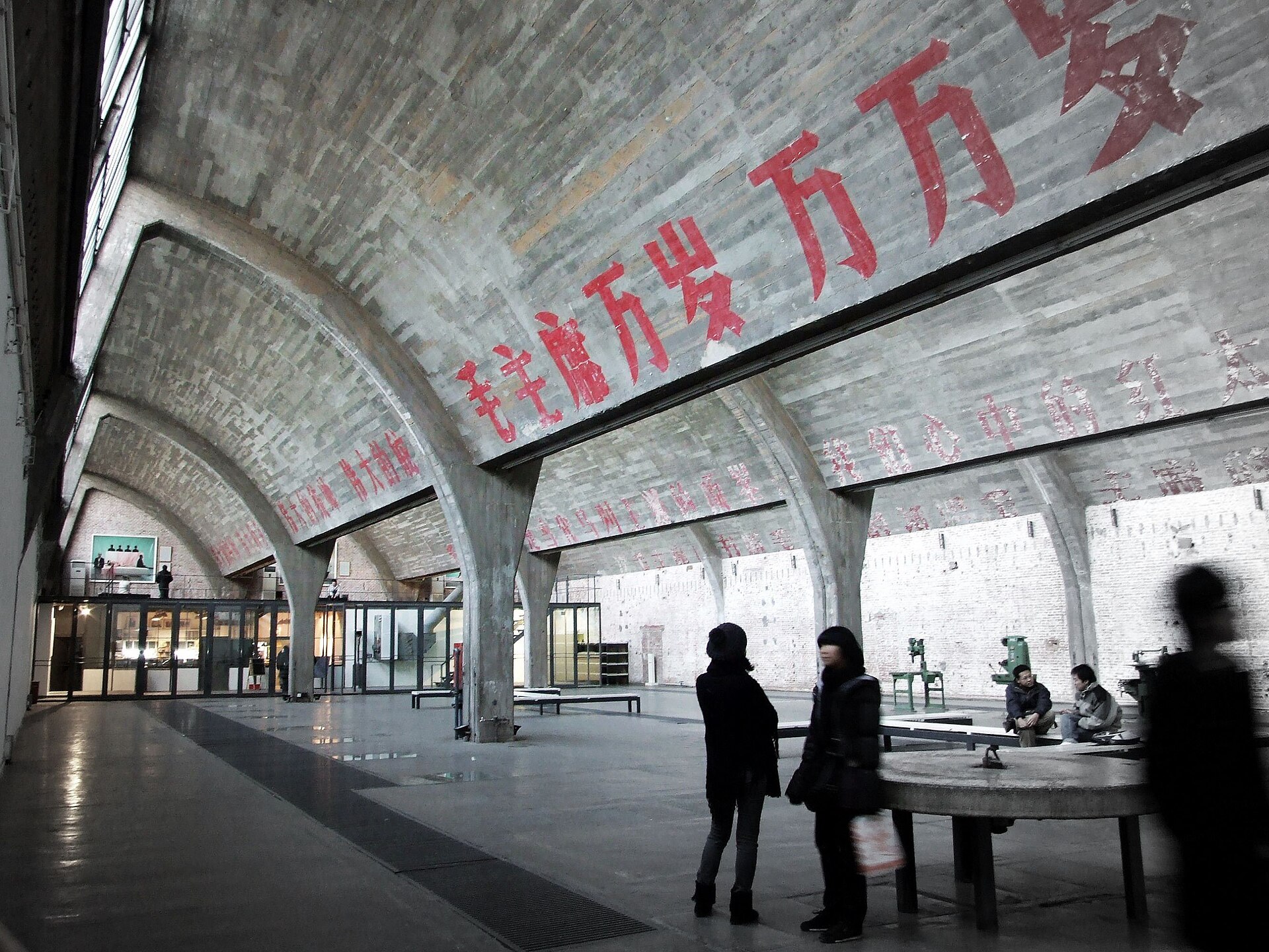
The 798 Art District occupies the former 718 Joint Factory in north-east Beijing, a cluster of Bauhaus-influenced industrial halls built with East German help in the 1950s. Since the early 2000s artists have colonised the spaces, and today it is the city's main contemporary-art quarter, home to UCCA and scores of galleries. This guide covers how to get there, what to see, and the Monday closing habit you need to plan around.
798 is an open district with no gate or entry fee, so you can walk in freely. Individual galleries and museums — UCCA above all — sell separate tickets for major shows, and popular exhibitions can sell out, so check and book ahead if a headline show is on.
Metro Line 14 to Wangjing South (Exit B), then a 15-minute walk east into the district; or a taxi direct to the south gate off Jiuxianqiao Road.
Show the driver 798艺术区 (798 Art District) or 大山子798; most Beijing drivers know it.
Enter at the south gate off Jiuxianqiao Road or the east side near the main sculpture plaza. The district is walkable throughout with no one-way system.
The district's flagship institution, housed in a converted factory hall, with major rotating exhibitions of Chinese and international art. It is the one venue worth timing your visit around and buying a ticket for.
The sloping-sawtooth roofs and poured-concrete halls were designed with East German aid in the 1950s. Walking among them is half the appeal — the industrial architecture is the backdrop for everything here.
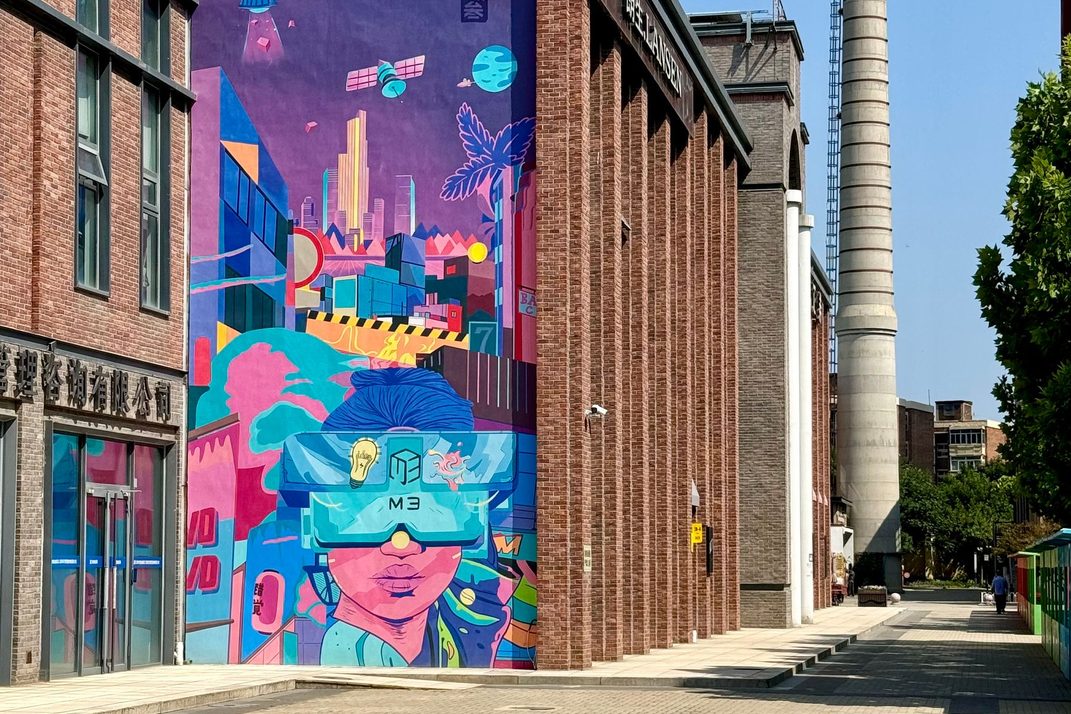
The open plazas and walls carry large-scale sculpture, murals and installations, much of it free to view outdoors. The giant Mao-era slogans on the old walls are themselves a draw.
Scores of smaller galleries and designer shops occupy the side halls, showing photography, painting and craft. Quality varies, but browsing them is how you catch emerging Beijing artists.
The site was built in the early 1950s as the 718 Joint Factory, a state electronics complex constructed with technical and architectural assistance from East Germany. Its Bauhaus-inspired sawtooth-roofed halls were unusual in China and gave the area its distinctive industrial look.
As state industry declined in the 1980s and 1990s the factory emptied, and in the late 1990s and early 2000s artists and galleries began renting the cheap, huge spaces. The district took its name from the 798 sub-plant and rapidly became Beijing's contemporary-art centre.
Today 798 is a protected cultural-creative zone with hundreds of galleries, studios and shops, anchoring Beijing's art market. It weathered waves of commercialisation and remains the city's premier place to see living Chinese art, while the original East German halls stand as a rare piece of industrial heritage.
Entering the district is free, with no gate or ticket. You pay only for individual exhibitions — UCCA and some galleries charge for major shows, while much of the outdoor sculpture and many smaller spaces are free to view.
Take metro Line 14 to Wangjing South (Exit B) and walk about 15 minutes east, or take a taxi or ride-hail directly to the south gate off Jiuxianqiao Road. The walk is unsigned in places, so a taxi is simplest if unsure.
Two to four hours covers UCCA, the central factory halls and a roam through the side galleries. Allow more if a major exhibition is on. The district is large and mostly outdoors, so pace yourself.
The district itself is open, but many smaller galleries and studios close on Mondays, and some venues keep irregular hours. If galleries are your main reason to come, choose a Tuesday to Sunday and confirm specific openings online.
Autumn weekends are pleasant, with open-air sculpture at its best and the plazas busy but not packed. Weekday mornings are quietest for gallery-hopping. Avoid Mondays for galleries, and bring sun protection in summer as much is uncovered.