
The Bird's Nest
The lattice-steel National Stadium, designed by Herzog & de Meuron with Li Xinggang, is the park's icon. Walk the exterior plaza for free, or pay to enter the stands and the lower bowl.
Walk the central axis between the Bird's Nest and the glowing Water Cube
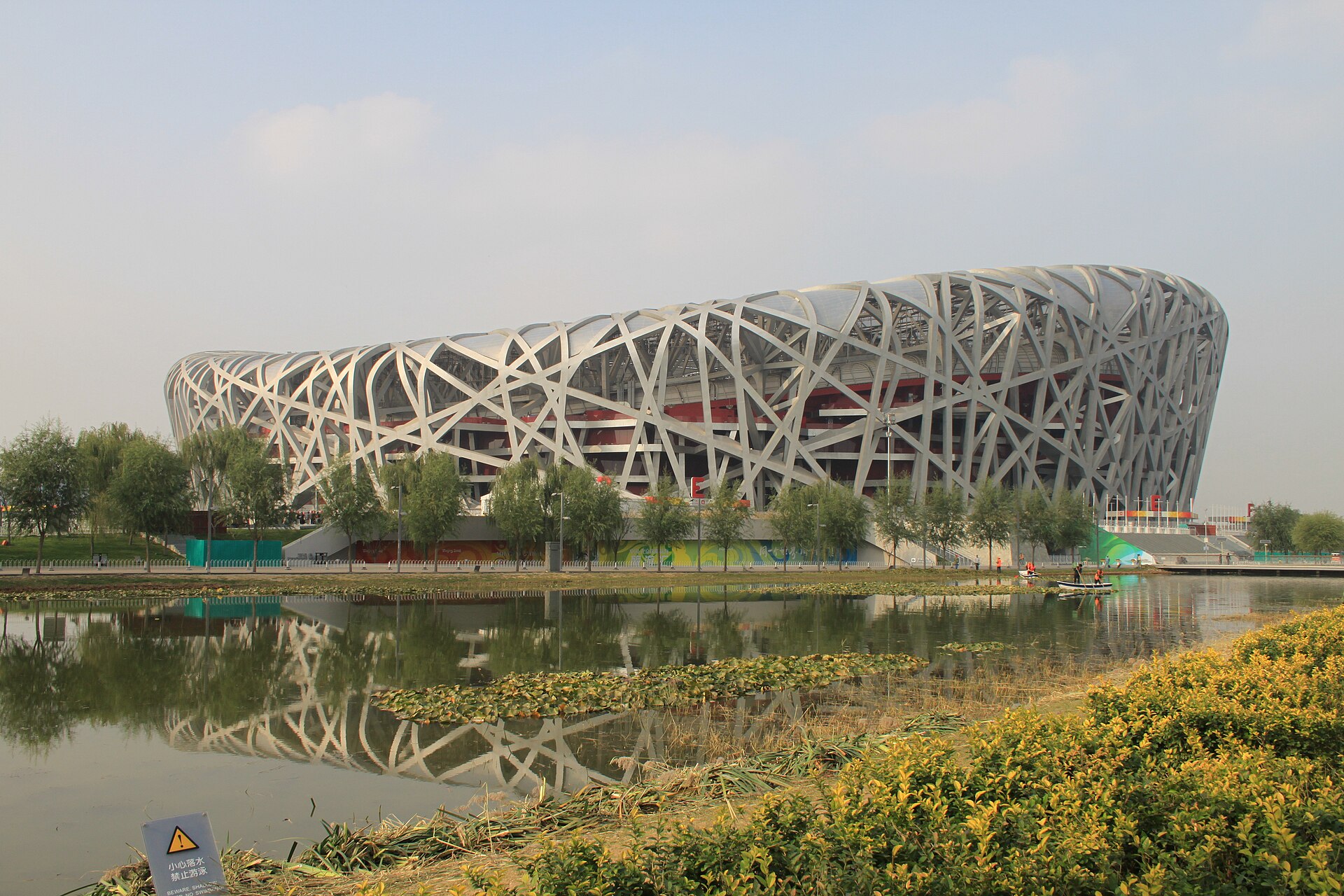
Beijing Olympic Park is the green axis built for the 2008 Games, anchored by the Bird's Nest stadium and the Water Cube aquatics hall. The vast grounds, the Olympic Forest Park and the night-lit architecture make an easy, car-free half-day. This guide covers what to see, whether the Bird's Nest interior tour is worth it, and how to use Line 8 to reach the park, and where the 2022 Winter Olympics legacy actually sits.
The park grounds are free and open, so no booking is needed to walk them. The Bird's Nest and Water Cube charge for interior visits, and those tickets are bought on-site or through the venues' own channels.
Metro Line 8 to Olympic Park (Exit B) or South Gate of Forest Park; both put you on the central axis within a short walk of the stadiums.
Show the driver 奥林匹克公园 (Olympic Park) or 鸟巢 (Bird's Nest). Use the south gate area for the main stadiums.
Enter the grounds from any open side; the Bird's Nest and Water Cube sit beside each other on the central axis walk.
The lattice-steel National Stadium, designed by Herzog & de Meuron with Li Xinggang, is the park's icon. Walk the exterior plaza for free, or pay to enter the stands and the lower bowl.
The blue, bubble-clad National Aquatics Center hosted swimming in 2008 and now doubles as a water park. Its LED-lit skin glows blue at night and is the park's best photo.
A broad, car-free promenade runs between the two venues and up toward the Forest Park, echoing Beijing's north–south imperial axis extended into the 21st century.
The large northern park offers lakes, woodland trails and a hill with a view back over the stadiums. It is the calm, green counterweight to the architecture.
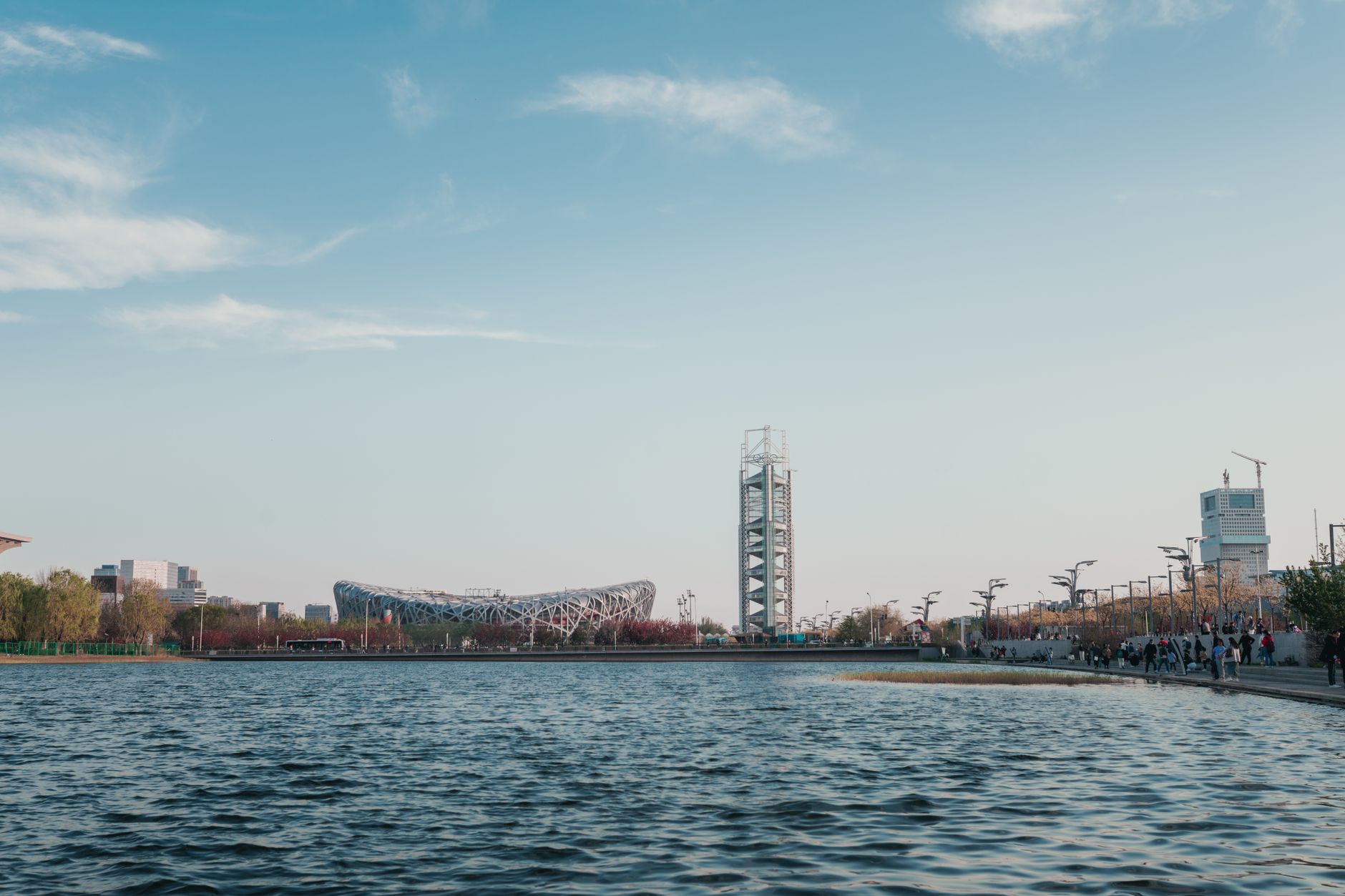
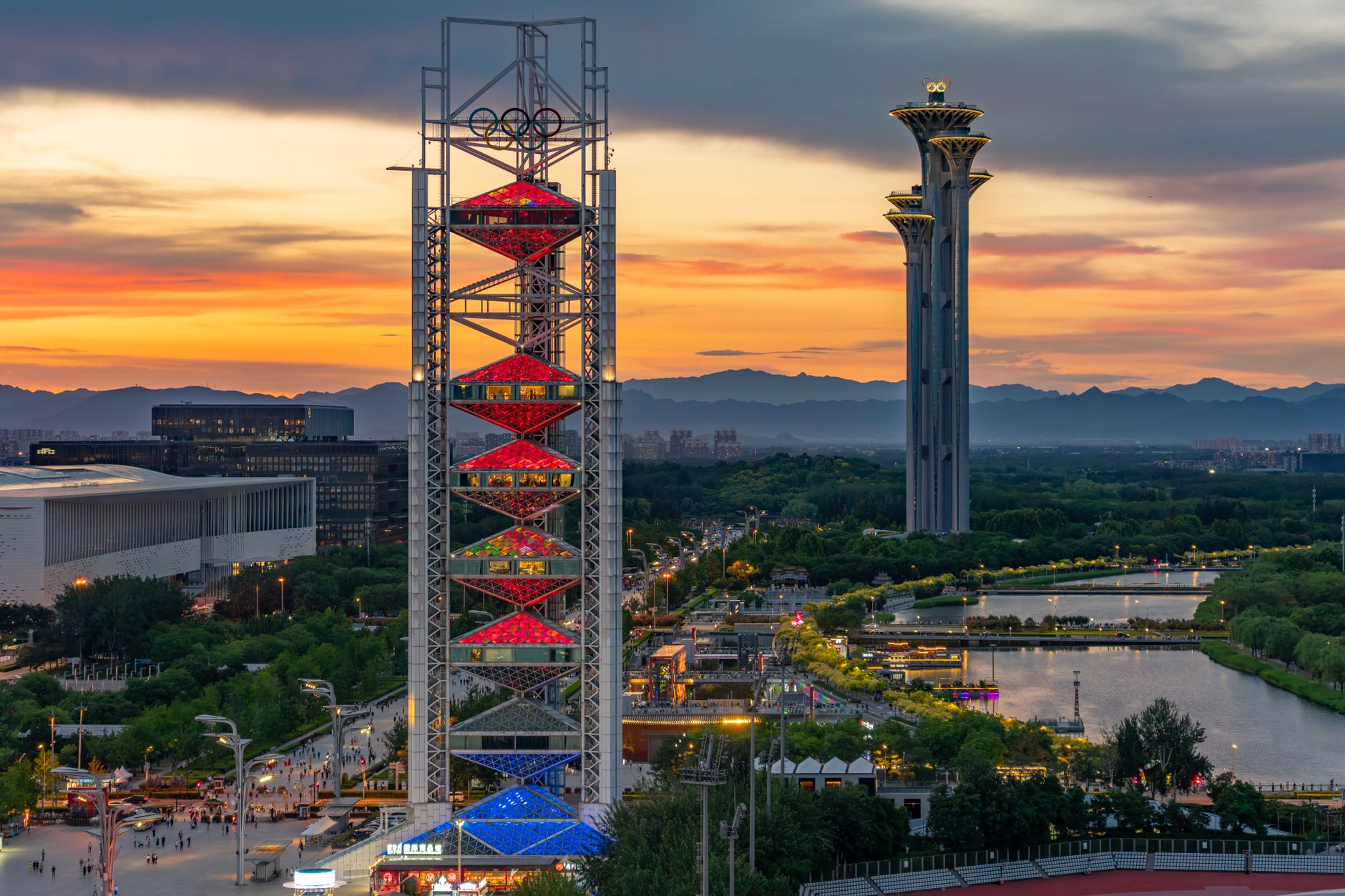
The park was created for the 2008 Summer Olympics on open land in the city's north, extending Beijing's traditional central axis beyond the old city. The Bird's Nest and Water Cube were built as the headline venues for athletics and swimming.
After 2008 the grounds became a public park and a venue for state ceremonies and concerts. Beijing then reused the site's fame for the 2022 Winter Olympics, though most winter events — including the Big Air Shougang jump — were staged at separate venues far from here.
Today the stadiums are largely exhibition and tourism objects rather than active sports grounds, and the surrounding park draws joggers, families and evening strollers. The lit skyline remains one of the city's most photogenic modern scenes after dark.
Yes for the architecture and the easy, car-free grounds, especially in the evening when the stadiums light up. If you only want one Olympic site, the free exterior walk around the Bird's Nest and Water Cube is enough.
No ticket is needed for the public park grounds. The Bird's Nest and Water Cube charge for interior visits, and those are bought on-site or through the venues' own channels on the day.
A relaxed half-day covers the axis walk, both venues from outside, and a stretch of the Forest Park. Add an interior tour or the water park if you want longer.
Evenings are best, when the Water Cube glows and the Nest is lit. Spring and autumn offer comfortable walking; summer days are hot and shade is scarce on the plaza.
Only if you are keen on stadium architecture. The paid walk shows the stands and lower bowl, but most visitors find the free exterior plaza and the lit-night views more rewarding.