Great Wall & Landmarksmaotiananmenmemorialfree-entryreservation
Chairman Mao Memorial Hall: Complete Visitor Guide
Mao's embalmed body lies here, free to view — but a reservation and early arrival are essential
The Chairman Mao Memorial Hall stands on the south axis of Tian'anmen Square and displays the embalmed body of Mao Zedong inside a crystal coffin. Entry is free but tightly controlled: a real-name reservation is required, opening is limited to short morning windows, all bags must be stored, and photography is forbidden inside. Queues can be long even with a booking. This guide explains how to make the reservation through the official WeChat mini-program, what to expect in the chamber, and how to pair the visit with the square and nearby Qianmen Street.
Quick Facts
Opening hours
08:00–12:00 (Tue–Sun) · closed Mondays
Last entry
11:30
Closed
Mondays (and some public holidays)
Suggested time
30–60 minutes
Ticket price
Free
Best season
Autumn or winter for shorter queues
Booking
Required — real-name reservation
Nearest metro
Line 1, Qianmen (Exit B) or Tian'anmen East (Exit B)
How to Book the Mao Memorial Hall Reservation
The hall is free, but entry is by timed real-name reservation through the official Mao Jinian Tang WeChat mini-program. You book a 30-minute window and show your passport at the gate. Slots open the day before and fill fast, so book early.
Open the official 'Mao Jinian Tang' reservation mini-program on WeChat and search the romanised name if needed.
Enter each visitor's passport number — the reservation is real-name and checked at the gate.
Pick a date and a 30-minute timed slot; slots usually release the day before, sometimes a few days ahead.
Save or screenshot the QR code and bring the same passport you registered.
Arrive inside your window, pass security, and follow the one-way queue through the hall.
Getting There
🚇
By metro
Metro Line 1 to Qianmen (Exit B) or Tian'anmen East (Exit B); the hall is on the south side of Tian'anmen Square, a 10-minute walk.
🚕
By taxi
毛主席纪念堂 天安门广场 (south side of the square). Tell the driver you want the square's south end.
🚪
Entrances
Enter from the north queue on the square's south side; the route is one-way and you exit on the east side toward Qianmen.
Mao lies in a crystal coffin under soft light, and visitors move past on a slow, near-silent walkway. The few minutes inside are deliberate and solemn, making this one of the most unusual and quietly moving sights on the square.
White Marble Façade
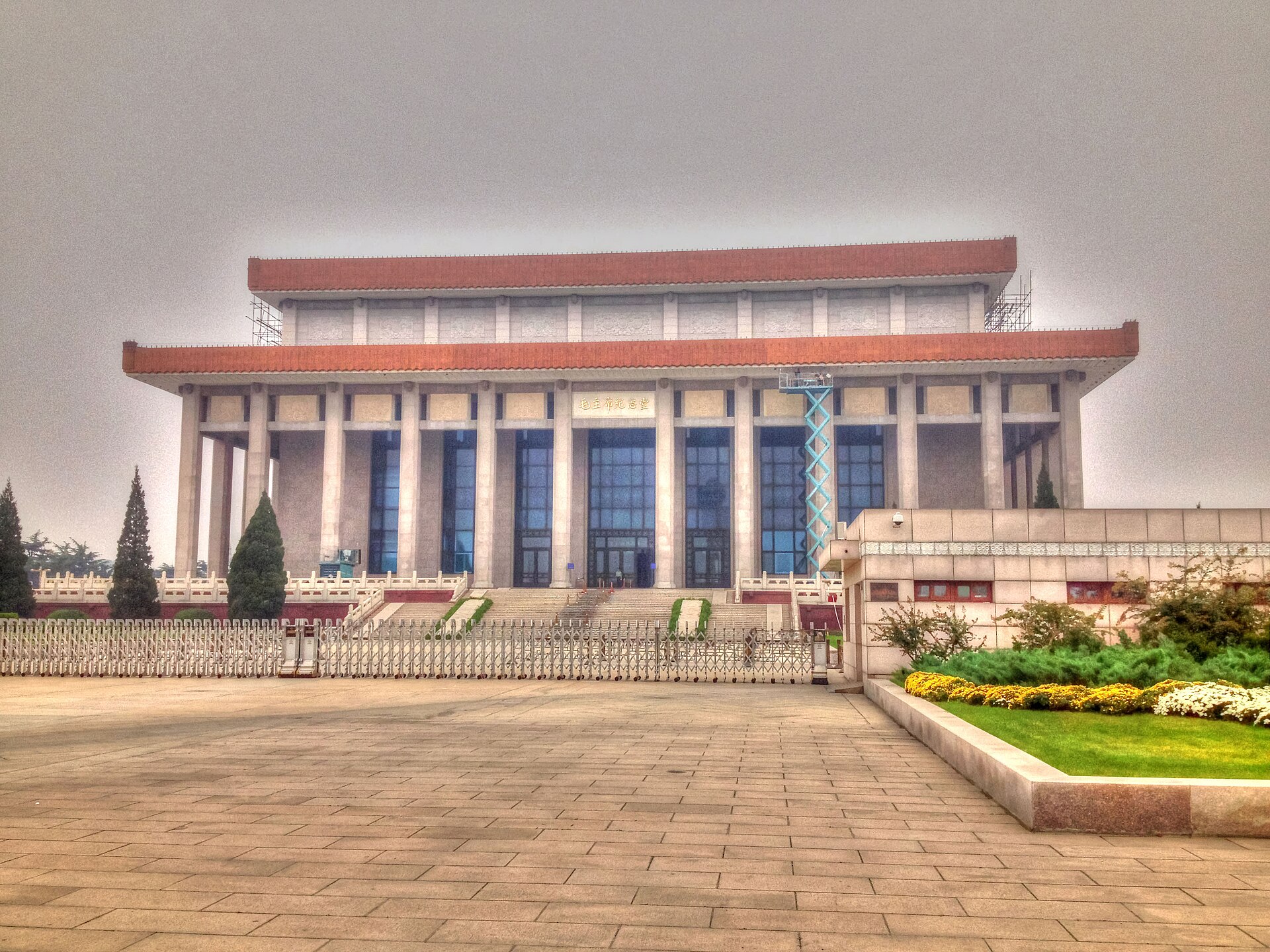
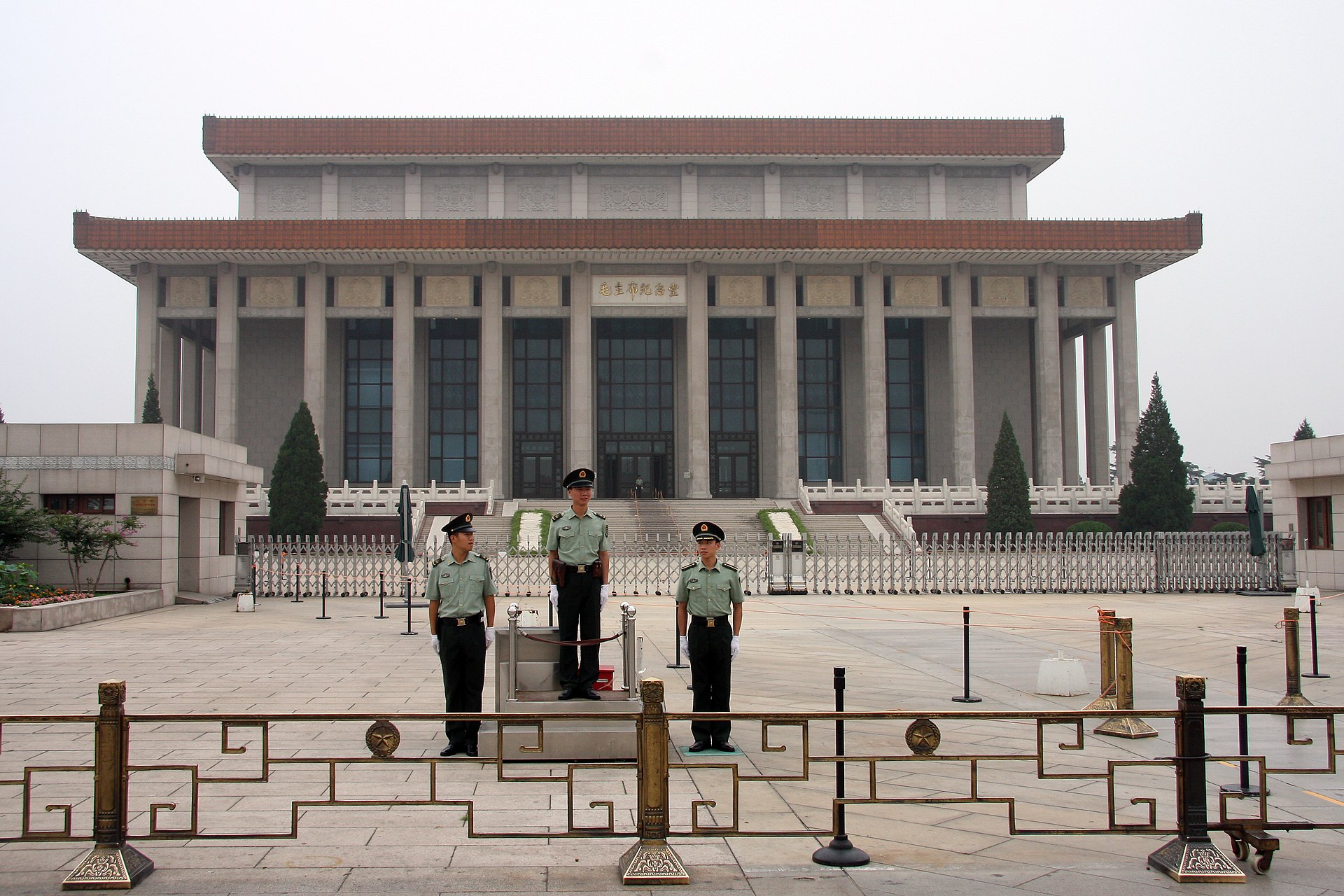
The hall is built of granite and white marble with a golden national emblem above the entrance. Its deliberately austere and monumental frontage signals the political weight the site still carries, and it photographs best from across the square's open plaza.
Statue of a Seated Mao
Before the coffin, a white marble statue shows Mao seated and at ease, backed by a carved relief of revolutionary scenes. It is the chamber's central focus, and the walkway curves past it before continuing toward the body.
The Square Setting
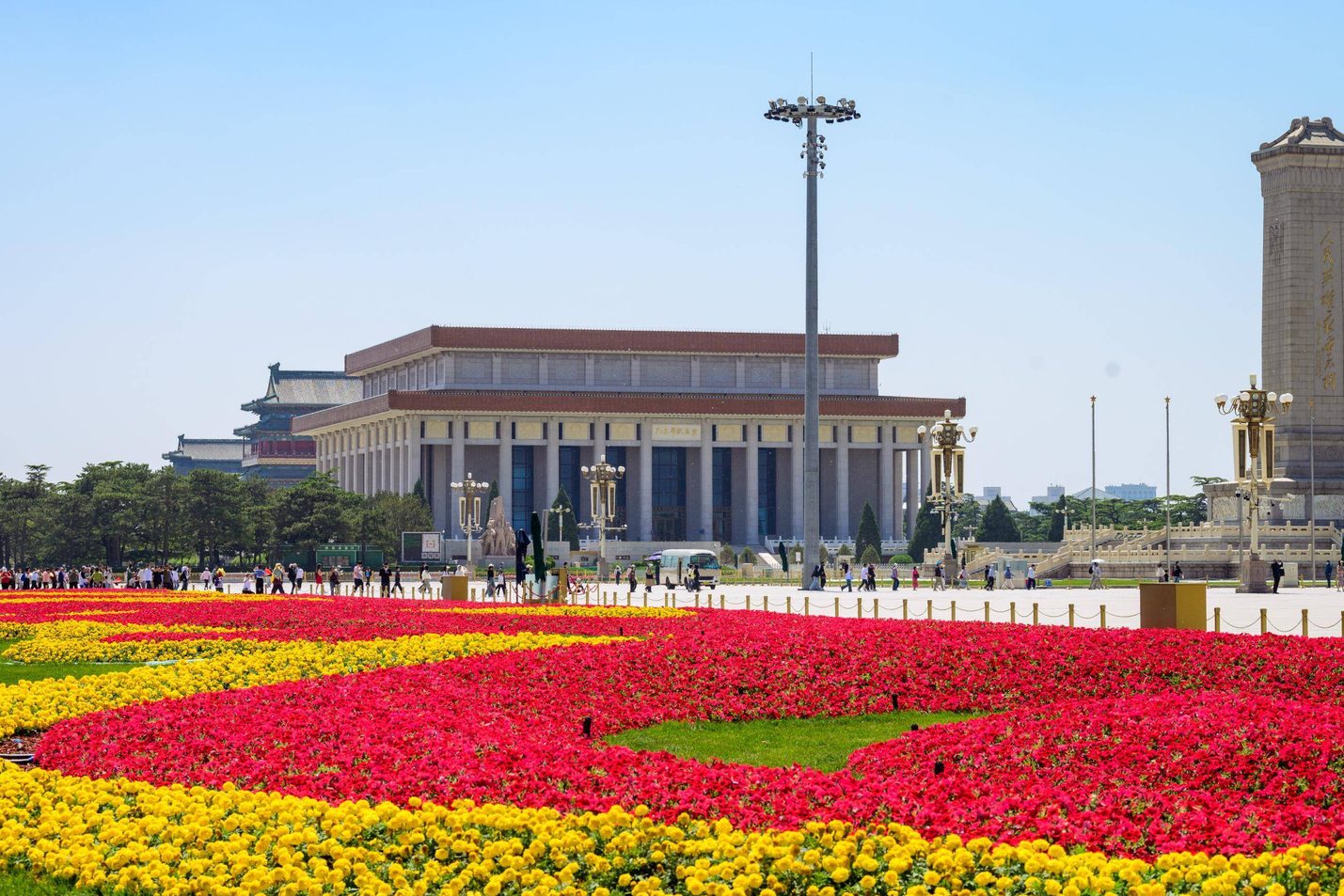
The hall sits on the south axis of Tian'anmen Square, framed by the Monument to the People's Heroes and the Gate of Tian'anmen. That stark framing of modern state architecture is part of the experience from the moment you join the queue.
Photo Gallery
Autumn flower beds on Tiananmen Square frame the Chairman Mao Memorial Hall and the Monument to the People's Heroes.
A 1970s Revolutionary Shrine
The hall was built in 1976-1977, soon after Mao Zedong died in September 1976. Its design came from a national competition, and the granite-and-marble structure rose on the south side of Tian'anmen Square, replacing the old Gate of China that had long marked the imperial city's southern edge before the great square was laid out. The square itself was enlarged in the 1950s, which is why the hall sits where the old city wall once ran.
Inside, Mao's body was embalmed and placed on display, following the Soviet-style model used for Lenin and Ho Chi Minh. Through the reform era the site stayed open as a place of pilgrimage and quiet ceremony, drawing millions of Chinese visitors each year who came to pay their respects rather than to tour the building as a conventional monument. Admission has remained free since opening, a deliberate choice by the state to keep the site accessible.
Today the hall admits foreign visitors alongside domestic crowds, entirely free of charge but tightly controlled. The body remains on view in its climate-controlled crystal coffin, and the brief, silent walk through the chamber ranks among the most unusual and quietly powerful experiences available anywhere on the square today, whatever your politics. Security is noticeably tighter here than at most Beijing sights, so allow extra time at the entrance.
Suggested Route
1. Book your slotReserve a timed window on the official WeChat mini-program the day before and screenshot the QR code.
2. Arrive at the north queueJoin the line on the square's south side with your passport; security here is strict and thorough.
3. Cloak bags and phonesUse the free cloakroom; nothing may pass the inner gate, so travel as light as you possibly can.
4. Walk the chamberMove slowly past the statue and the crystal coffin on the one-way walkway; there is no stopping.
5. Exit east toward QianmenLeave on the east side and stroll Qianmen Street for food, shops and the old-city atmosphere.
Mistakes to Avoid
Do not bring a bag, camera or phone — everything must be left at the free cloakroom first.
Book the day before; walk-up entry is not possible without a real-name reservation.
Avoid Mondays entirely — the hall is closed, with no exceptions for foreign travellers.
Do not photograph or film inside; even phone use is forbidden in the chamber.
Arrive early in your slot; latecomers join a long security queue and may miss entry.
Yes. Entry is free but by timed real-name reservation through the official WeChat mini-program. You register your passport number and pick a 30-minute slot; slots open the day before and sell out, so book as early as you possibly can to avoid disappointment.
How much does it cost?
Nothing — admission is completely free. The only cost is your time in the queue and the cloakroom if you arrive with bags, which must be stored before you go inside the chamber. There is no ticket fee at any stage of the visit.
How long does a visit take?
Plan 30 to 60 minutes including security and the short, one-way walk through the chamber. The inner visit itself is only a few minutes of slow movement past the coffin, but the outer queue and cloakroom can add considerably at busy times.
When is the best time to go?
Go on a weekday soon after the 08:00 opening, inside your booked slot. Autumn and winter bring shorter queues than the summer holiday crush, and remember that Mondays are always closed, with no exceptions made for foreign travellers.
Is it worth visiting?
If you are curious about modern China's founding myths, yes. The experience is brief, solemn and unlike any other Beijing sight, but it is not a typical tourist attraction and some visitors find the controlled, reverential atmosphere quietly uncomfortable.