
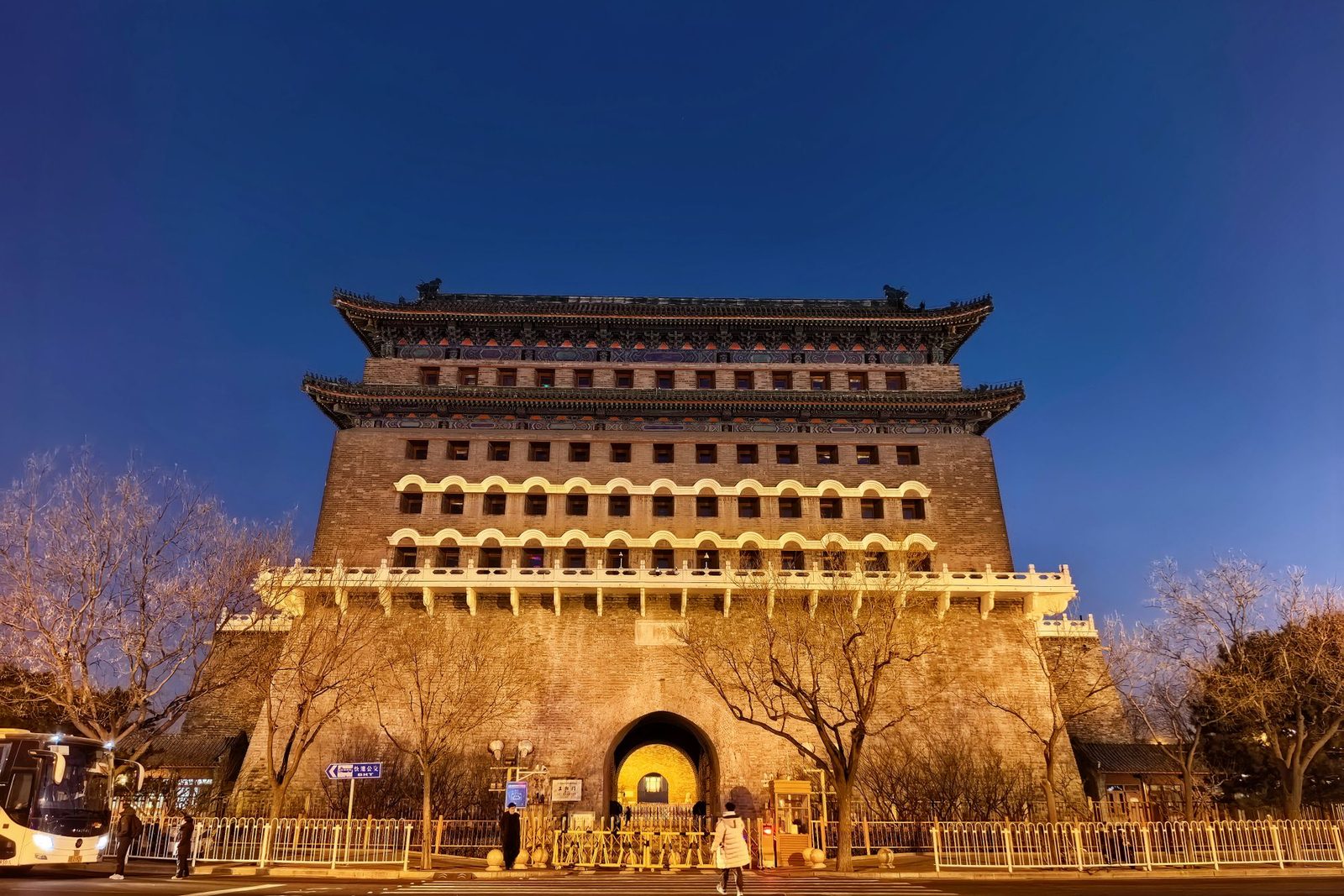
Zhengyangmen Archery Tower
The imposing Zhengyangmen gate tower (Qianmen) anchors the north end of the street and is the only surviving stretch of the old city frontage. Climb it or the adjacent museum for a clear view down the avenue.
A rebuilt thoroughfare — the side hutongs and food lanes just behind it are the real draw
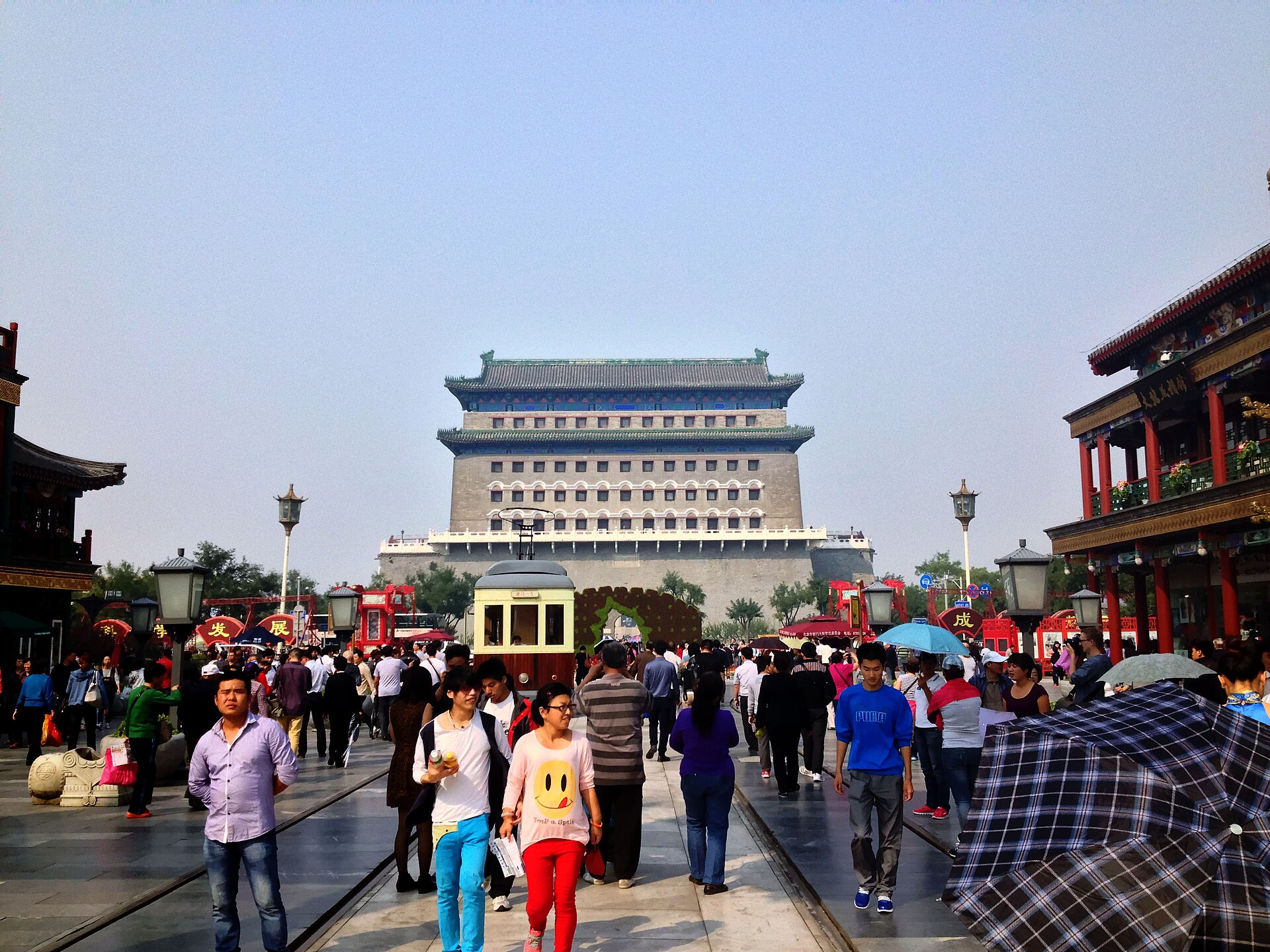
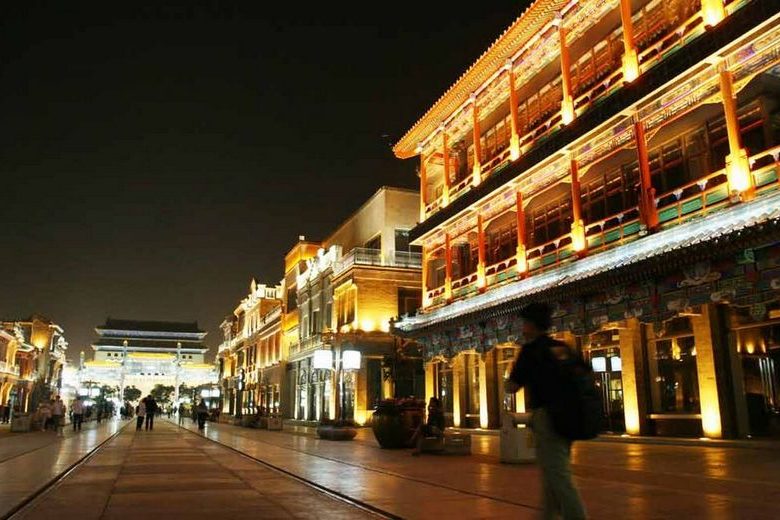
Qianmen Street is the broad pedestrian avenue rebuilt south of Tian'anmen, echoing the commercial spine that has stood here since the Ming dynasty. On its own the street is polished and commercial, but the reward is just behind it: the hutongs of Xianyukou and Yangmeizhu, the clanging Dangdang tram, and the Zhengyangmen archery tower. This guide explains what to skip, what to seek out, and how to pair the area with Tian'anmen Square and Dashilar.
Qianmen Street is a public pedestrian street, so there is no ticket or reservation. The only thing to plan is timing and how far you walk into the surrounding hutongs.
Metro Line 2 or Line 8 to Qianmen (Exit B or C); the pedestrian street begins a one-minute walk north of the station.
Show the driver 前门大街 (Qianmen Street). Most drop you at the north end near Zhengyangmen.
Open at both ends; there is no gate. Walk south from Tian'anmen Square or north from the Dashilar side — it connects on foot.
The imposing Zhengyangmen gate tower (Qianmen) anchors the north end of the street and is the only surviving stretch of the old city frontage. Climb it or the adjacent museum for a clear view down the avenue.
A reconstructed wooden tram — the 'Dangdang che' — trundles the length of the street on rails. It is more prop than transport, but children enjoy it and it makes a good photo.
Just west of the main drag, Xianyukou packs noodle shops, roast-duck counters and snack stalls into a lively lane. This is where most visitors actually eat, away from the avenue's chains.
A quieter side hutong running parallel to the street, Yangmeizhu holds indie bookshops, cafés and preserved courtyard houses. It shows the older grain the main street was rebuilt to echo.
Qianmen, meaning 'Front Gate', refers to Zhengyangmen, the grandest of the nine outer gates of the Ming and Qing capital. From the early 1400s the street beyond it, then called Zhengyangmen Dajie, developed as the southern approach to the imperial city and the busy commercial quarter that served merchants, officials and travellers heading to the gate.
The area flourished through the Qing as a shopping and entertainment district, packed with teahouses, theatres and the famous Dashilar shops just to the west. Much of it was destroyed in a fire during the Boxer Rebellion fighting of 1900, then rebuilt and modernised through the Republican era and again after 1949.
What stands today is a 2000s reconstruction rather than surviving Qing fabric; the old grain is better felt in the side hutongs than on the avenue. Still, the Zhengyangmen tower and the restored street draw enormous crowds, and the Dangdang tram keeps a piece of early-20th-century Beijing alive.
Yes, but mainly for the surrounding hutongs rather than the rebuilt avenue. Spend your time in Xianyukou for food and Yangmeizhu for atmosphere, and treat the street as a pleasant connector.
No. The street is open and free to walk. Only the Zhengyangmen tower and the Beijing Railway Museum charge admission, and both sell on-site tickets without a passport reservation.
Plan two to three hours if you include the side hutongs and a meal. The avenue alone takes twenty minutes; the payoff is in the lanes beside it.
Weekday mornings are quietest for photos, while evenings bring the tram, the lights and the food stalls. Autumn and winter evenings are especially atmospheric.
Take Metro Line 2 or Line 8 to Qianmen and walk in. It is also a short, flat walk south from Tian'anmen Square or west from Dashilar.