Seven centuries of cypresses, exam steles and the glazed archway of learning
The Confucius Temple and Imperial College, known as Kong Miao and Guozijian, form Beijing's scholar's quarter just north of the Lama Temple. The temple honours the sage with 700-year-old cypresses and 198 stone steles of successful exam candidates. Next door, the Guozijian was the empire's highest academy, built around the glazed Biyong hall. This guide covers the cheap combined ticket, the steles, the Biyong hall and how to pair the site with the Lama Temple.
Quick Facts
Opening hours
08:30–17:00; confirm on the official account
Last entry
16:30; confirm on official account
Closed
Open daily (Mondays may close in winter — confirm)
Suggested time
1.5–2 hours
Ticket price
Around CNY 30 combined; confirm on the official account
Best season
Spring and autumn for the cypress shade
Booking
Not required — walk in (passport ID may be checked)
Entry point
South Gate on Guozijian Jie, north of the Lama Temple
Do You Need to Book?
The temple and college are run as a quiet historic site with no advance booking for foreign visitors. You buy a combined ticket at the South Gate and walk in, though a passport check can apply on the occasional busy day when tour groups pass through.
Walk north from the Lama Temple to Guozijian Street and find the South Gate of the compound.
Pay the combined ticket fee at the window or scan the on-site code; foreign cards are often rejected, so carry cash.
Show your passport if staff request ID — real-name entry is occasionally enforced on peak days.
Enter and follow the route through the Confucius Temple before crossing to the Guozijian next door.
Getting There
🚇
By metro
Metro Line 2 or 5 to Yonghegong Lama Temple, then a 5-minute walk north along Guozijian Street to the South Gate.
🚕
By taxi
孔庙国子监 南门 (south gate, on Guozijian Street, north of Yonghegong).
🚪
Entrances
Enter at the South Gate, tour the Confucius Temple courtyards, then cross internally to the Guozijian and exit near the north — the route flows one way through both.
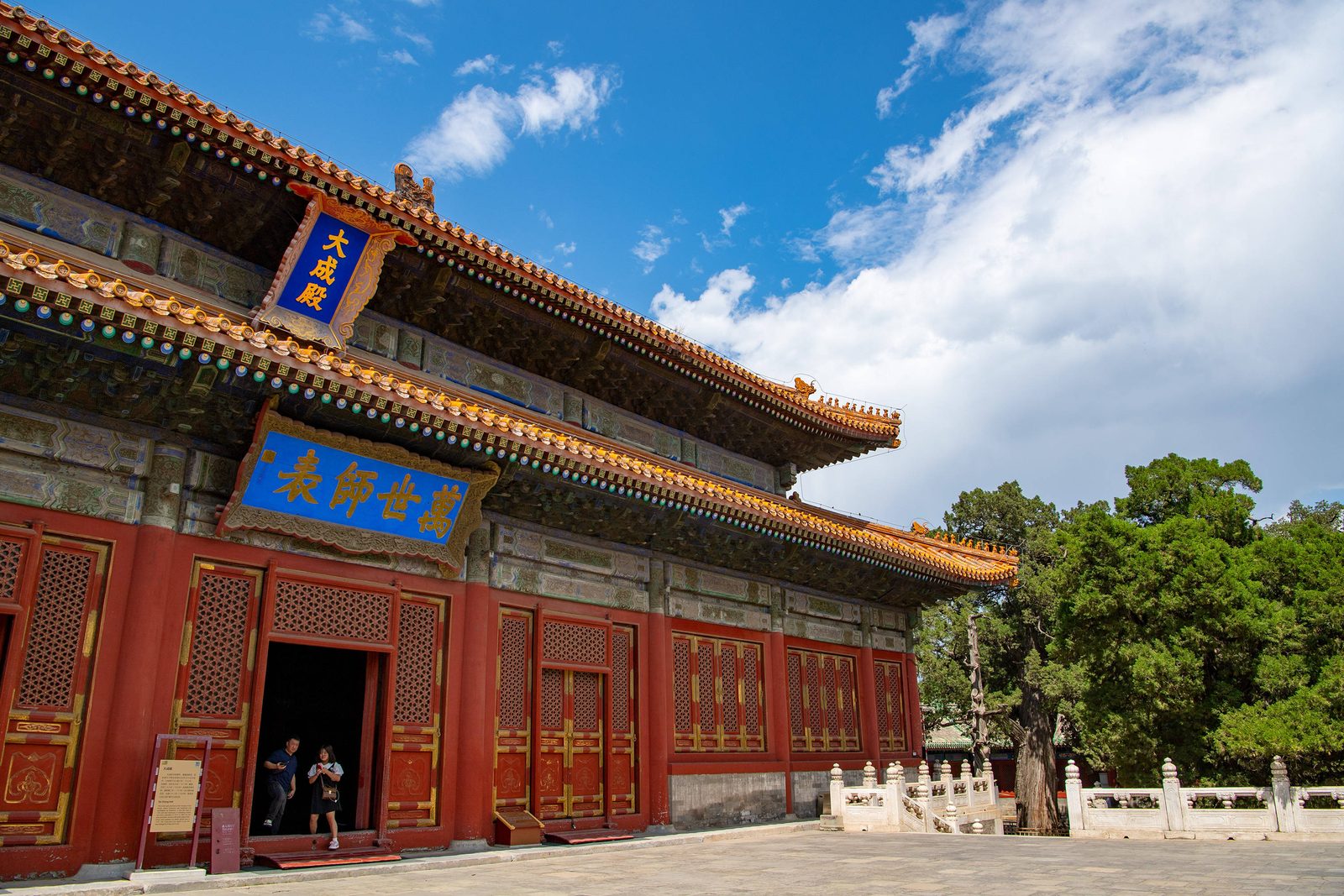
Stone steles in the courtyard record the names of every successful jinshi, the highest imperial exam passers, across the Yuan, Ming and Qing. Running your eye down them is to read centuries of China's scholar-official elite at a glance.
The 700-Year Cypresses
Ancient cypresses, some planted in the Yuan era over 700 years ago, shade the temple courts. The oldest, the 'Cypress of the Scholar', is said to bow toward the sage and is a local favourite.
The Biyong Hall (Guozijian)
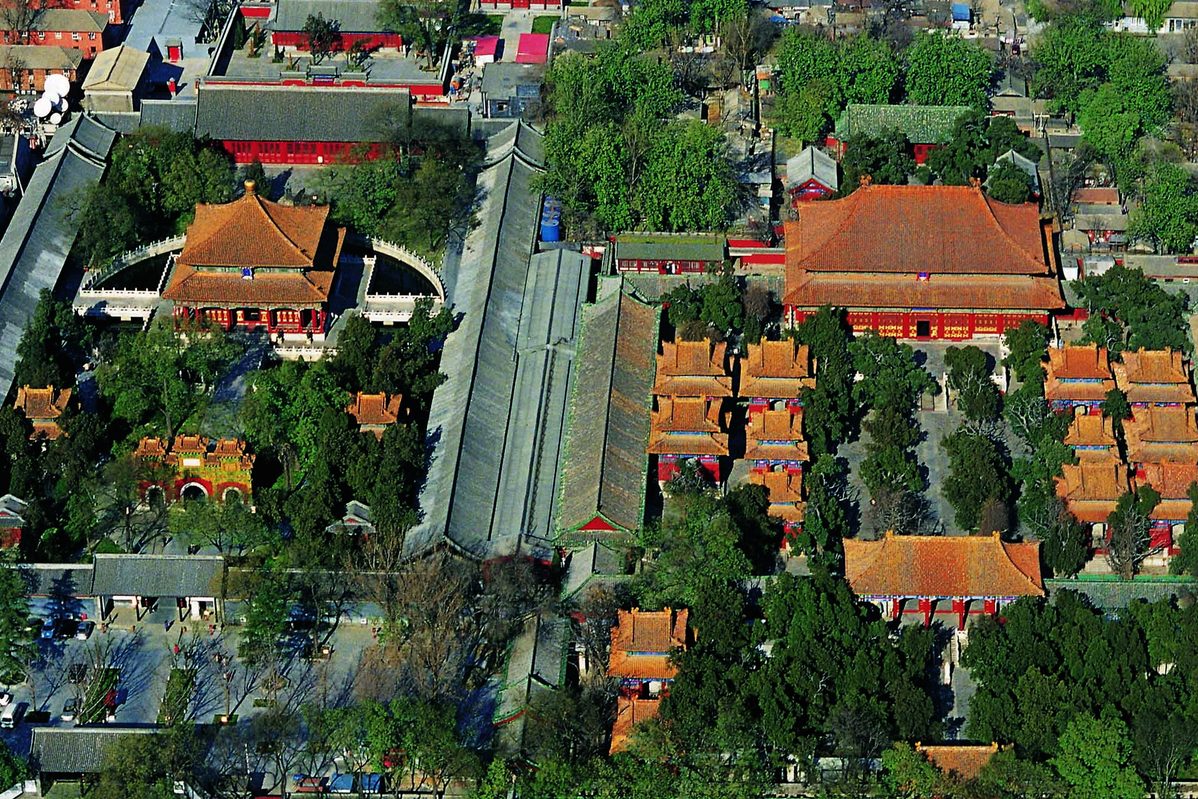
The centrepiece of the Imperial College is a circular glazed hall on a square water moat, where the emperor himself lectured. Its perfect geometry symbolised the empire's order and is unique among Beijing's academic sites.
The Glazed Archway
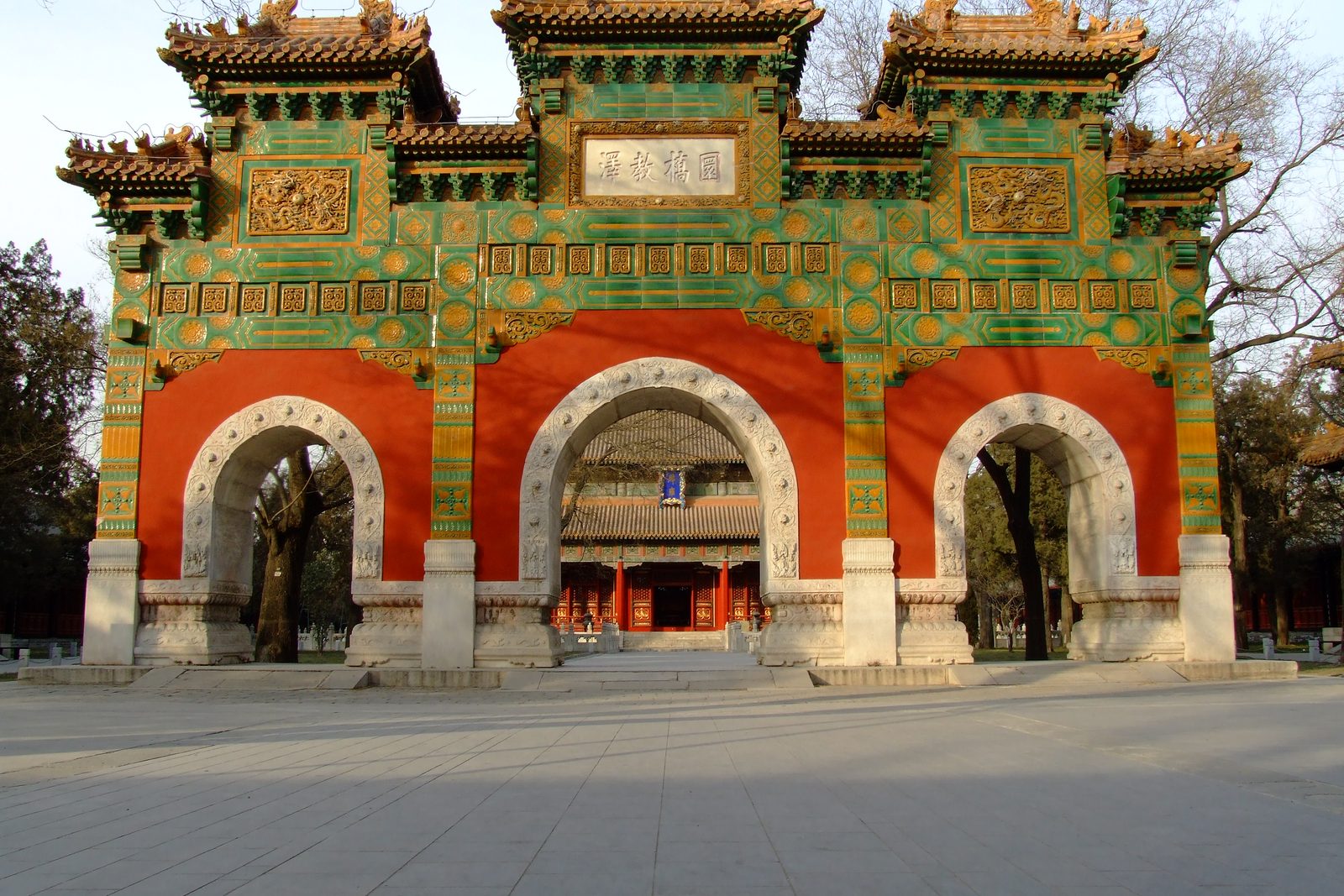
A rare, richly coloured glazed memorial archway stands at the college entrance, inscribed with phrases honouring learning. It is one of the few surviving imperial glazed archways in the city and a fine photo frame.
Photo Gallery
The red-walled halls and ancient steles of the Confucius Temple in BeijingThe glazed-tile memorial archway on the central axis of Guozijian
Seven Centuries of Confucian Learning
The Confucius Temple was founded in 1302 under the Yuan dynasty and enlarged through the Ming and Qing as the capital's principal site for honouring Confucius and the scholar tradition. Beside it, the Imperial College (Guozijian) was established as the empire's highest seat of learning, training and examining officials.
For centuries the temple hosted the grand ceremony of twice-yearly sacrifices to Confucius, while the college drew the finest students from across the realm. The steles of successful exam candidates were erected here as a permanent roll of honour, a tradition that lasted until the exam system ended in 1905.
After 1911 both institutions declined, but the buildings survived and were restored as a protected historic site. Today the quiet courtyards, ancient cypresses and the unique Biyong hall make this one of Beijing's most scholarly and least crowded imperial sites — a calm counterpoint to the nearby Lama Temple.
Suggested Route
1. South Gate entryEnter from Guozijian Street and buy the combined ticket. The gate opens onto the first Confucius Temple court, quieter than the Lama Temple crowds just south.
2. Confucius Temple courtyardsWalk the axis past the main hall and the stone steles. Read the jinshi names and stand beneath the ancient cypresses.
3. The glazed archwayReach the coloured memorial archway honouring learning. It marks the threshold to the Imperial College and is the best external photo of the whole site.
4. Biyong HallCross into the Guozijian and circle the circular hall on its moat. Imagine the emperor lecturing here to the realm's top scholars.
5. Exit north, return to Lama TempleLeave near the north and walk back south to the Lama Temple or Wudaoying Hutong for food and a slower finish.
Mistakes to Avoid
Do not buy separate tickets — only the combined ticket is sold at the gate.
Bring cash; the gate reader often rejects foreign cards here.
Avoid late-morning tour groups; go early for empty courtyards.
Do not miss the Guozijian — the temple alone is only half the site.
Confirm Monday opening in winter; it can close on quiet days.
Do I need to book the Confucius Temple and Imperial College in advance?
No. The site sells a combined ticket at the South Gate with no advance booking for foreign visitors; pay on arrival and walk in. Carry your passport, as a real-name check can occasionally apply on busy tour-group days.
How much does it cost?
Around CNY 30 for the combined temple-and-college ticket, though confirm the current figure on the official account before you go. There is no separate charge inside, and the price is stable compared with the major palaces.
How long should I spend there?
Allow one and a half to two hours to see the Confucius Temple courtyards, the steles and cypresses, then cross to the Guozijian and the Biyong hall. It is compact, so a calm visit rarely exceeds two hours.
When is the best time to visit?
Weekday mornings are quietest, with empty courtyards and good light through the cypresses. Spring and autumn are pleasant; avoid late-morning tour groups. The site is calm year-round and rarely crowded even on holidays.
How does it compare with the Lama Temple next door?
The Lama Temple is grand, aromatic and busy; this site is scholarly, stone and green, and far quieter. They sit five minutes apart and complement each other perfectly — one for living Buddhist devotion, the other for Confucian learning and imperial exams.