
The Central Courtyards
A long sequence of halls and courtyards on the classic Buddhist axis, among the oldest continuously used temple grounds in the city.
One of Beijing's oldest Buddhist monasteries, famed for its April lilac blossom
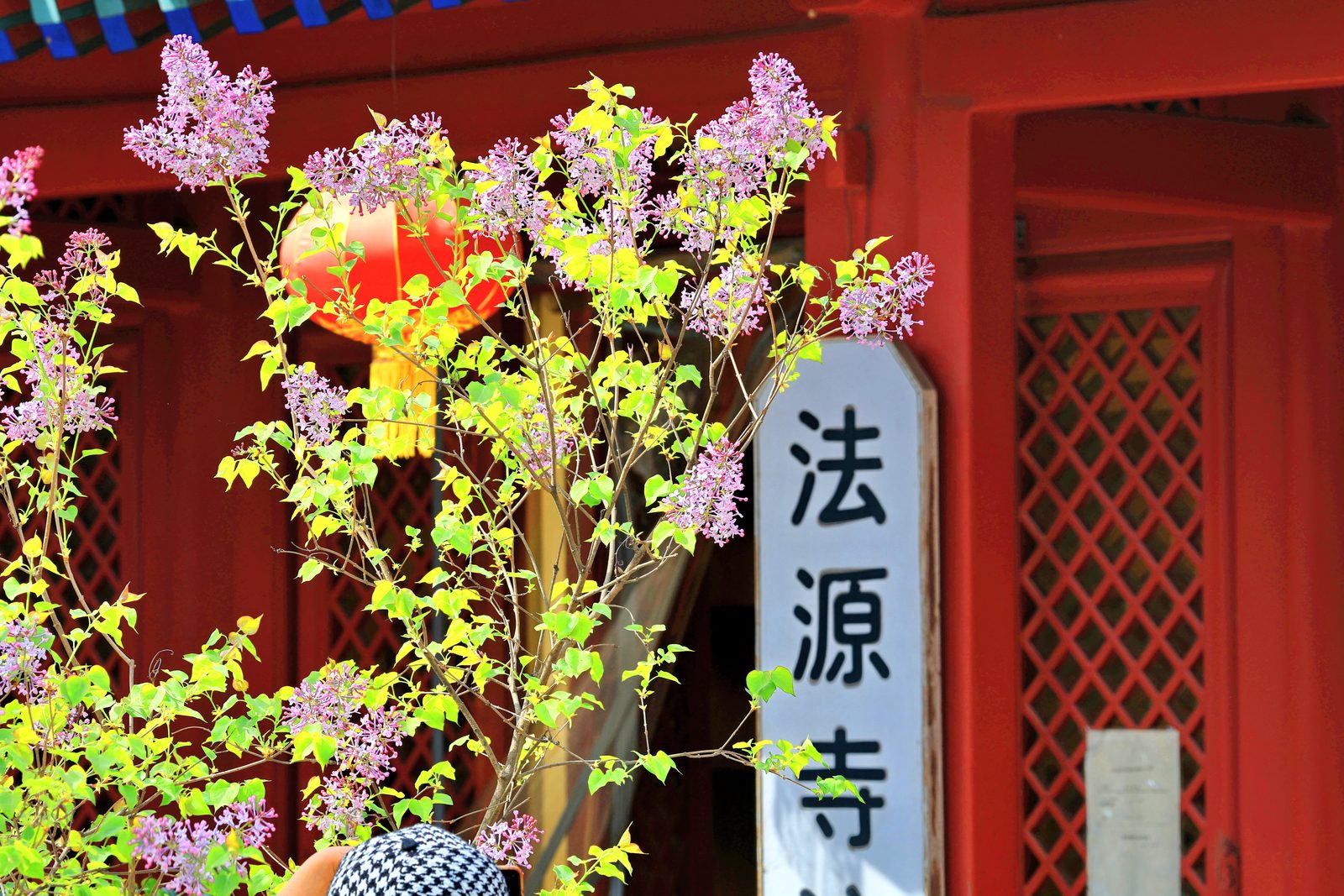
Fayuan Temple traces its founding to 645 AD and is among the oldest continuously used Buddhist sites in Beijing. It is also home to the Chinese Buddhist Academy, so the atmosphere is devotional rather than touristic. This guide covers opening hours, the free entry, how to get there, and the famous lilac blossom that fills the courtyards every April.
Fayuan Temple is a working monastery with free entry and no booking. A small donation is welcomed at the gate. Because it is an active religious site, dress modestly and keep quiet; the atmosphere is devotional rather than touristic.
Metro Line 4 or 7 to Caishikou (Exit D), then a 10-minute walk south through the old streets to the temple's south gate.
Show the driver 法源寺 (Fayuan Si). The temple sits just south of Caishikou in the old city.
Enter at the south gate on the central axis. The temple is a sequence of courtyards best walked north to south, then back out the same gate.
A long sequence of halls and courtyards on the classic Buddhist axis, among the oldest continuously used temple grounds in the city.
Mature lilac trees planted across the temple bloom in April, filling the courtyards with scent and making the month the temple's best-known moment.
The principal hall holds substantial Buddhist images and is the focus of the monastery's daily ritual life.
Home of the Chinese Buddhist Academy, the temple trains monks and keeps a scholarly, living character rare among Beijing's sights.
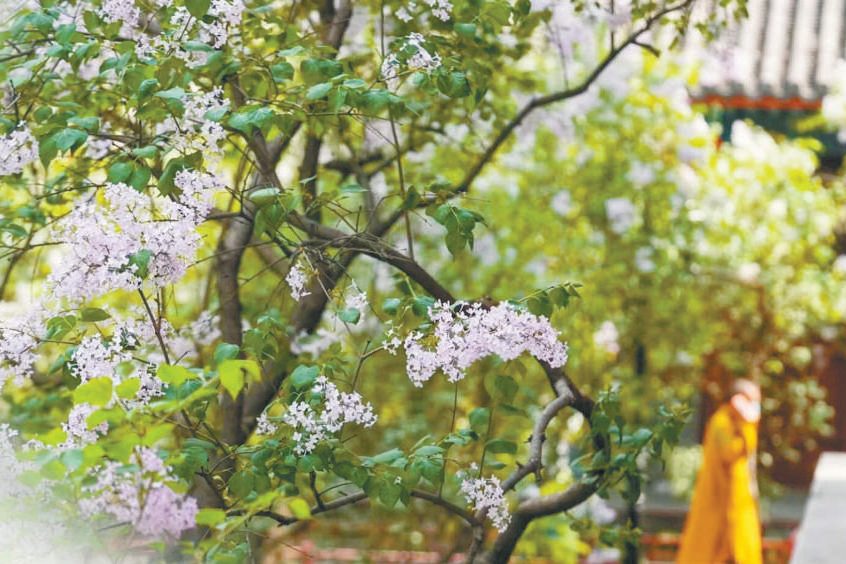
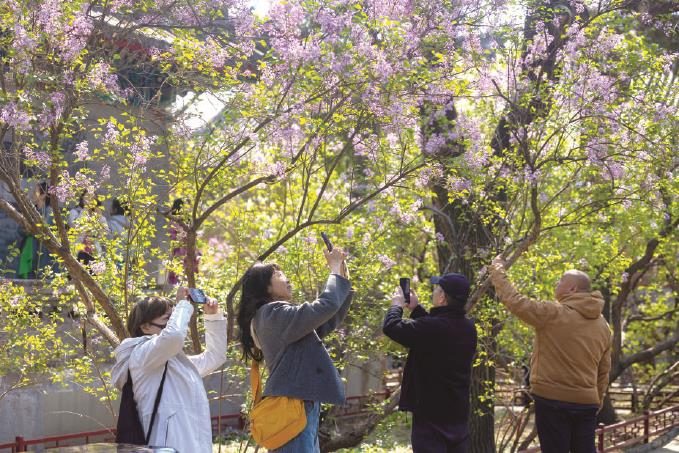
Fayuan Temple traces its founding to 645 AD, during the Tang dynasty, when it was established as the Temple of the Source of Law. Though much of what stands today is later reconstruction, its ground and continuity of worship reach back nearly fourteen centuries, making it one of the oldest Buddhist sites in Beijing.
The temple was damaged and rebuilt across the Liao, Jin, Yuan, Ming and Qing dynasties, serving repeatedly as a major monastic and printing centre. In the Qing it became a recognised seat of Buddhist learning, a role that survives today through the Chinese Buddhist Academy housed within its walls.
Fayuan remains an active monastery rather than a museum, and its April lilac blossom has been celebrated for centuries as one of Beijing's quiet floral events. It is also near the Niujie mosque, so a visit sits naturally inside the old city's layered religious geography.
Yes. Entry is free, with a small donation welcomed at the gate. There is no booking and no ticket window for foreign visitors; you simply walk in and respect the working-monastery atmosphere.
Take Metro Line 4 or 7 to Caishikou and walk about ten minutes south, or take a taxi to 法源寺. The temple sits in the old city just south of the Caishikou district.
One to ninety minutes covers the courtyards, the principal hall and a calm walk. Visit in April if you can, when the lilac blossom makes the grounds especially memorable.
April is the standout month for the lilac blossom. Otherwise, weekday mornings are quietest. Avoid relying on precise opening hours — arrive mid-morning and dress modestly as at any active temple.
Yes, for travellers interested in living Buddhism rather than monuments. It is among Beijing's oldest continuous temple sites, free to enter, and pairs well with the nearby Niujie mosque and the antique street at Liulichang.