Temple of Heaven (Tiantan): Complete Visitor Guide
A Ming-dynasty altar of heaven, ringed by parkland and morning tai chi
The Temple of Heaven, known as Tiantan, is a Ming-dynasty imperial altar in south Beijing where emperors prayed for good harvests each winter solstice. Beyond the famous halls lies a beloved public park full of morning tai chi and singing. This guide covers the park-versus-through-ticket choice, the Echo Wall, the Hall of Prayer and the Line 5 Tiantan Dongmen entrance that leads straight to it. Go early to catch the park at its most alive, before the tour buses arrive.
Quick Facts
Opening hours
06:00–22:00 (park) · 08:00–17:30 (halls)
Last entry
21:30 (park) · 17:00 (halls)
Closed
Open daily
Suggested time
2–3 hours
Ticket price
CNY 15 park · CNY 34 through-ticket
Best season
Autumn for clear skies
Booking
Passport ID recommended — book online
Nearest metro
Line 5, Tiantan Dongmen (Exit A)
Do You Need to Book?
The park sells real-name tickets online against your passport, and the inner halls need either a through-ticket or separate hall tickets. Book a day ahead in peak season; early mornings you can also walk in, but the halls still need a valid ticket.
Use the official Temple of Heaven WeChat mini-program or ticketing site; enter your passport number.
Choose the park-only ticket or the through-ticket covering the Hall of Prayer and the altars.
Pick a date; timed entry matters mostly in peak periods and holidays.
Enter at Tiantan Dongmen (Line 5 Exit A) and scan your passport at the turnstile.
Walk west into the park toward the Hall of Prayer for Good Harvests.
Getting There
🚇
By metro
Metro Line 5 to Tiantan Dongmen (Exit A); the east gate is a 3-minute walk and leads straight to the Hall of Prayer path.
🚕
By taxi
天坛公园 东门 (east gate). Drivers know Tiantan; name the gate you want.
🚪
Entrances
Enter at the East Gate (Dongmen) for the shortest walk to the Hall of Prayer; the park is large, so plan a loop back to the same gate.
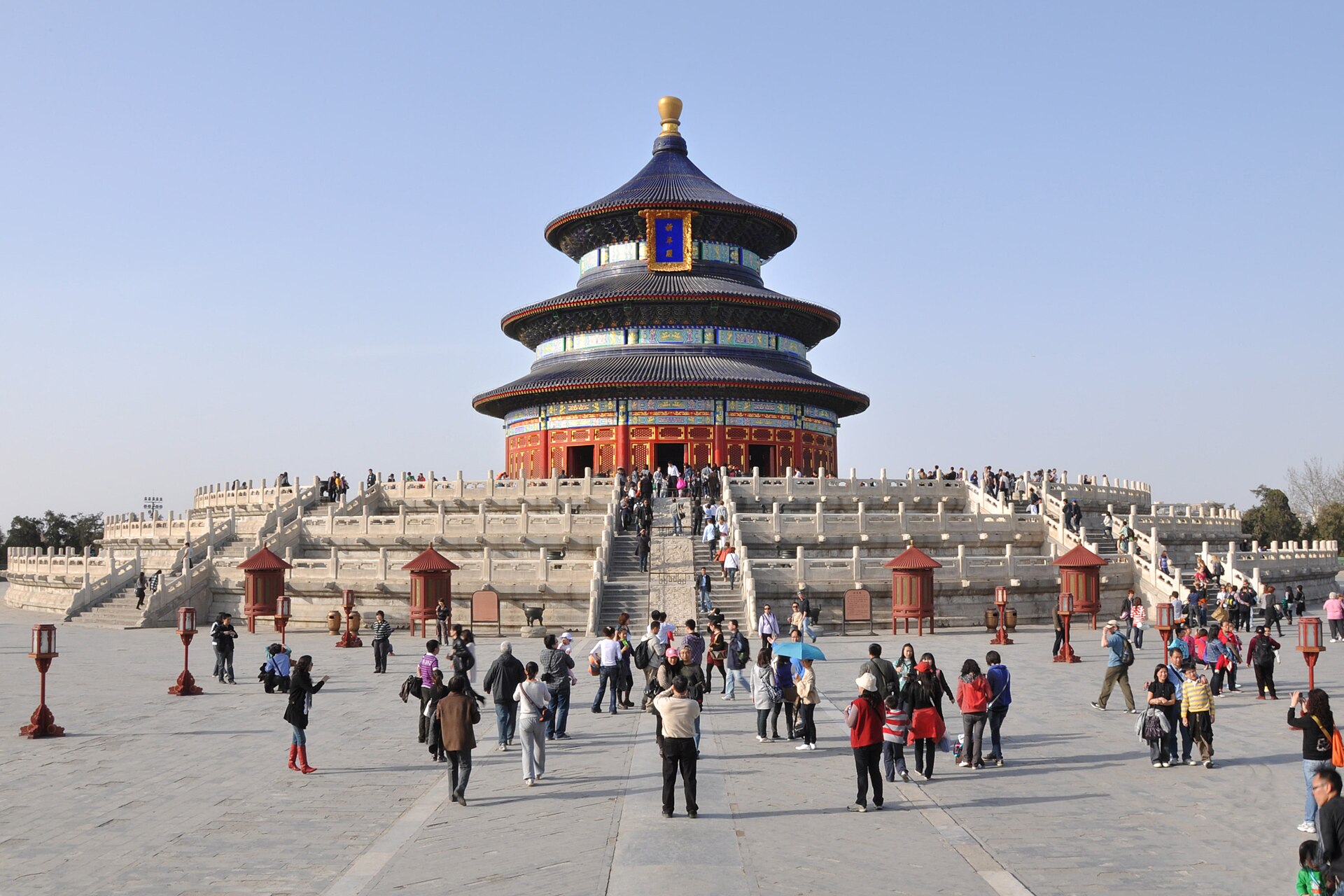
The iconic triple-eaved circular building stands on a three-tier marble terrace, where emperors prayed for the year's harvest. Best seen from the north approach across the court, it is the park's centrepiece and its most photographed structure.
The Echo Wall
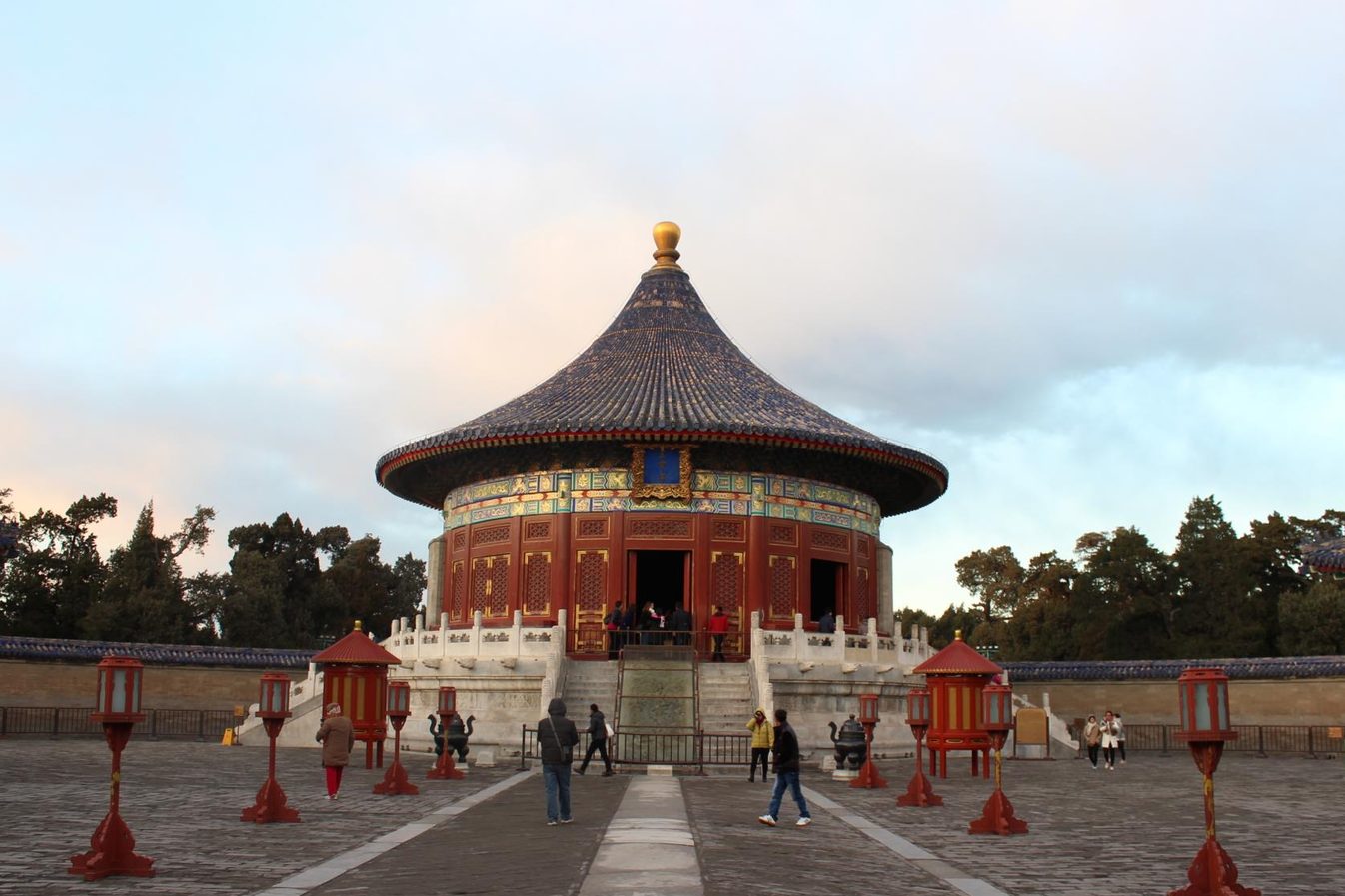
A circular wall around the Imperial Vault carries whispers from one side to the other, a quirky acoustic trick that delights visitors. It sits inside the through-ticket zone, so test it with a friend once you have paid.
Circular Mound Altar
An open three-tier marble platform is where the winter solstice rite was held, aligned to the heavens with no overhead beam to break the sightline. Stand at its centre and the design's logic becomes quietly clear.
The Morning Tai Chi Park
Outside the paid halls, the surrounding park fills at dawn with locals practising tai chi, sword forms and singing. It is free to watch and photograph, and for many visitors it is the most memorable part of the morning.
Photo Gallery
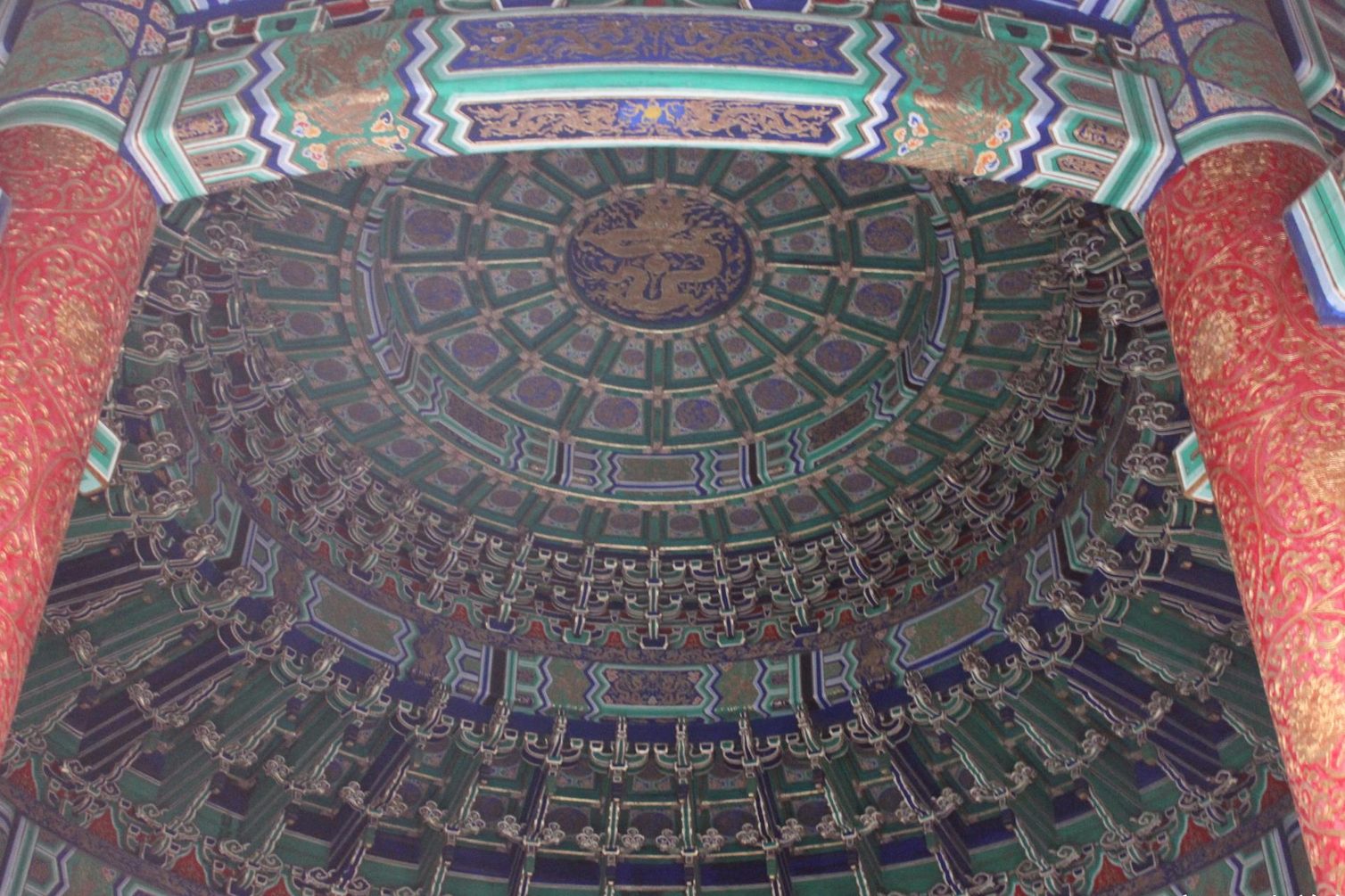
The Imperial Vault of Heaven, encircled by the Echo Wall, with ceremonial red lanterns lining the stone courtyard.The coffered ceiling inside the Hall of Prayer for Good Harvests, its dragon medallion set in concentric rings of painted beams.
A Ming Altar of Heaven
The Temple of Heaven was built between 1406 and 1420 under the Yongle emperor, the same ruler who raised the Forbidden City, as the site for the annual rites of heaven. It stood southeast of the city, matching the ritual geography of the capital's ceremonial axis with care. The emperor reached it via a raised, walled road that ordinary people were forbidden to use.
Each winter solstice the reigning emperor came in strict fasting and procession to pray for a good harvest, performing rites at the Circular Mound and the Hall of Prayer. Later Ming and Qing rulers rebuilt and refined the complex, prizing its blue-tiled symbolism of heaven above almost every other consideration of state. The blue tiles were reserved for heaven, a colour not used on the lesser altars of the state.
UNESCO listed the Temple of Heaven as a World Heritage Site in 1998, calling it a masterpiece of architectural cosmology. Today the park draws tourists to the halls and thousands of Beijingers who exercise, sing and play cards in its woods each morning at dawn, keeping an old public tradition alive. The surrounding park has been public since the early 1900s, long before the halls opened widely.
Suggested Route
1. East Gate entryEnter at Tiantan Dongmen (Line 5 Exit A) and walk west toward the Hall of Prayer.
2. Hall of PrayerVisit the triple-eaved hall and its terrace, the park's centrepiece and best photo stop.
3. Echo Wall vaultContinue to the Imperial Vault and test the whispering wall inside the through-ticket zone.
4. Circular Mound AltarWalk south to the open marble altar where the solstice rite was once held.
5. Loop back through the parkReturn via the cypress woods, catching locals at tai chi, and exit at the East Gate.
Mistakes to Avoid
Do not buy the park-only ticket if you want the halls — the through-ticket is cheaper overall.
Enter at the East Gate (Dongmen), not the far west gate, to save a long walk.
Go early for tai chi and light; the halls open only at 08:00, after the park.
Avoid the midday crowds at the Hall of Prayer; first and last hours are calmer.
Bring your passport — the real-name ticket is checked at the hall entrances.
The park uses real-name tickets online against your passport, and the halls need a valid ticket. Book a day ahead in peak season; on quiet mornings you can sometimes walk in, but the halls still require a paid ticket.
How much does it cost?
Park entry is about CNY 15; the through-ticket covering the Hall of Prayer, Echo Wall and Circular Mound is about CNY 34. Buying halls separately costs more, so take the through-ticket if you want to see everything.
How long does a visit take?
Two to three hours covers the main halls, the Echo Wall and a walk through the park. Add more if you linger over the morning tai chi and the cypress woods, which are at their liveliest soon after opening.
When is the best time to go?
Arrive at opening — 06:00 for the park, 08:00 for halls — in autumn for clear light and active tai chi. Avoid summer haze and the midday crush at the Hall of Prayer, when tour groups peak.
Is it worth visiting with the Forbidden City?
Yes. The Forbidden City shows imperial power enclosed; the Temple of Heaven shows imperial ritual under open sky. The two together make Beijing's ceremony and statecraft clear, and the comparison page draws the line between them.