Fragrant Hills Park (Xiangshan): Complete Visitor Guide
Beijing's autumn red-leaf mountain, with a cable car and the Azure Clouds Temple
Photo:
Beijing Municipal Government
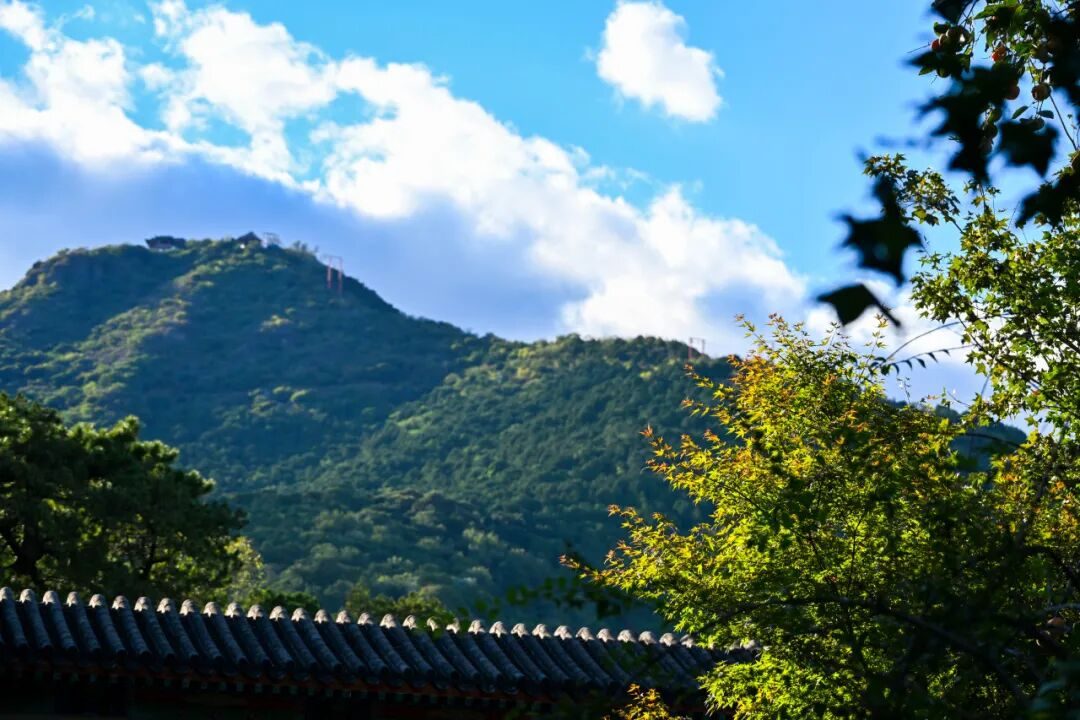
Fragrant Hills Park, known as Xiangshan, is the wooded mountain on Beijing's western edge where the city comes to watch autumn. From late October the hills turn red with smoke-tree and maple leaves, and crowds follow. Beyond the foliage there is a Ming temple, a Sun Yat-sen memorial and a cable car to the summit. This guide covers the tram-and-metro approach, the red-leaf season reality and how to spend a half day out west.
Quick Facts
Opening hours
06:00–19:00 (peak); confirm on the official WeChat account
Last entry
18:00 (peak); confirm on official account
Closed
Open daily
Suggested time
Half a day (3–4 hours)
Ticket price
Around CNY 10 off-season, CNY 15 at red-leaf peak; confirm
Best season
Late Oct–early Nov for red leaves
Booking
Recommended at peak — passport and online reservation
Entry point
Main East Gate, beside the Xijiao Line Xiangshan terminus
Do You Need to Book?
Fragrant Hills is a public park you can usually enter by buying a ticket at the gate, but during the red-leaf peak in late October and early November real-name, timed reservations are strongly recommended and sometimes required.
For most of the year, buy a ticket at the East Gate window or scan the on-site code; carry cash as readers can fail.
During red-leaf season, book on the park's official WeChat mini-program with your passport number for a timed slot.
Take the metro to Bagou (Line 10), then the Xijiao Line tram to its Xiangshan terminus by the gate.
Show your passport and e-ticket QR at the gate; signal in the hills is weak, so load it beforehand.
Arrive early — the tram and gate queues build fast on autumn weekends.
Getting There
🚇
By metro
Metro Line 10 to Bagou, then transfer to the Xijiao Line (a surface tram) to its Xiangshan terminus; the East Gate is a short walk from the stop.
🚕
By taxi
香山公园 东门 (east gate, terminus of the Xijiao tram line).
🚪
Entrances
Enter at the East Gate near the tram terminus; the park is large, so most visitors ride the cable car up and walk down, or vice versa.
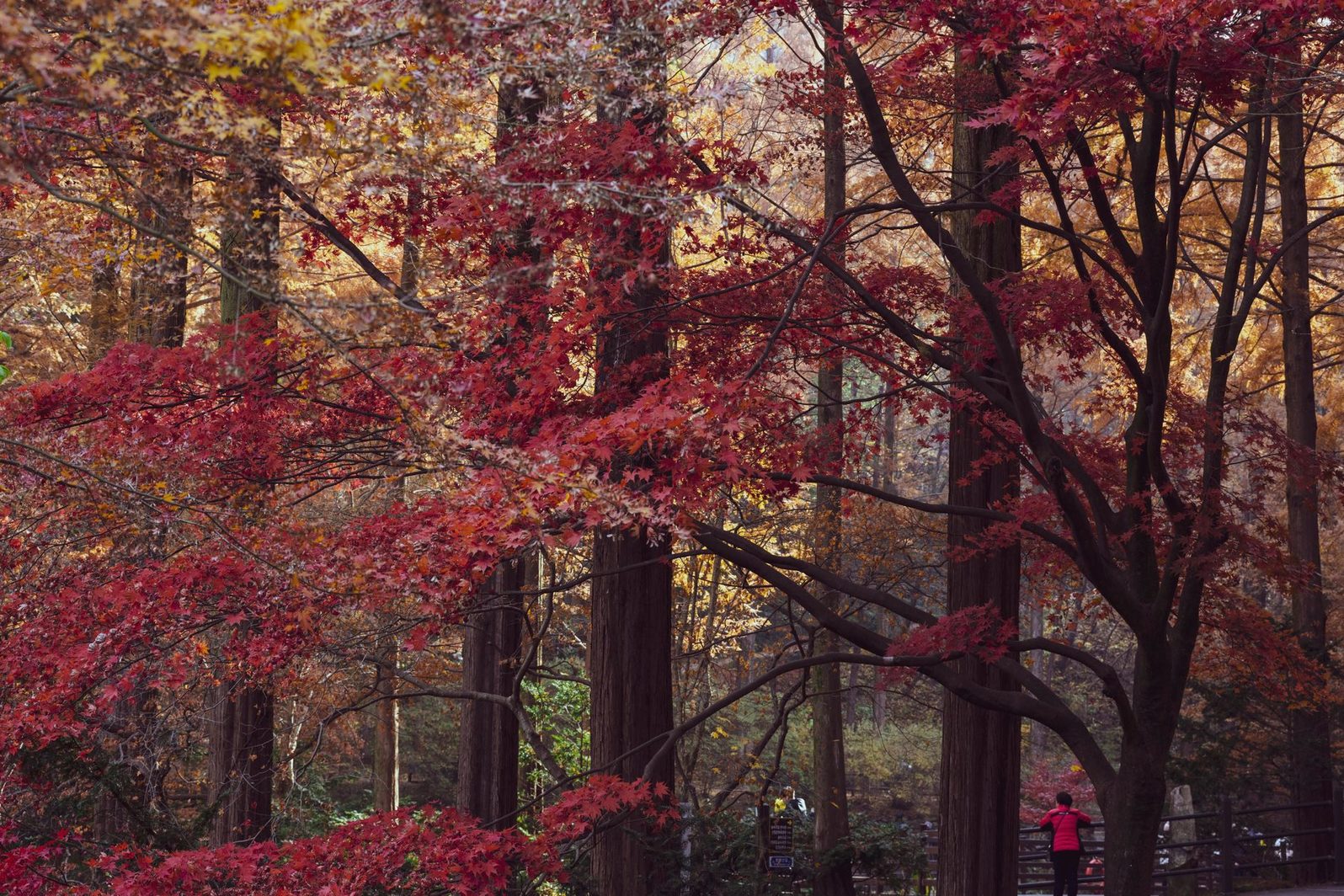
From late October to early November the smoke trees and maples blaze red across the slopes. It is Beijing's signature autumn spectacle, but the popular ridges get crowded; the higher trails stay quieter and the colour lasts longer.
Fragrant Hills Cable Car
A gondola runs from near the East Gate up toward the summit area, sparing the steepest climb. It is a calm way to reach the viewpoints and is especially welcome with children or in cold weather.
Biyun Temple (Azure Clouds)
A serene Ming-era temple complex partway up the hill, with layered courtyards, a white marble pagoda and the Sun Yat-sen Memorial Hall. It is quieter than the red-leaf throngs and worth the detour.
Shuangqing Villa
A modest hillside retreat where Mao Zedong stayed in 1949. The gardens, springs and Revolutionary-era exhibits make it a calm, historically layered stop above the main tourist paths.
Photo Gallery
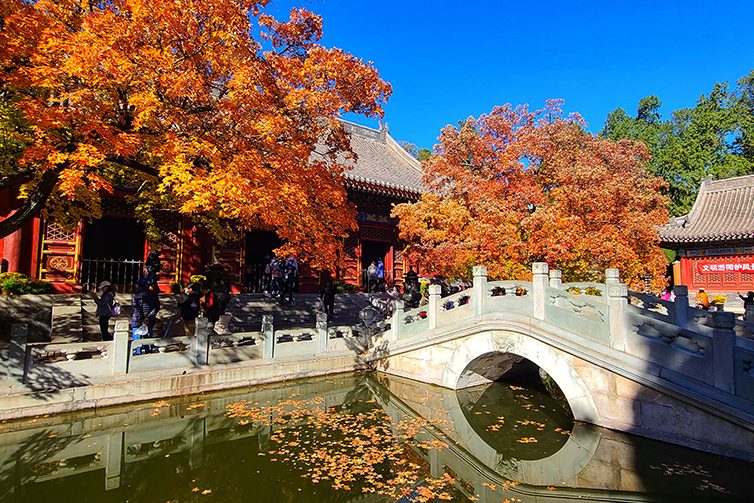
A stone bridge and pavilion mirrored in the pond at Fragrant Hills in autumnVivid red and orange maples on the forested slopes of Fragrant Hills in late October
A Royal Hunt Ground Turned Public Park
Fragrant Hills was developed as an imperial retreat as early as the Jin dynasty and flourished under the Yuan and Ming, when temples and pavilions were built among the woods. The Qing emperor Qianlong expanded it into a formal mountain resort, naming it Jingyi Garden and using it for hunts and seasonal escape from the heat of the city.
The gardens suffered repeated damage — sacked by foreign forces in the 1860s and again in the upheavals of the early 20th century — before being rebuilt and opened to the public in the Republican period. In 1949 Shuangqing Villa briefly served as Mao Zedong's residence as the new government took shape in Beijing.
Today Fragrant Hills is a large municipal park and forest reserve on the city's western hills. Its red-leaf season draws hundreds of thousands each autumn, yet the upper trails and the Biyun Temple remain comparatively calm, and the site is prized as one of Beijing's best escapes into real woodland.
Suggested Route
1. East Gate from the tramArrive via the Xijiao Line terminus and enter the East Gate. Buy your ticket early; the tram and gate queues build by mid-morning on autumn weekends.
2. Biyun Temple detourClimb gently to the Azure Clouds Temple first, while it is cool and quiet. The white pagoda and memorial hall reward an early start before the red-leaf crowds arrive.
3. Cable car to the ridgeRide the gondola toward the upper slopes for the broadest foliage views. Step off and walk the higher trails, which stay red longer and emptier than the lower ridge.
4. Shuangqing VillaDrop down to the hillside villa and gardens for a calm, historic pause above the busy paths before heading back toward the gate.
5. Exit and tram backReturn to the East Gate and take the Xijiao Line back to Bagou, or walk down to the Beijing Botanical Garden next door for the afternoon.
Mistakes to Avoid
Do not visit on a red-leaf weekend without a timed booking; entry can be capped.
Take the Xijiao tram, not a taxi — hillside roads jam completely in autumn.
Avoid the lower ridge at midday; the colour and light are better higher up.
Bring cash; the gate reader often rejects foreign cards and there are no ATMs.
Do not expect solitude in late October — go early or on a weekday.
For most of the year, no — buy at the gate. During the late-October to early-November red-leaf peak, real-name timed reservations are recommended and sometimes required, so book on the official WeChat mini-program with your passport if you travel then.
How much does it cost?
Around CNY 10 off-season and roughly CNY 15 at the red-leaf peak, though confirm the current figure on the park's official account before you go. The cable car is a separate charge paid inside the park.
How long should I spend there?
Allow half a day — three to four hours — to ride the cable car, see Biyun Temple and walk a ridge. Add the Beijing Botanical Garden next door and you have a full western-outskirts day.
When is the best time to go?
Late October to early November for the red leaves, but expect crowds; weekdays and early starts are essential then. For quiet woodland, spring and summer weekdays are far pleasanter and the tram is empty.
How do I actually get there?
Take Metro Line 10 to Bagou and change to the Xijiao Line tram to its Xiangshan terminus by the East Gate. Driving is not advised in autumn, when the hillside roads gridlock and parking is scarce.