
Original Ming masonry
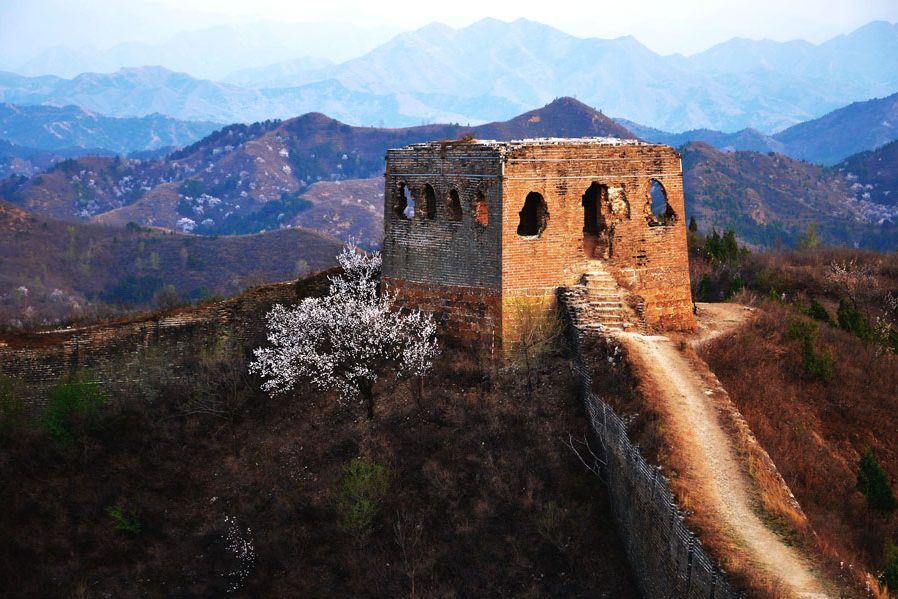
Unlike restored sections, Gubeikou keeps its original 16th-century brickwork — weathered, tilted and overgrown, but the real thing rather than a modern rebuild.
The quiet, unrestored Wall where the Jinshanling–Simatai ridge walk begins
Gubeikou is the Great Wall for hikers who want original, unrestored masonry rather than a rebuilt ramp. Its ridges are wild, its watchtowers are weathered, and it forms the western anchor of the celebrated Gubeikou–Jinshanling–Simatai ridge walk. This guide covers the 980 bus and Miyun transfer, the lack of ticketed facilities, passport considerations, and how to link the multi-section hike.
Gubeikou has no formal ticket office, so there is nothing to book — you simply arrive and walk the ridge. That freedom is the appeal, but it also means no facilities, no staff and no passport check at the wall itself.
Take Metro Line 15 to Wangjing West, then the 980 Express bus to Miyun. From Miyun take a local bus or taxi to Gubeikou village, the access point for the western ridge.
Show the driver 古北口长城 (Gubeikou Great Wall) or 古北口村 (Gubeikou village). Taxis know the village, not the exact ridge path.
There is no formal gate. Enter on foot from Gubeikou village and climb to the ridge; the walk east links toward Jinshanling and eventually Simatai.
Unlike restored sections, Gubeikou keeps its original 16th-century brickwork — weathered, tilted and overgrown, but the real thing rather than a modern rebuild.
The Gubeikou stretch once held 24 watchtowers; many still stand as roofless shells with arrow slits, giving a stark, photogenic sense of the Wall's scale.
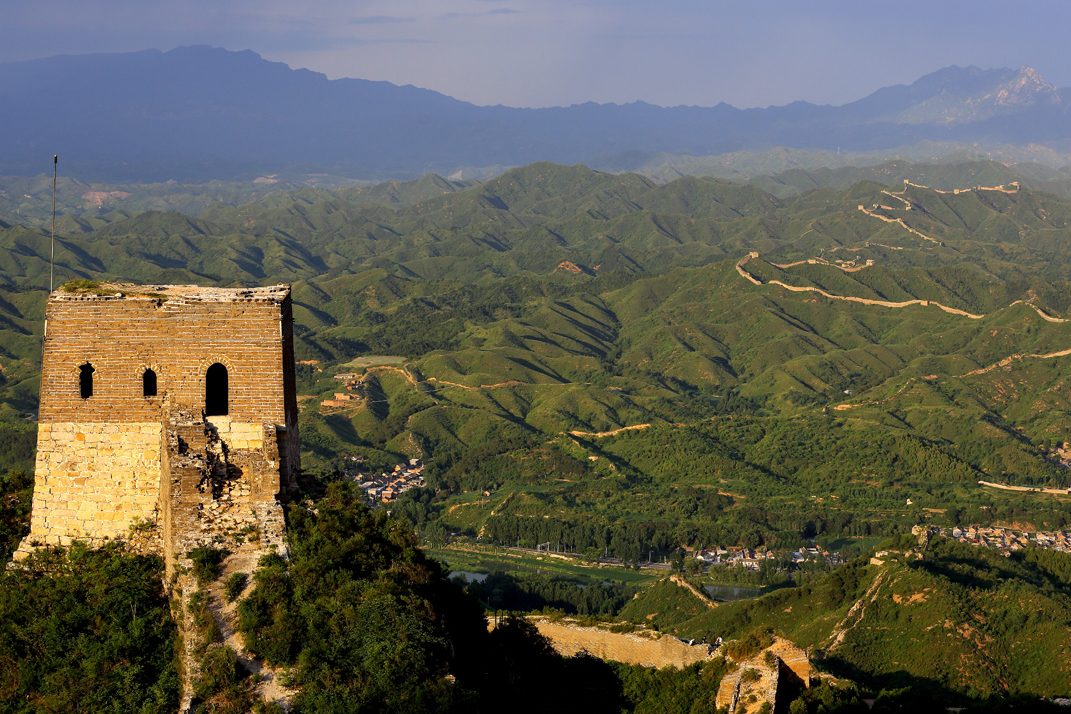
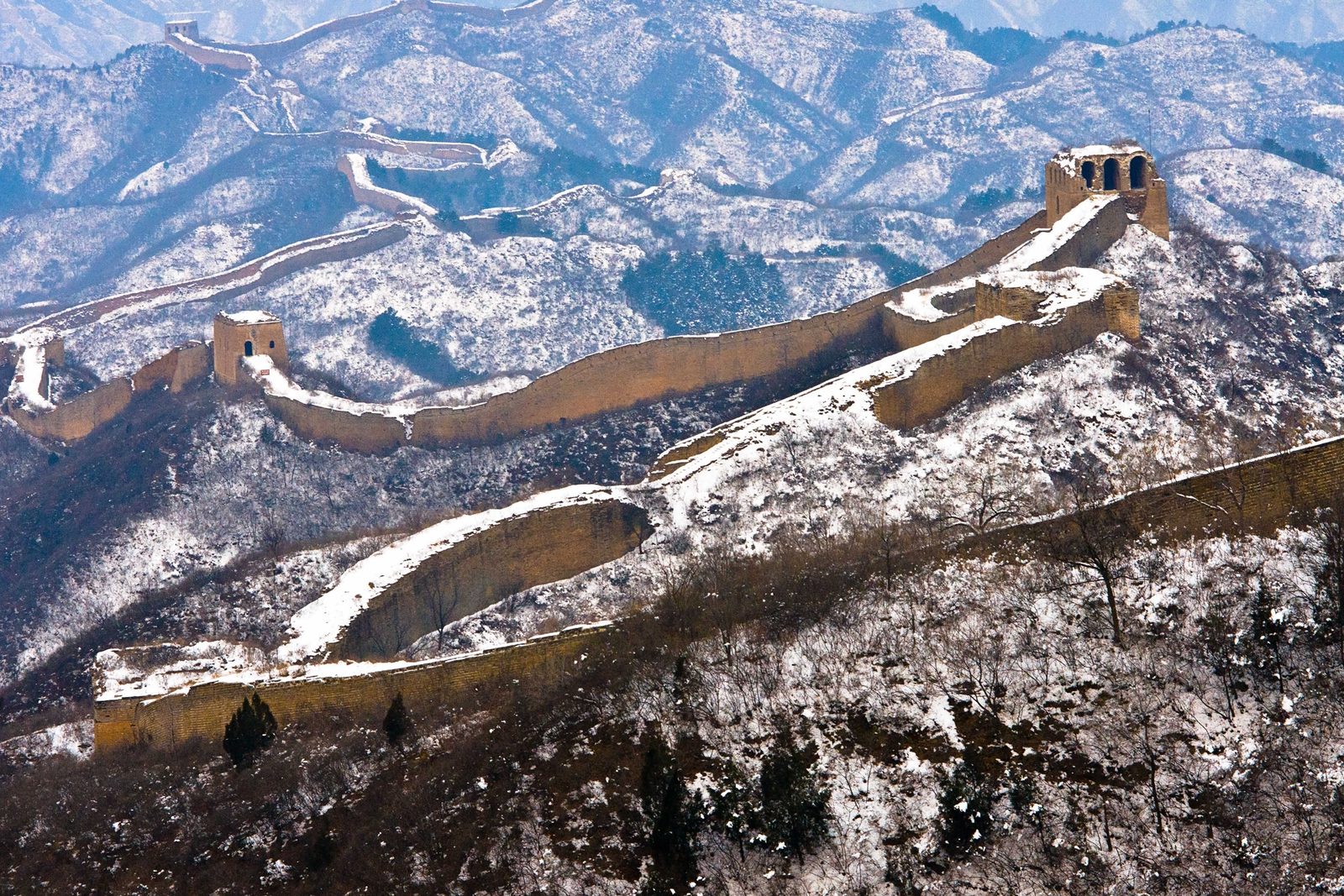
The ridge splits around two hills nicknamed Coiled Dragon and Crouching Tiger, with strategic passes that guarded the old road north to Mongolia.
From Gubeikou you can walk east toward Jinshanling and on to Simatai, the start of the finest multi-day Wall traverse near Beijing.
Gubeikou guarded one of the oldest invasion routes between the North China plain and the Mongolian steppe, with Wall-building recorded here as far back as the Northern Qi dynasty. The present Ming wall was raised in the 15th–16th centuries to seal this strategic pass.
Because the pass stayed militarily relevant into the republican era, parts were fought over and left unrepaired, which is why Gubeikou survives as wild Wall today. It was never turned into a ticketed scenic zone, unlike Badaling or Mutianyu.
Today Gubeikou is valued precisely for what it lacks — no crowds, no railings, no rebuild. Its ridge forms the western anchor of the Gubeikou–Jinshanling–Simatai traverse, a hike serious Wall walkers rate among the best in China.
No. Gubeikou has no ticket office, gate or passport check, so there is nothing to book — you simply walk up from the village. Carry ID for the bus and hotels, and book Jinshanling or Simatai separately if you plan to cross into them.
It is effectively free, with no admission charge. Your only costs are transport — the 980 bus to Miyun and a local transfer — and any food or water you carry, since nothing is sold on the ridge.
A half day covers the western ridge from the village; a full day if you walk toward Jinshanling. The 980 bus and Miyun transfer add about 2.5 hours each way, so begin early.
Spring through autumn gives safe, dry footing and clear ridge views. Avoid winter ice and summer storms, when the unrestored stone is treacherous and there is no shelter or rescue on the wall.
Only if you are a confident hiker. Unlike Badaling or Mutianyu, Gubeikou is wild, unrailed and unsupported. Choose a restored section for an easy first visit, and save Gubeikou for a fit, prepared day.