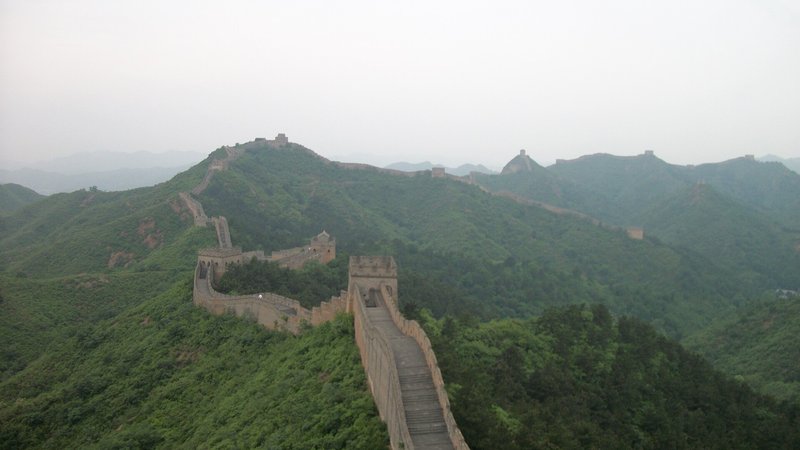
The dense watchtower cluster
Jinshanling packs more than 60 watchtowers and enemy towers into its open stretch, many with original Ming brickwork and arrow-slit windows you can still step through.
The half-restored Wall where a serious ridge hike to Simatai begins
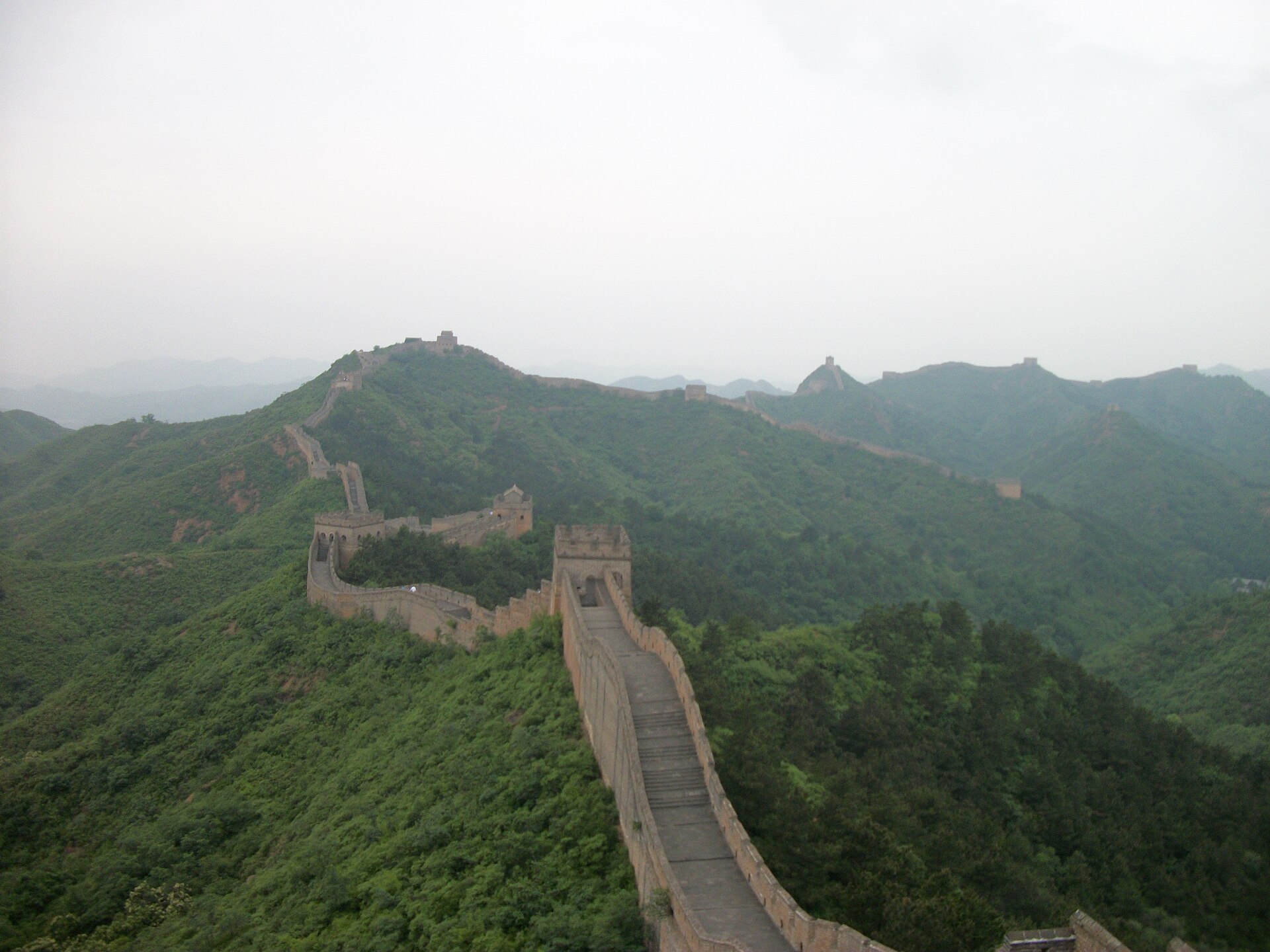
Jinshanling is the Great Wall for people who want to walk a real ridge rather than pose on a restored ramp. About half of its stretch is rebuilt and half left wild, and the eastern end flows into the legendary Jinshanling–Simatai hike. This guide covers the 980 bus and Miyun transfer, the cable car, passport booking, and how to connect the ridge walk to Simatai.
Jinshanling sells real-name tickets tied to your passport through its official WeChat mini-program. Book before you travel, especially if you plan to continue the ridge hike toward Simatai, which needs its own Gubei Water Town reservation.
Take Metro Line 15 to Wangjing West, then the 980 Express bus to Miyun. From Miyun transfer to a local bus or taxi for the final 30–40 minutes to the Jinshanling entrance.
Show the driver 金山岭长城 (Jinshanling Great Wall). From Miyun a taxi to the gate is a negotiable flat fare.
Enter at the west (restored) gate. Walk east along the ridge toward Simatai; the east exit links to Gubei Water Town if you have that booking.
Jinshanling packs more than 60 watchtowers and enemy towers into its open stretch, many with original Ming brickwork and arrow-slit windows you can still step through.
The western half is rebuilt and easy to walk, giving a safe taste of the Wall with sweeping valley views and the photo-friendly General's Tower.
East of the restored section the Wall turns genuinely wild — tilted slabs, overgrown steps and no railings. This is the heart of the Jinshanling–Simatai hike.
The eastern end meets Simatai across a gully. With a Gubei Water Town booking you can continue; without it, turn back at the boundary.
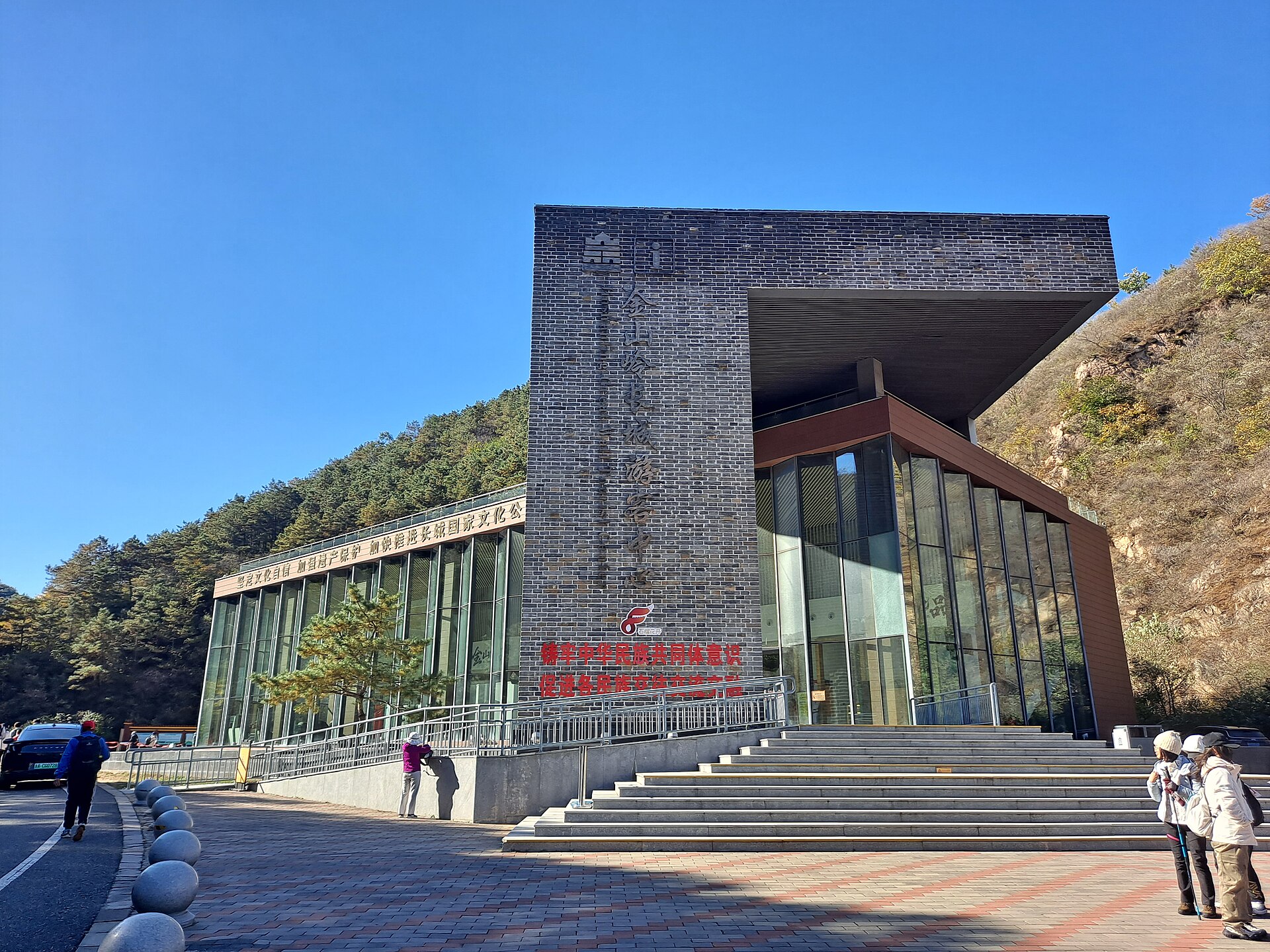
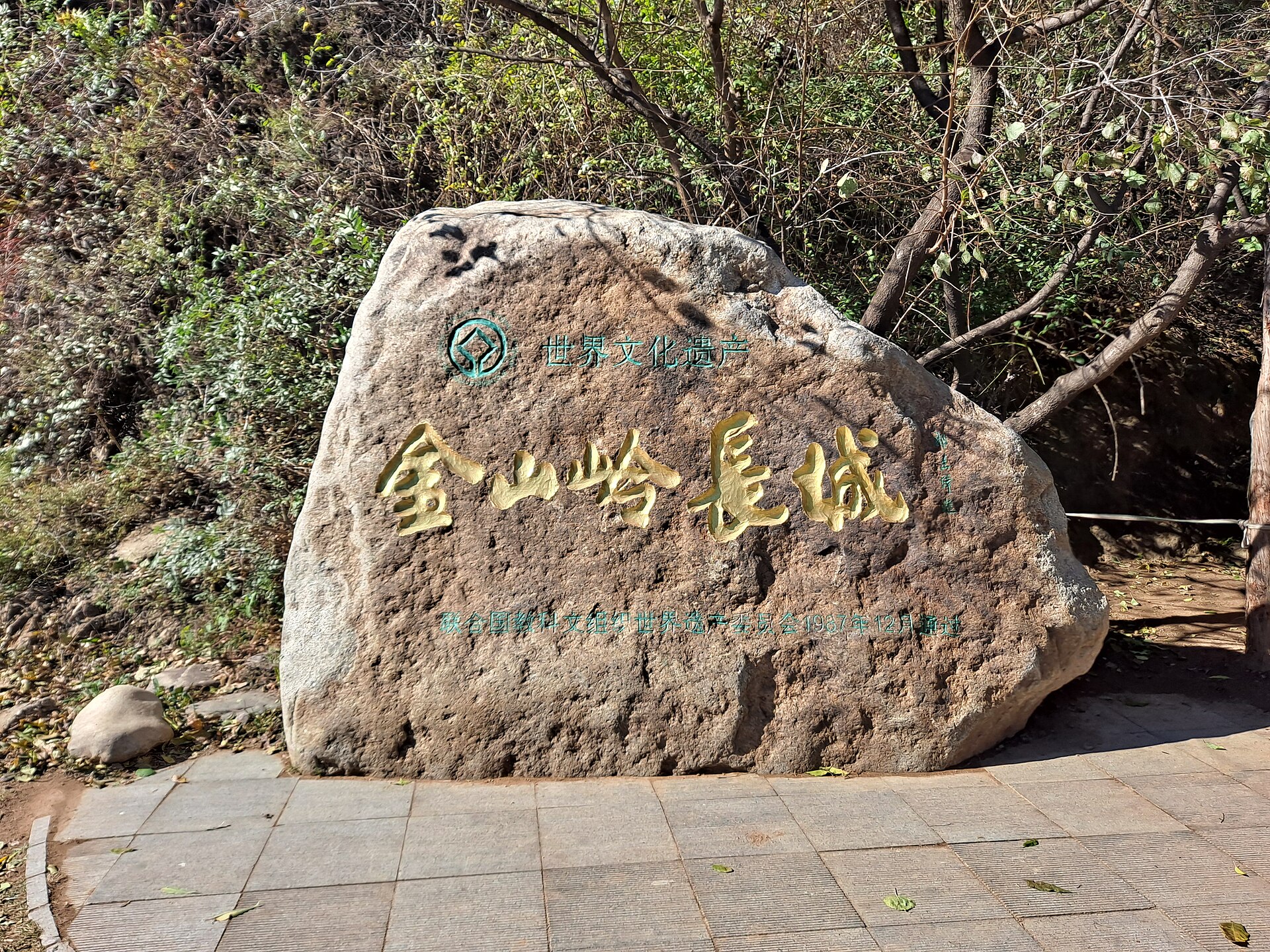
Jinshanling was built in the 1560s under the Ming general Qi Jiguang, who strengthened the northern line with closely spaced watchtowers and a double-wall system. Its name means golden mountain ridge, after the hills it crowns.
After the Ming fell in 1644 the section was abandoned and weathered for centuries, which is why so much of it remains unreconstructed. Only the western portion was restored in the late 20th century, leaving the east as one of the best wild-Wall hikes near Beijing.
Today Jinshanling is prized by hikers for its mix of intact and ruined wall across roughly 10 kilometres. It is the starting point of the celebrated Jinshanling–Simatai traverse, widely considered the finest day hike on the whole Great Wall.
Yes. Tickets are real-name and tied to your passport, booked on the official WeChat mini-program. If you plan to hike on to Simatai, you must also book Gubei Water Town separately, as the Simatai end cannot be entered without it.
Entry is around CNY 65, with the cable car extra. Confirm the current figure on the official account before you go, as prices shift by season and the cable car is sometimes sold separately.
A half day covers the restored west ridge; allow a full day if you hike the wild east section or continue toward Simatai. The 980 bus and Miyun transfer add about 2.5 hours each way.
Autumn (September–October) and spring offer the best hiking weather and clearest views. Avoid summer heat and winter ice, when the wild ridge is slippery and the cable car may close.
Yes — the ridge walk east is one of the best Wall hikes in China. You must hold a Gubei Water Town reservation to cross into Simatai, and the full traverse takes most of a day.