
The Cherry Blossom Avenue
Roughly 2,000 cherry trees line the paths and burst pale pink in late March to mid April. This is the park's reason to exist and the single busiest fortnight of its year.
Beijing's cherry-blossom park: a lakeside loop, pedal boats and a pale-pink spring crowd
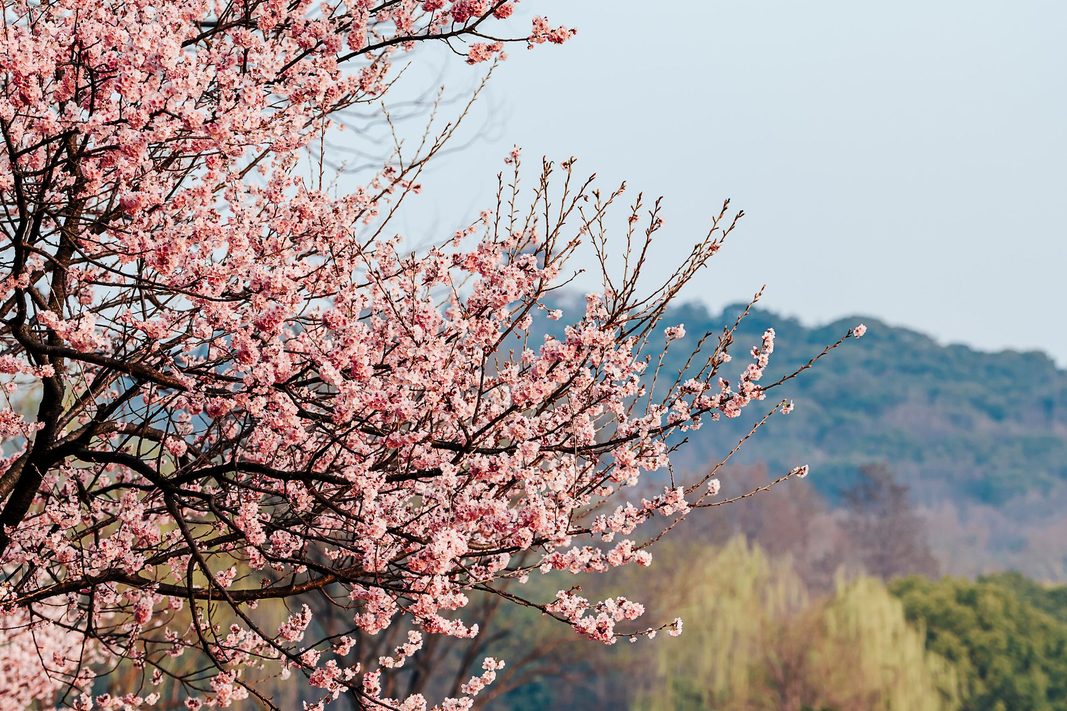
Yuyuantan Park is a large lakeside park in west Beijing whose entire reputation rests on two weeks of cherry blossom in late March and early April. Outside that window it is a calm place to walk, boat and watch the city. This guide covers the festival, the boating, and how to reach the park from the nearby Military Museum metro. The park also sits beside the central TV tower, giving an unusual close-up of that landmark.
Yuyuantan is a public park with no advance booking. You buy a small gate ticket, and in cherry-blossom season that ticket rises to around CNY 10. Bring your passport as ID, though the check is light.
Line 1 to Military Museum (Junshi Bowuguan), Exit A, then a 10-minute walk west to the east gate. Line 9 also serves Military Museum.
Show the driver 玉渊潭公园 东门 (the east gate).
Use the east gate near Military Museum for the blossom avenue, or the south gate by the TV tower for the lake. Both are open.
Roughly 2,000 cherry trees line the paths and burst pale pink in late March to mid April. This is the park's reason to exist and the single busiest fortnight of its year.
A large central lake offers pedal and electric boats from spring to autumn. Circling the water at your own pace is the park's best non-blossom activity, and it is cheap.
A small pier on the lake's edge, originally a naval mooring, now a quiet photo spot with reflections of the TV tower. It is the calmest corner away from the blossoms.
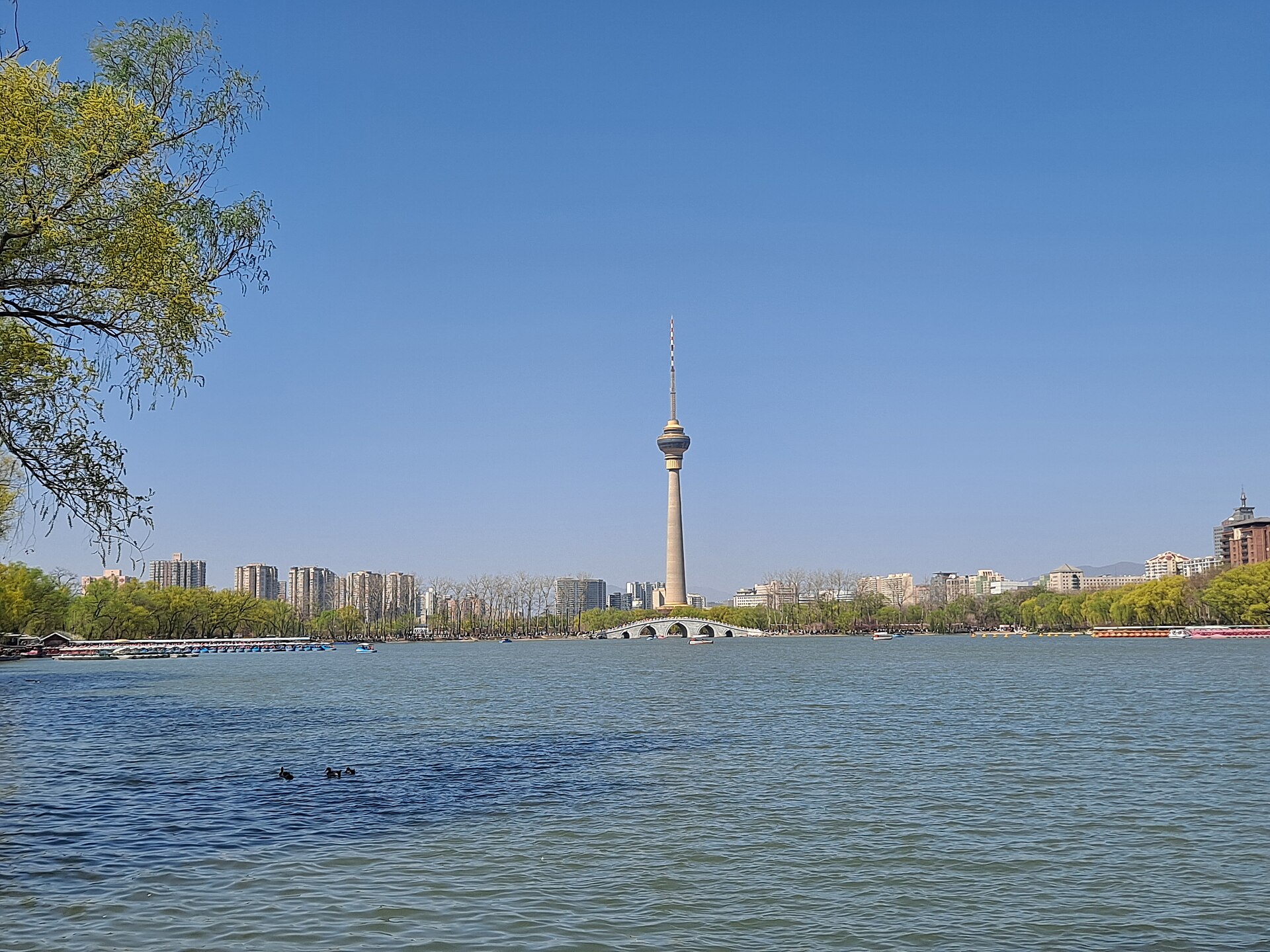
The central TV tower (中央电视塔) rises just outside the park, and the east path gives an unusual close-up of its needle. Pair the view with a lakeside coffee, or climb the tower for the wider city panorama.
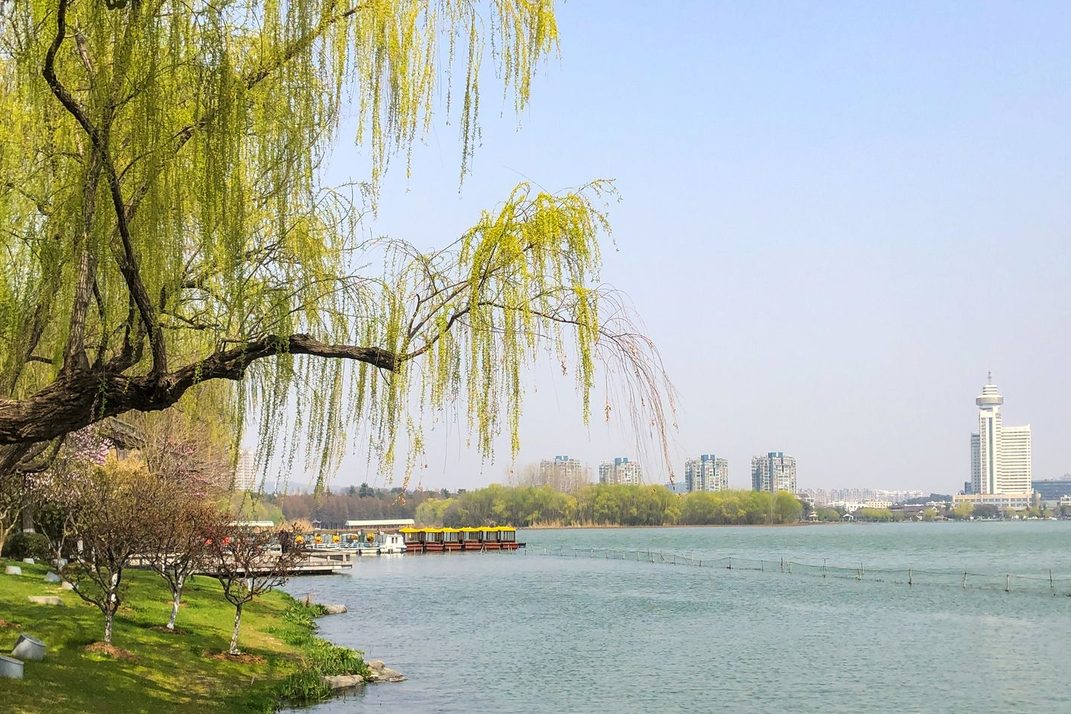
Yuyuantan began as a natural lake and flood-basin west of the old city, dammed and shaped over centuries for irrigation and flood control. After 1949 it was turned into a public park, and the surrounding wetlands were tamed into the lawns and paths visitors walk today. The name means 'Jade Abyss Lake', a nod to the water's depth and clarity.
Cherry trees were first planted here in quantity in the 1970s and 1980s, gifted in part from Japan, and the blossom festival grew into one of Beijing's best-known spring events. The nearby Military Museum and TV tower rose in the same decades, reshaping the shore. By the 2000s the festival drew hundreds of thousands of visitors across its two-week peak.
Today the park covers around 140 hectares, most of it water and riverside path. It stays busy for the blossom fortnight and quiet the rest of the year. The TV tower just outside remains its most photogenic neighbour, and the central lake keeps boating lively through summer. The blossom festival now fills two weeks of early April with visitors from across the city. Expect a gentle, local, thoroughly un-monumental Beijing experience.
No. It is a public park with walk-in gate tickets and no advance booking. In blossom season you simply pay the higher seasonal price at the gate. Bring your passport as ID, though the check is usually light.
The base ticket is around CNY 2, rising to about CNY 10 during the cherry-blossom festival in late March and April. Boating is extra, paid at the lakeside kiosk. Confirm the current price on the park's noticeboard.
Allow 1.5 to 2 hours: an hour for the cherry avenue in bloom and the rest for the lakeside walk and a boat. Outside blossom season an hour is plenty for a gentle stroll, and the evening light is worth staying for.
Late March to mid-April for the blossom, ideally on a weekday morning before 09:00. The rest of the year is calm; autumn gives good lake light and few crowds. Summer evenings are pleasant and uncrowded, so they suit a relaxed walk.
Only for the blossom — that two-week window is genuinely lovely and very local. Outside it, it is a pleasant but ordinary lakeside park. Pair it with the Capital Museum next door rather than making a special trip.