A pocket imperial altar west of Tian'anmen, famous for peonies and tulips
Photo:
Beijing Municipal Government
Zhongshan Park is a small, calm imperial altar-turned-public-park just west of Tian'anmen Square, behind the walls enclosing the Forbidden City. It began as the Ming-Qing Altar of Land and Grain, the ritual heart of state sacrifice. Today it is best loved for spring peonies and tulips and its ancient cypresses. This guide covers the cheap ticket, the altar's layout, the flower seasons and how to pair it with a Tian'anmen–Forbidden City day.
Around CNY 3–5; confirm on the official WeChat account
Best season
Late April for peonies; spring for tulips
Booking
Not required — walk in (passport ID may be checked)
Entry point
West Gate (near Tian'anmen) and a gate from the Forbidden City
Do You Need to Book?
Zhongshan Park is a municipal park with no advance booking for foreign visitors. You buy a cheap ticket at the gate and walk in, though a passport check can apply on busy national-holiday days when nearby Tian'anmen is at its busiest.
Walk to the West Gate near Tian'anmen or the connecting gate from the Forbidden City's western wall.
Pay the small ticket fee at the window or scan the on-site code; foreign cards are often rejected, so carry cash.
Show your passport if staff request ID — real-name entry is occasionally enforced on peak days.
Enter and follow the central path to the Altar of Land and Grain.
Getting There
🚇
By metro
Metro Line 1 to Tian'anmen West (Exit B), then a short walk; the park's West Gate sits just inside the red wall west of the square.
🚕
By taxi
中山公园 西门 (west gate, west of Tian'anmen Square).
🚪
Entrances
Enter at the West Gate near Tian'anmen or the gate linking from the Forbidden City; the park is compact, so you naturally loop back to your entry.
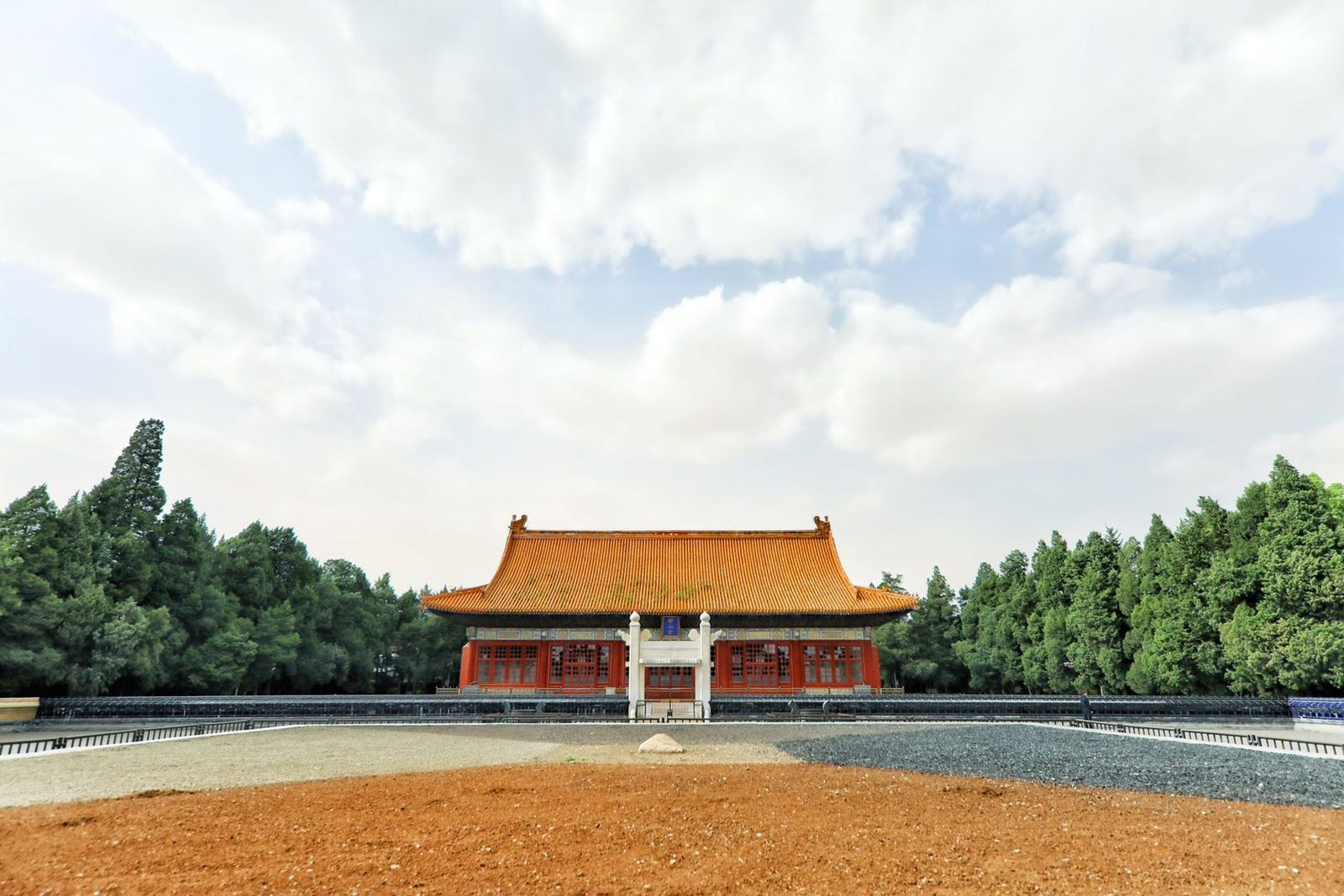
The park's core is a square marble terrace where Ming and Qing emperors sacrificed to the soil and harvest. Its five-colour earth and open design are unique among Beijing's imperial altars and remain strikingly intact.
The Peony Garden
A celebrated collection of tree and herbaceous peonies blooms in late April, alongside later peonies into May. The beds are among the finest in the city and draw serious flower photographers each spring.
Tulip Displays
Thousands of tulips are massed in the central beds each spring, a colourful contrast to the sombre altars. The displays are at their best in April and are free to view with park entry.
Ancient Cypress Grove
Centuries-old cypresses shade the paths, several planted in the Liao and Yuan periods. The oldest, the 'Liao Cypress', is estimated at around 1,000 years and gives the small park real weight.
Photo Gallery
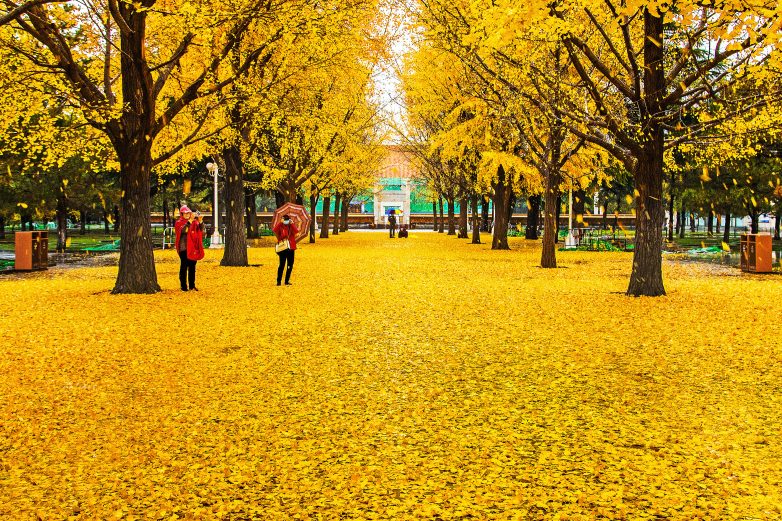
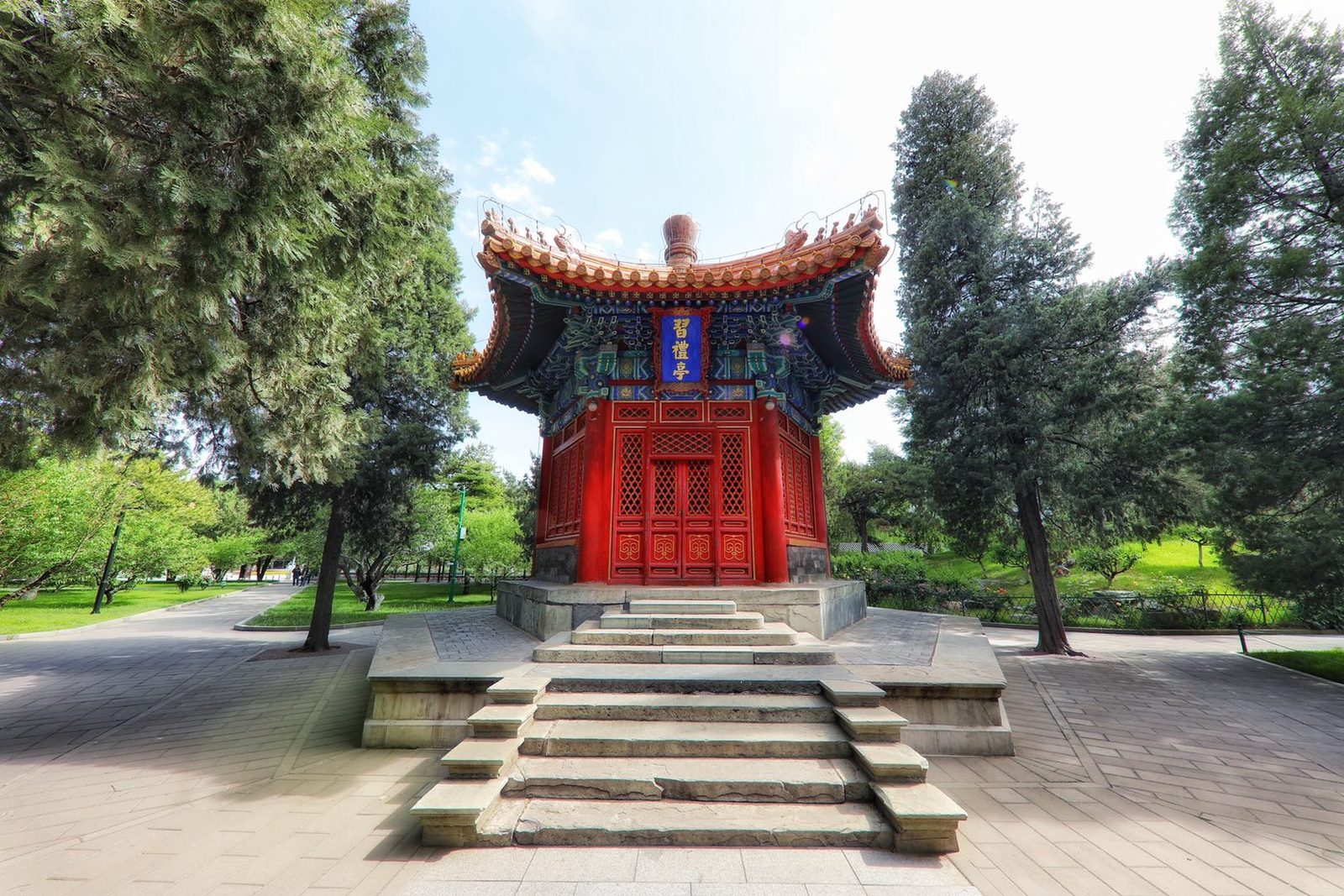
The ginkgo avenue at Zhongshan Park carpeted in fallen golden leaves in late autumnThe Xili Pavilion, a Qing-dynasty ceremonial pavilion standing among ancient cypresses in Zhongshan Park
From State Altar to Public Park
The site was laid out in 1421 as the Altar of Land and Grain (Shejitan) when the Ming emperor Yongle established the capital in Beijing. Twice a year the emperor came here to sacrifice for good harvests, making it, with the Temple of Heaven, one of the two ritual poles of imperial rule.
The altar stayed in use through the Qing until 1911, after which the grounds were reorganised as a public park in 1914 and named Zhongshan in honour of Sun Yat-sen following his death in 1925. It briefly served as a gathering ground for the press and intellectual circles, earning its old 'Press Park' nickname.
Today the park is a protected historic site and a rare quiet green wedge between Tian'anmen Square and the Forbidden City. Its altar, ancient trees and seasonal flower beds draw both worshippers at the nearby temples and travellers escaping the square's open crowds for a few calm minutes.
Suggested Route
1. West Gate entryEnter near Tian'anmen and buy your cheap ticket. The park is small, so orient straight to the central altar rather than wandering the outer paths first.
2. Altar of Land and GrainStand on the marble terrace and read the five-colour earth scheme. This is the park's ritual core and the quickest lesson in imperial state sacrifice.
3. Peony and tulip bedsMove to the flower beds, best in April. Even outside bloom season the layout and old trees make a pleasant, quick loop.
4. Cypress grove walkStroll the shaded paths among the ancient cypresses, finishing at the Liao Cypress. This is where the park feels oldest and quietest.
5. Exit to the Forbidden CityLeave by the connecting gate into the Forbidden City's west side, or back to Tian'anmen — both make a natural half-day pairing.
Mistakes to Avoid
Do not visit the flower beds off-season expecting colour; peonies peak in late April.
Bring cash; the gate reader often rejects foreign cards at this small park.
Avoid midday on national holidays; Tian'anmen crowds spill in.
Do not skip the altar — the flowers are only half the story.
Enter via Tian'anmen only if the square reservation allows it.
No. It is a municipal park with no advance booking; buy a cheap ticket at the gate and walk in. Carry your passport, as a real-name check can apply on busy national-holiday days when nearby Tian'anmen is at its busiest.
How much does it cost?
Only a few yuan — around CNY 3 to 5, though confirm the current figure on the park's official account before you go. There is no separate charge for the flower beds, which are included with entry.
How long should I spend there?
One to ninety minutes is enough for the altar, the flower beds and a cypress stroll. Most visitors fold it into a Tian'anmen and Forbidden City day rather than treating it as a standalone destination.
When is the best time to visit?
Late April for the peonies and spring for the tulips are the clear peaks, with the beds at their best. For calm, go early on a weekday; the park is pleasant year-round but quietest outside bloom season.
Can I combine it with the Forbidden City?
Easily. The park links directly to the Forbidden City's western wall, and it sits a short walk from Tian'anmen Square. Enter Zhongshan first for flowers, then pass through to the palace, or vice versa — both share the same red-wall quarter.