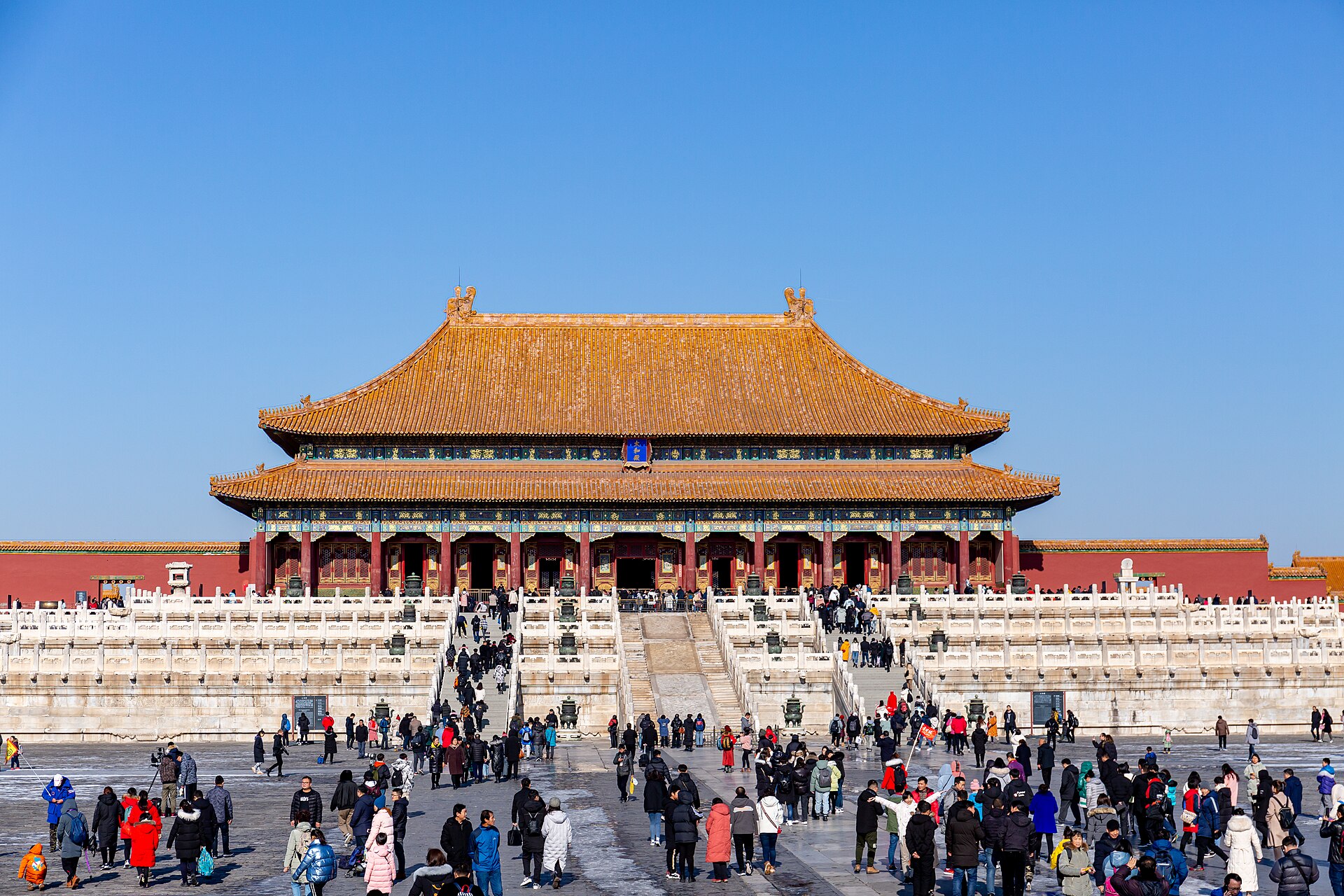
Hall of Supreme Harmony
The largest and most ceremonial building in the palace, raised on a three-tier marble terrace. This is where emperors were enthroned and where the grandest state rituals took place.
600 years of imperial China, roughly 9,000 rooms, one unforgettable afternoon
The Forbidden City — officially the Palace Museum — is the largest surviving imperial palace complex in the world and the single most important sight in Beijing. For nearly 500 years it was the walled home and seat of government of 24 emperors, and today it holds over a million treasures inside 980 buildings. This guide covers everything a foreign visitor needs: how to book with a passport, what it really costs, when to go, and the one-way route that saves you both time and steps.
Foreign visitors cannot simply queue at the gate. Tickets are sold online in advance and are tied to your passport number, so book before you fly — especially in peak season, when the daily quota sells out within minutes.
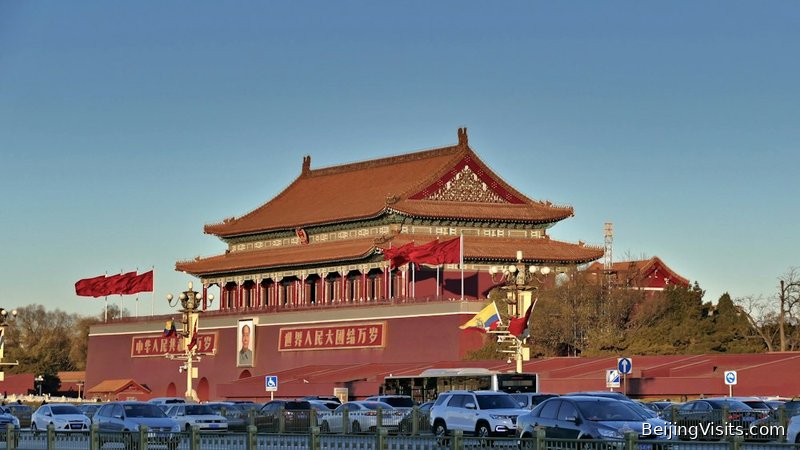
Metro Line 1 to Tian'anmen East (Exit B) or Tian'anmen West (Exit B), then a 10–15 minute walk north through the Tian'anmen area to the Meridian Gate.
Show the driver 故宫博物院 午门 (the south entrance). Do not ask for the 'exit' side — the complex is one-way and the north gate only lets people out.
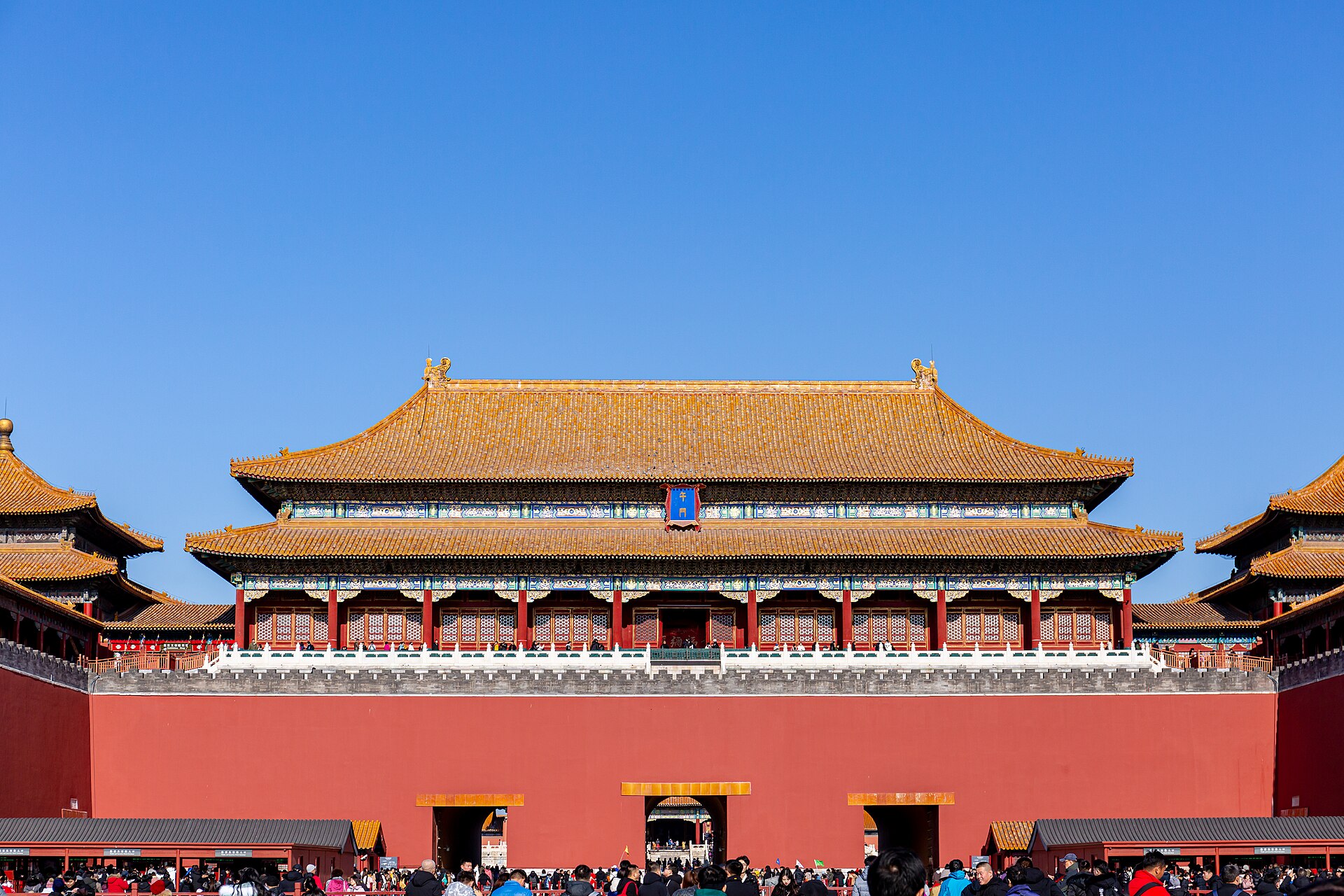
Enter at the Meridian Gate in the south, exit at the Gate of Divine Prowess (Shenwumen) in the north. Walking back south afterwards is not possible inside the walls.
The largest and most ceremonial building in the palace, raised on a three-tier marble terrace. This is where emperors were enthroned and where the grandest state rituals took place.
North of the three main halls, the Qianlong Garden area and the glazed Nine-Dragon Screen reward anyone who walks past the mid-point instead of turning back.
A separate small ticket unlocks imperial jewellery, gold vessels and ceremonial regalia. It is the single best upgrade inside the complex.
Hundreds of mechanical clocks, many gifts from European courts — an unexpected and genuinely charming collection.
Construction ran from 1406 to 1420 under the Ming emperor Yongle, using timber floated down from the south-west and stone hauled in on winter ice roads. For the next five centuries it served as the residence and administrative heart of the Ming and then the Qing dynasties — 24 emperors in total.
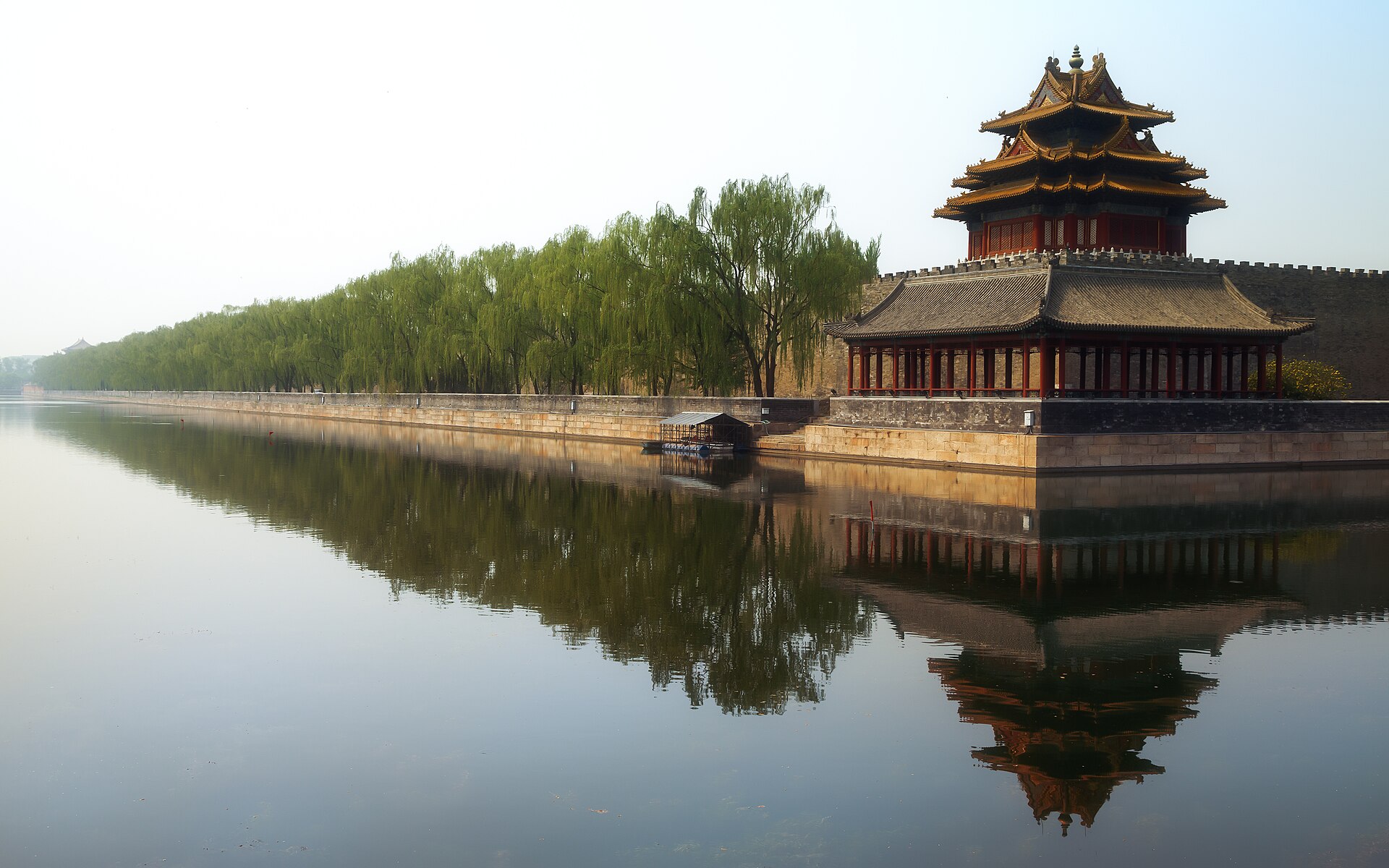
The complex covers about 72 hectares inside a moat and a wall roughly ten metres high, arranged in a strict north–south axis: ceremonial halls in front, private living quarters behind. The folk figure of '9,999 and a half rooms' is a legend; the documented count is around 980 surviving buildings.
The last emperor, Puyi, remained in the inner court until 1924, and the Palace Museum opened to the public in 1925. UNESCO listed the site as a World Heritage Site in 1987, and it now holds more than a million registered artefacts — a large share of them never on display at any one time.
Yes. Tickets are sold online against your passport number, normally released about 7 days ahead, and there is no walk-up window for foreign visitors. In peak season the daily quota sells out quickly, so book as soon as your dates are fixed.
CNY 60 from April to October and CNY 40 from November to March. The Treasure Gallery and Clock Gallery each cost an extra CNY 10 and are bought inside the complex.
Yes, it closes every Monday except during national public holidays and during the peak summer period when special arrangements may apply. Always confirm on the official site before you travel.
Three to four hours is realistic for the main route, and half a day if you add the Treasure Gallery, the gardens and a climb up Coal Hill for the overlook.
Enter only at the Meridian Gate on the south side and exit at the north. The route is one-way, so plan what you want to see before you leave the central axis.