
White Dagoba
A white stupa crowns Jade Flower Island at the lake's centre, built in the 17th century on a Yuan-era mound. Climb it for a fine panorama over the water and the rooftops of the old city stretching beyond the walls.
A lakeside imperial garden with a white dagoba and a nine-dragon wall
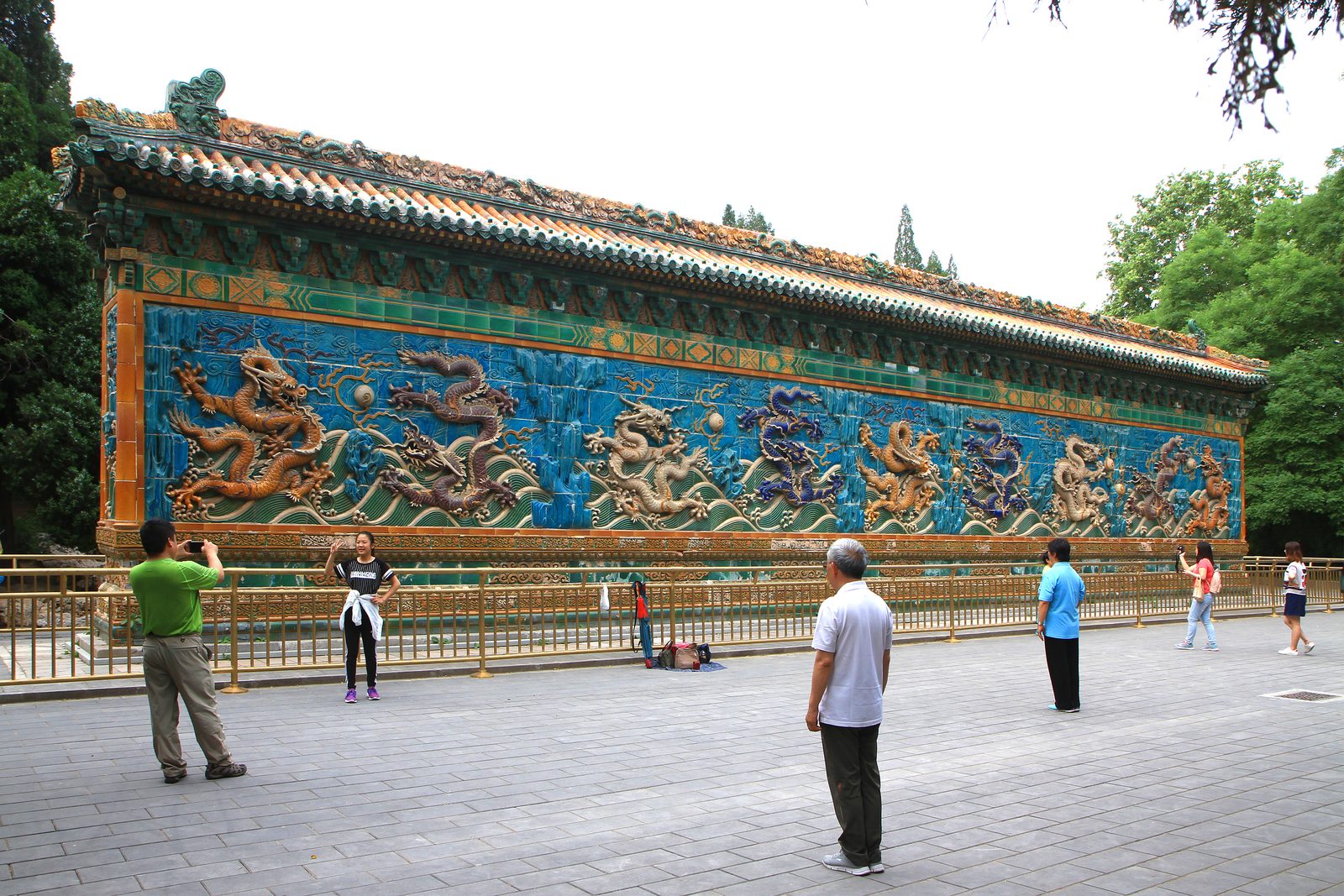
Beihai Park is a compact imperial lakeside garden in central Beijing, centred on White Dagoba hill, the glazed Nine-Dragon Screen and a calm lake. It is the most intimate of the city's old gardens and links straight to the Houhai lakes. This guide covers the tickets, boating on the water, the north-gate walk to Shichahai and the Line 6 Beihai Bei entrance. Allow two to three hours, then drift north into Houhai for the evening.
Beihai is a public park and you can usually walk in, but the gate uses real-name ticketing against your ID, so carry your passport. No advance booking is needed except on the busiest holiday mornings, when a short queue may form.
Metro Line 6 to Beihai Bei (Exit B); the north gate is a 5-minute walk and feeds toward the Nine-Dragon Screen and Houhai.
北海公园 北门 (north gate). For the south gate use 北海公园 南门.
Enter at the North Gate for the Nine-Dragon Screen and Houhai link, or the South Gate near the Forbidden City for the White Dagoba first.
A white stupa crowns Jade Flower Island at the lake's centre, built in the 17th century on a Yuan-era mound. Climb it for a fine panorama over the water and the rooftops of the old city stretching beyond the walls.
One of Beijing's two glazed nine-dragon walls shows coiled dragons in vivid ceramic. Smaller and quieter than the better-known screen in the Forbidden City, it is an easy, photogenic stop on the park's north shore.
Rent a paddle or pedal boat and circle Jade Flower Island; it is the standard way to see the dagoba from the water and the most relaxing thing to do on a warm afternoon. Jetties sit along the shore.
Leaving by the north gate drops you into Shichahai and Houhai, a warren of hutongs, bars and lakeside walks. It is the natural next step after Beihai and needs no extra transport to reach.
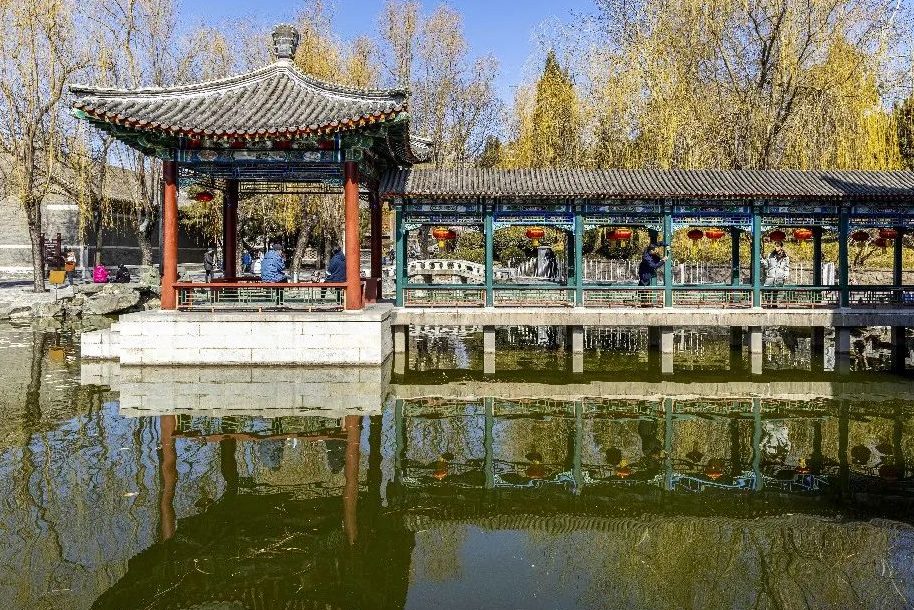
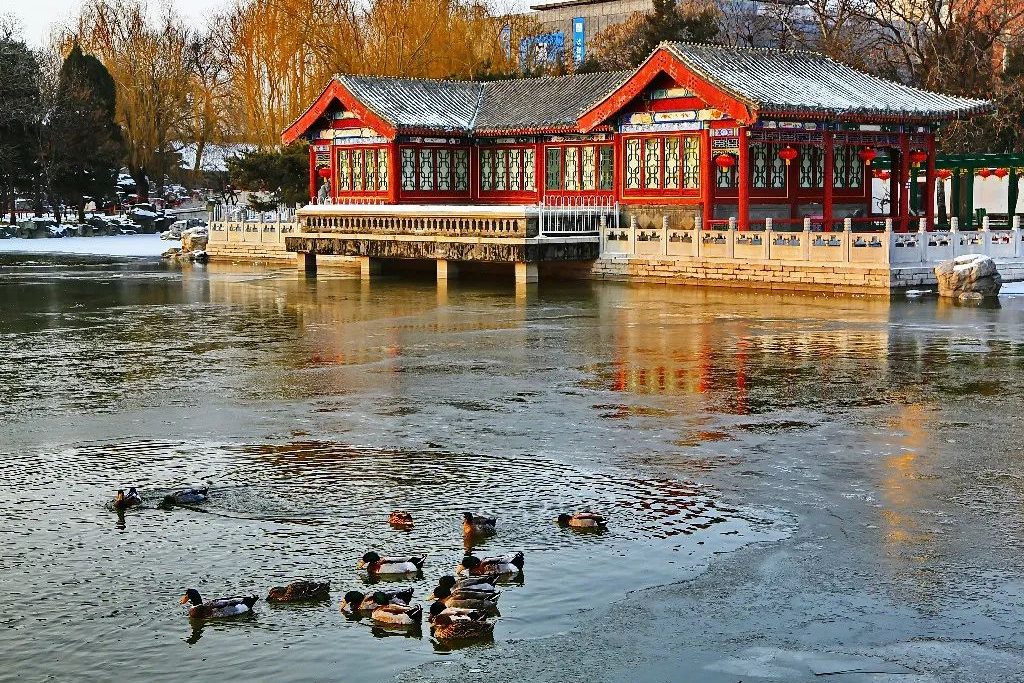
Beihai's origins trace to the 12th-century Jin dynasty, but its form came under Kublai Khan in the Yuan era, when the 'Lake of the Celestial Sea' was dug and Jade Flower Island raised as an earthly mirror of paradise. It sat just west of the Mongol capital that became Beijing. The design was meant to echo a description of a paradise mountain in Buddhist cosmology.
Ming and Qing rulers kept Beihai as an imperial garden beside the Forbidden City, adding the Round City, the Nine-Dragon Screen and the white dagoba after a 17th-century fire. The Qing court used it for small ceremonies and quiet retreat from the relentless affairs of state. The white dagoba replaced an earlier pavilion lost to that fire and still dominates the island.
Opened to the public in 1925, Beihai is now a beloved city park of about 70 hectares, half of it water. Its blend of Tibetan-style stupa, Chinese pavilions and open lake makes it the most intimate of Beijing's surviving imperial gardens and a favourite local escape. At dusk local retirees gather for dancing and singing, a daily ritual that visitors are welcome to join.
No advance booking is needed — it is a public park you can walk straight into. Carry your passport, as the gate uses real-name ticketing and may check ID, especially on busy holiday mornings when a short queue forms.
Entry is about CNY 10 in peak season and CNY 5 off-peak; boats and the Round City are extra. It is among the cheapest imperial gardens in the city centre, and good value for the money you will spend on a long, lazy afternoon.
Entry is about CNY 10 in peak season and CNY 5 off-peak; boats and the Round City are extra. It is among the cheapest imperial gardens in the city centre, and good value for the money you will spend there on a long, lazy afternoon.
Late spring and autumn are ideal, with mild weather and clear light on the water. Arrive at the 06:30 opening to share the park with tai chi groups before the later crowds arrive and the light flattens.
Yes, but differently. The Summer Palace is vast and imperial; Beihai is small, central and intimate, easy to pair with Houhai and the Forbidden City in a single day of palace-and-lake walking without leaving the centre.