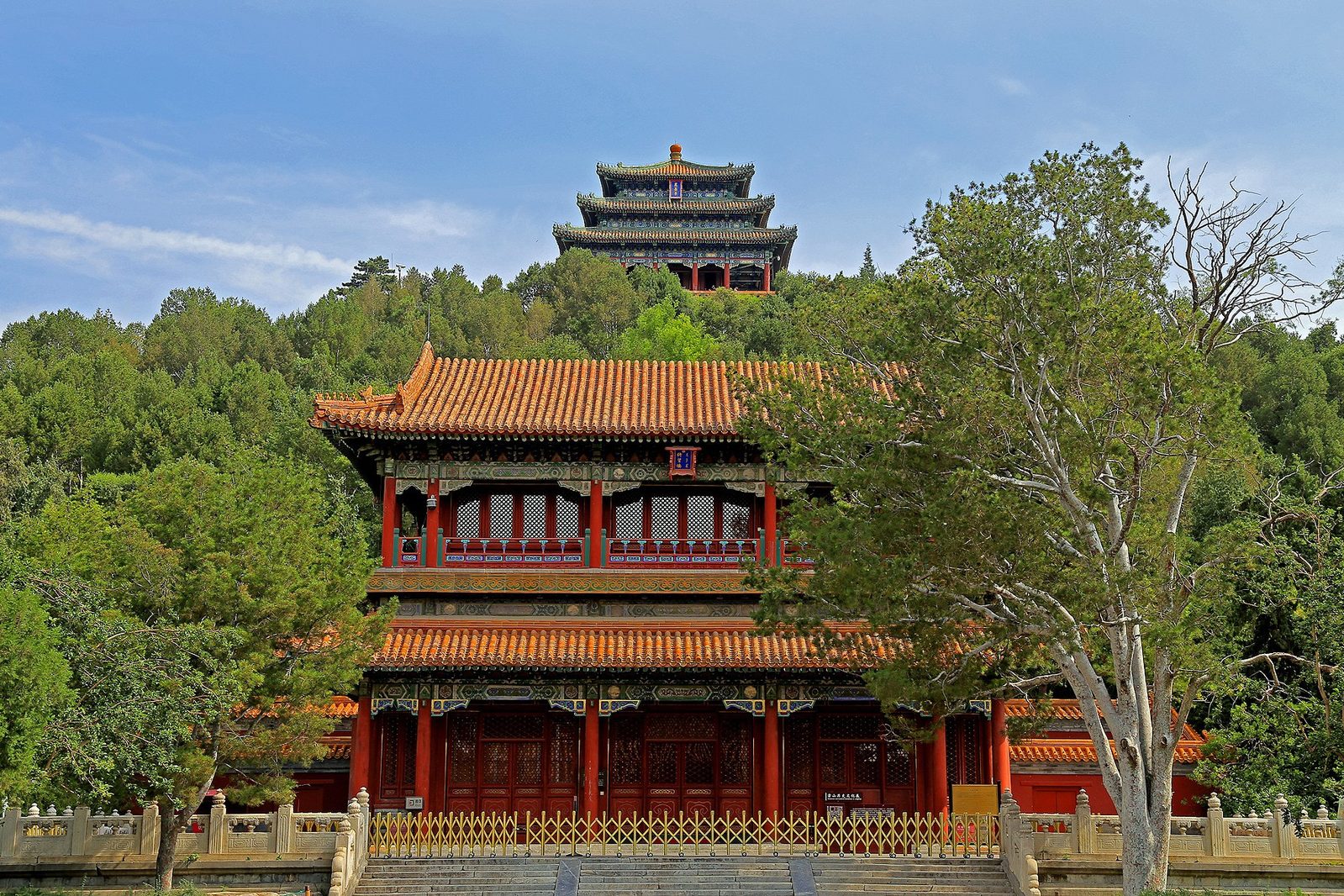
The Coal Hill pavilion view straight down the imperial axis — Beijing's classic postcard
Jingshan Park sits on Coal Hill, the artificial mound the Ming emperors raised behind the Forbidden City to anchor the city's central axis. From its summit pavilion you get the best cheap panorama of the palace's 9,000 roofs running dead straight to Tian'anmen. The ticket costs almost nothing and the climb takes ten minutes. This guide covers opening hours, the route up, and how to time your visit for the best light.
Quick Facts
Opening hours
06:30–21:00 (Apr–Oct) · 06:30–20:00 (Nov–Mar)
Last entry
20:30 (Apr–Oct) · 19:30 (Nov–Mar)
Closed
Open daily
Suggested time
1–2 hours
Ticket price
CNY 2 (Apr–Oct) · CNY 1 (Nov–Mar); confirm on official account
Best season
Autumn (Oct–Nov) for clear views
Booking
Not required — walk in
Entry point
South Gate, directly opposite the Forbidden City north exit
Do You Need to Book?
Jingshan is a municipal park with no advance booking. You buy a paper or e-ticket at the gate and walk in, though a quick real-name check can apply on busy national-holiday weekends.
Walk to the South Gate (Qianmen) opposite the Forbidden City's north exit and join the ticket queue.
Pay at the window or scan the park's on-site code with your phone; foreign cards are not always accepted, so carry cash.
Show your passport if staff request ID — real-name entry is occasionally enforced on peak days.
Keep the paper stub; it may be checked again at the hilltop pavilion during festivals.
Getting There
🚇
By metro
Metro Line 8 to Shichahai (Exit C), then a 15-minute walk east, or walk north from the Forbidden City's Gate of Divine Prowess across the road.
🚕
By taxi
景山公园 南门 (south gate, opposite the Forbidden City).
🚪
Entrances
Enter at the South Gate facing the Forbidden City, climb the central path to Wan Chun Ting, and leave by the same gate or the quieter East Gate.
The hilltop pavilion sits at the exact centre of Beijing's north–south axis. From here the Forbidden City spreads out dead straight below you — the definitive view of the palace roofs and the line running to Tian'anmen.
The Five Pavilions of Coal Hill
Five restored pavilions crown the ridge, one at the summit and two on each shoulder. Each frames a slightly different composition of palace, moat and city, and most are free to enter.
The Ming Emperor's Viewpoint
The last Ming emperor, Chongzhen, is said to have ended his life on the hill in 1644. A modest stele marks the spot, and the sombre story adds weight to the otherwise cheerful park.
Autumn Foliage and Peony Garden
Below the ridge, seasonal colour draws crowds: red maples in late October and a compact peony bed in May. These lower paths are where locals actually stroll, exercise and play cards.
Photo Gallery
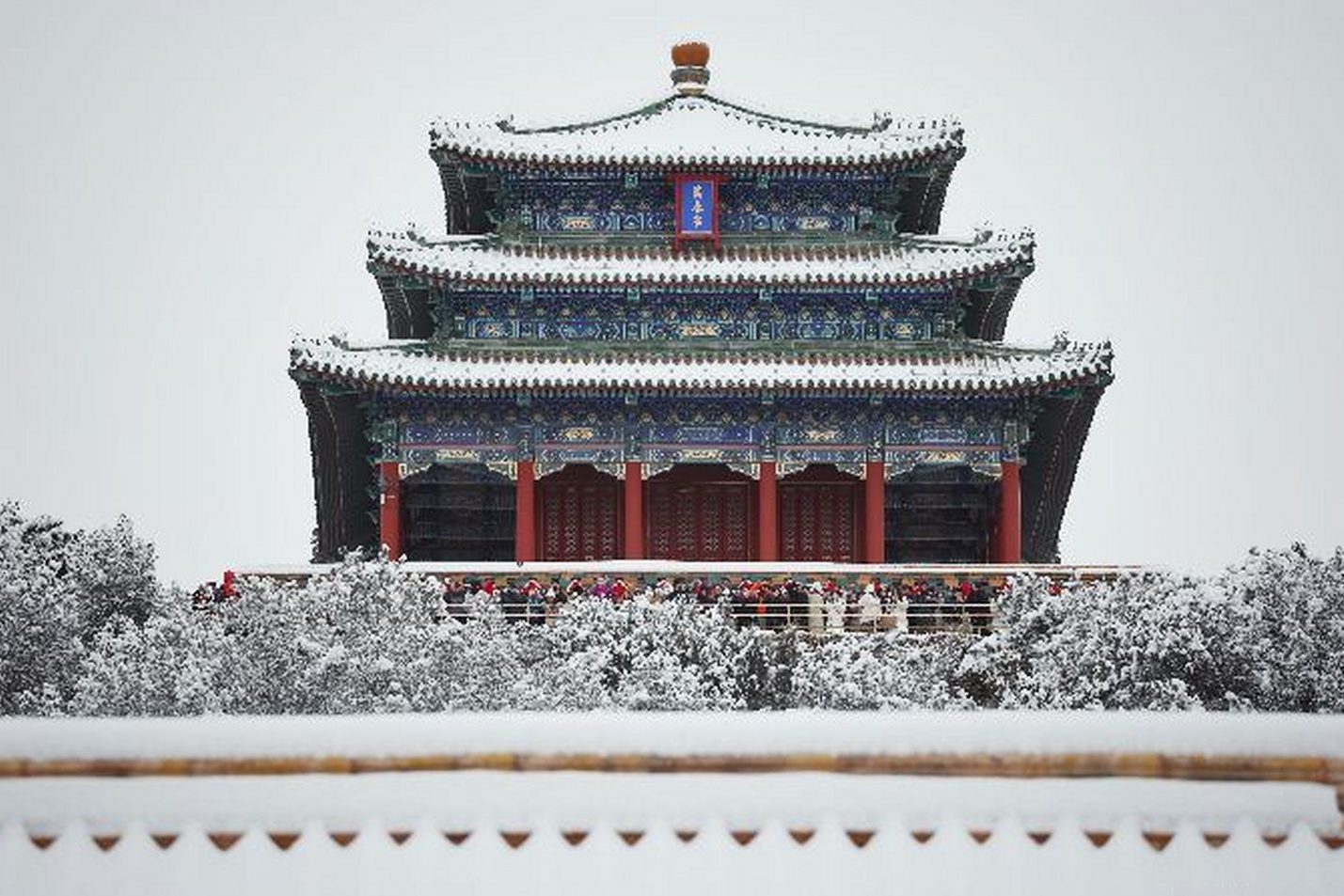
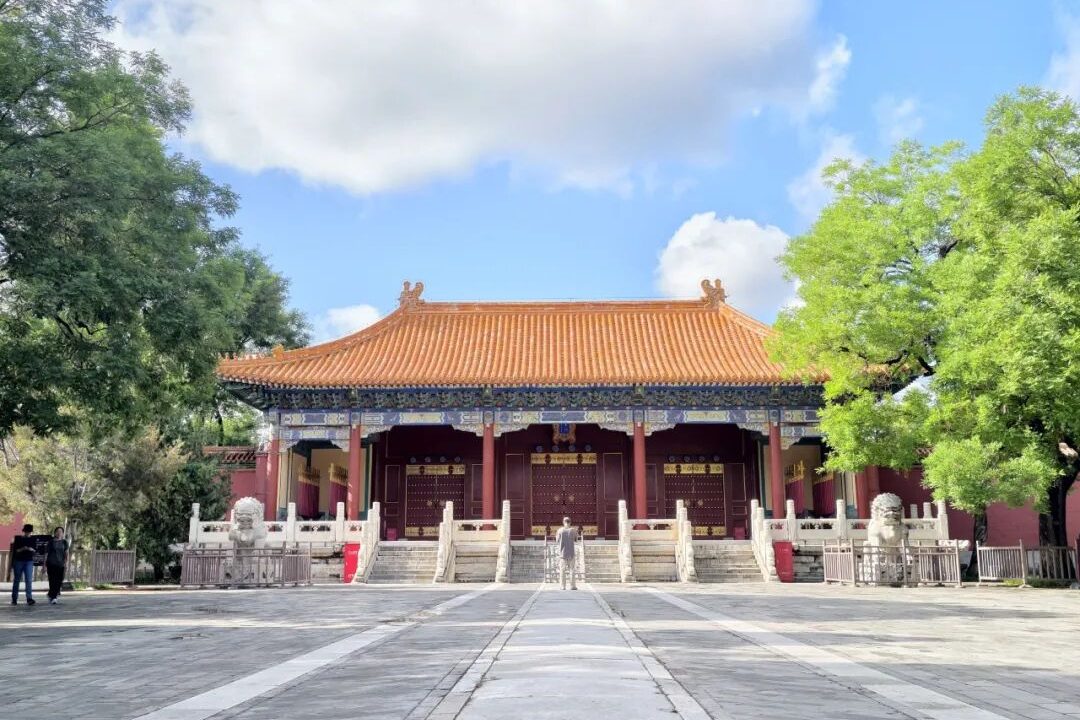
Snow cloaks the Wanchun Pavilion, the highest point on Beijing's central axis, in Jingshan Park.Pavilions and rooftops seen from Jingshan Park on Beijing's central axis
Five Centuries on the Imperial Axis
Jingshan was created in the early 15th century when the Ming emperor Yongle moved the capital to Beijing and built the Forbidden City. Earth excavated for the palace moat and imperial canals was piled here into a deliberate hill, originally called Coal Hill because it was said to hide emergency fuel stores. Its crest was fixed precisely on the city's central axis, behind the emperor's throne.
Through the Ming and Qing the hill served as a private imperial garden and a vantage point for watching the city. In 1644 the last Ming emperor, Chongzhen, fled here as rebel armies entered Beijing and took his own life from a tree on the slope — a moment that ended the dynasty. After 1911 the grounds slowly opened to the public.
The park was formally named Jingshan in 1928 and is now a protected historic site managed by the city. Its five ridge pavilions were rebuilt after wartime damage, and the central Wan Chun Ting remains the most precise spot from which to read Beijing's once-strict imperial geometry — the axis still runs unbroken to Tian'anmen.
Suggested Route
1. South Gate entranceEnter from the gate facing the Forbidden City's north exit. Buy your ticket here, then head straight up the central path rather than the side loops.
2. Climb to Wan Chun TingThe summit pavilion is a ten-minute walk. Go early or late for soft light; the midday glare flattens the rooftops you came to photograph.
3. Walk the east ridgeDescend slightly to the eastern pavilions for a quieter, tree-framed angle of the palace and the moat. Fewer visitors make it this far.
4. Lower gardens and peoniesDrop to the foot of the hill for the peony beds and autumn maples. This is where Beijingers actually relax, away from the viewpoint rush.
5. Exit east toward BeihaiLeave by the East Gate and walk west along the moat to Beihai Park, or south to rejoin the Forbidden City side — both pair naturally.
Mistakes to Avoid
Do not climb at midday; harsh light flattens the rooftops and the crowd is thickest then.
Skip the East Gate entry — it is further from the viewpoint and often closed by late afternoon.
Bring small cash for the ticket; the gate reader rejects many foreign cards.
Avoid national-holiday mornings, when locals fill the hill for exercise and photos.
Do not expect cafés inside; bring water, as the summit has no shelter from the sun.
No. Jingshan is a municipal park with no advance booking; you buy a ticket at the gate and walk in. Carry some cash and your passport in case real-name entry is checked on busy holiday weekends.
How much does Jingshan Park cost?
The ticket is famously cheap — around CNY 2 in high season and CNY 1 off-season, though confirm the current figure on the park's official channel before you go. Children and seniors often enter free.
How long should I allow for a visit?
Most visitors spend one to two hours: ten minutes up, twenty at the viewpoint, and a stroll through the lower gardens. Pair it with the Forbidden City and Beihai Park for a full imperial-day loop.
When is the best time to photograph the view?
Late afternoon gives warm light on the golden roofs, while clear autumn days (October–November) offer the sharpest long-distance views. Arrive soon after the 06:30 opening to beat both the glare and the tour groups.
Is Jingshan worth it after the Forbidden City?
Absolutely. The climb is short, the ticket negligible, and the axis view is the one photograph every Beijing trip needs. It also lets you decompress after the palace crowds without leaving the imperial quarter.