
Yinding Bridge (银锭桥)
A small hump-backed bridge at the narrows between Qianhai and Houhai, long famed for its westward view of the distant Western Hills. It is the classic photo spot and a natural turning point on a lakeside walk.
Three linked lakes, a bar street, and the best evening walk in old Beijing
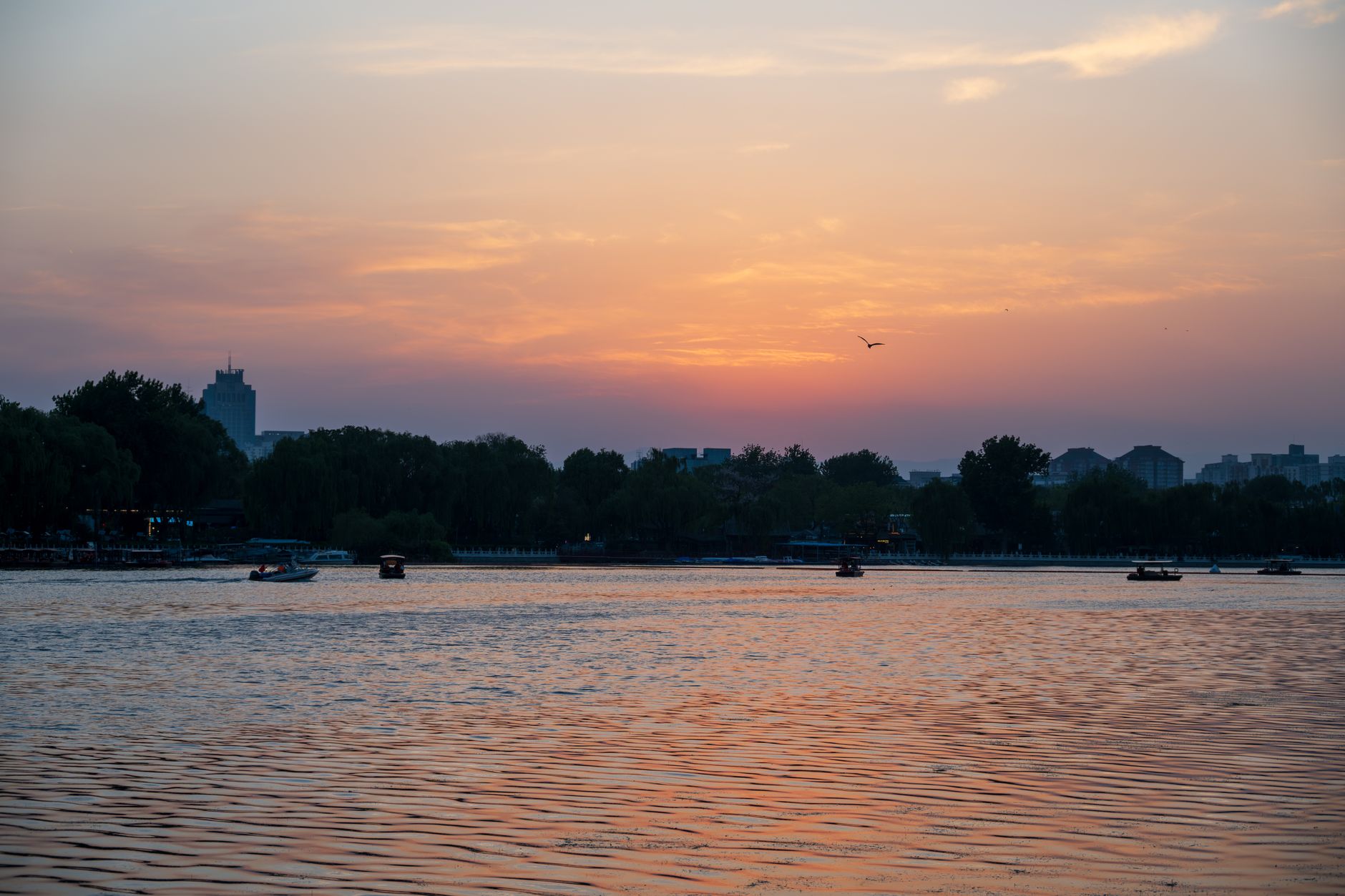
Shichahai is a cluster of three connected lakes — Qianhai, Houhai and Xihai — on the northwest edge of the old city, ringed by hutongs, willow trees and a lively bar street. It is the best evening walk in central Beijing, equal parts scenery and nightlife. This guide covers the rickshaw tours (and how to handle their hard-sell), Yinding Bridge, Prince Gong's Mansion, and how to enjoy the lakes after dark.
Shichahai is a public lakeside area with no entry fee or reservation, so there is nothing to book for walking. Boat rides, rickshaw tours and bars operate independently and set their own prices — the only real decision is whether to take a rickshaw, and if so, to agree the fare first.
Metro Line 8 to Shichahai Station (Exit A) or Line 2 to Gulou Dajie, then a 5-minute walk to the Qianhai waterfront.
Show the driver 什刹海 (Shichahai) or 后海 (Houhai); both are well known.
There is no gate — enter along the lakefront paths from any point. The Drum Tower sits at the east end and Prince Gong's Mansion to the southwest.
A small hump-backed bridge at the narrows between Qianhai and Houhai, long famed for its westward view of the distant Western Hills. It is the classic photo spot and a natural turning point on a lakeside walk.
The north shore of Houhai is lined with bars, live-music clubs and lakeside restaurants that light up after dark. Loud and touristy, but lively, and the water reflections are genuinely pretty.
The largest and best-preserved princely mansion in Beijing, once home to a Qing court favourite and later Heshen. Its gardens are among the finest private gardens in the city.
The quieter western and southern arms of the lake system offer willow-shaded paths and fewer crowds, especially around Xihai, where local life carries on away from the bar strip.
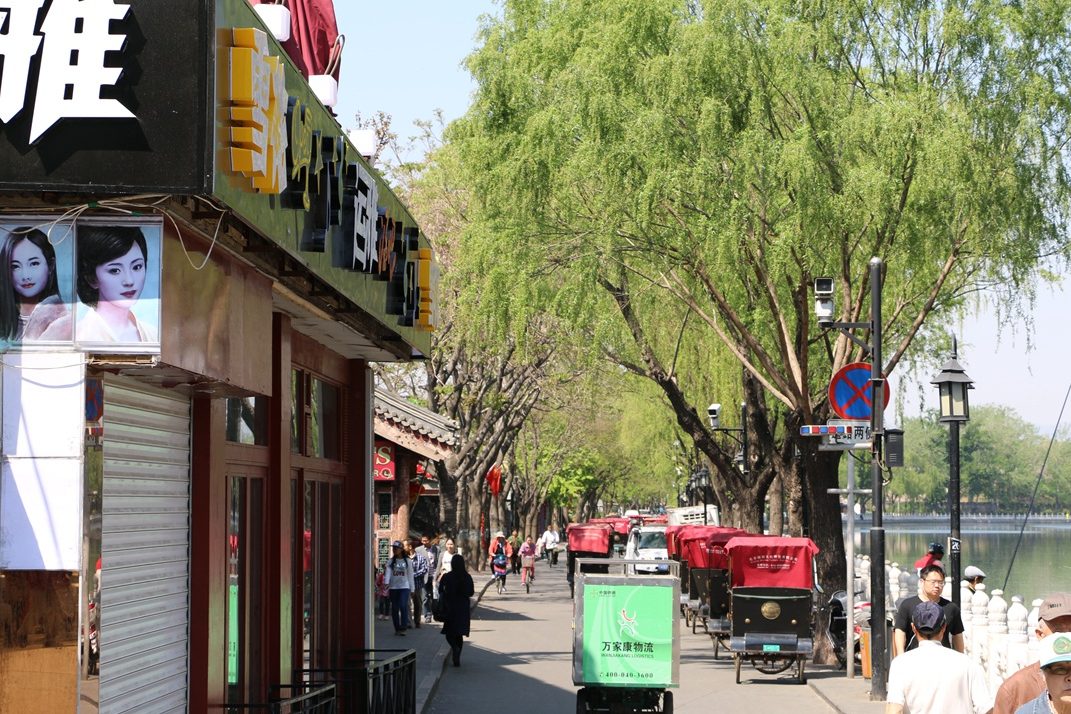
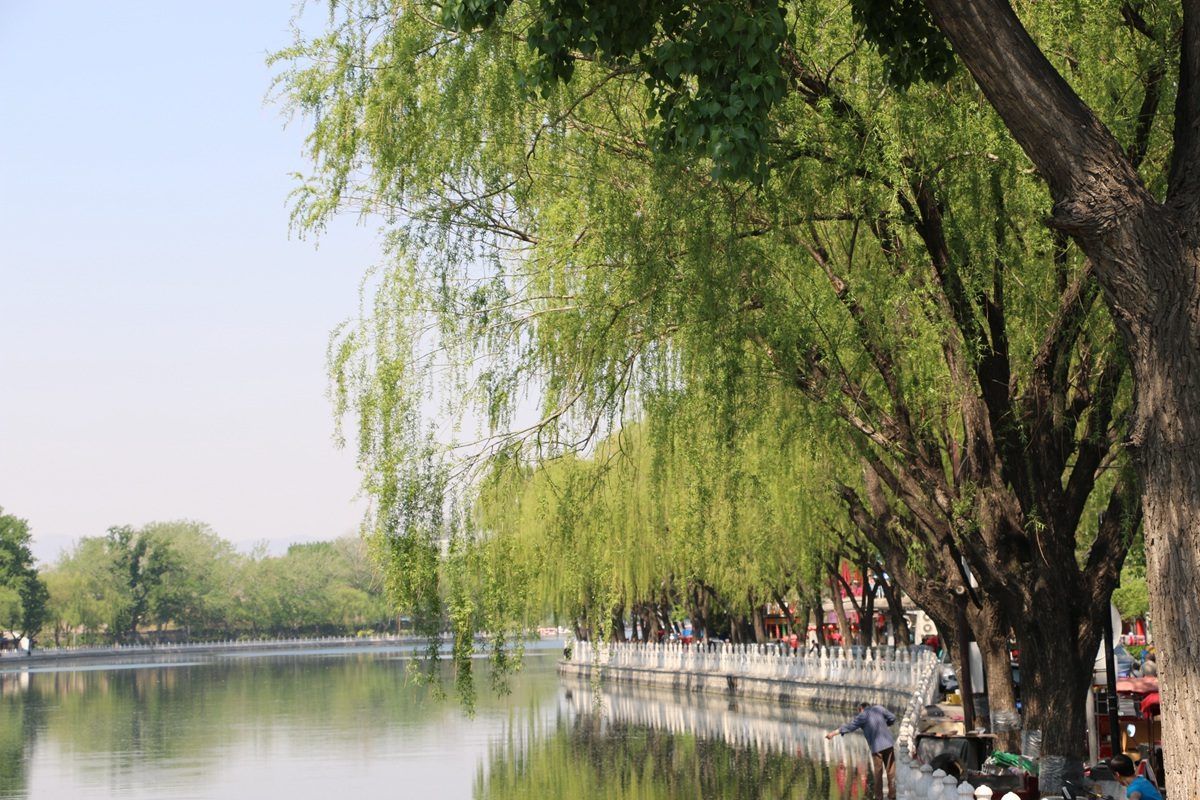
Shichahai's lakes are fed by the same spring system that supplied the Yuan-era canal network, and the area became a favoured retreat for officials and merchants from the Yuan and Ming dynasties onward. The name refers to the 'ten temples' (shicha) that once stood around the water.
In the Qing dynasty the lakeshore filled with the residences of princes and bannermen, including the mansion later called Prince Gong's. Through the 20th century the area declined into dense housing, then from the 1990s revived as a leisure district of bars, restaurants and rickshaw tours.
Today Shichahai is a protected historic-water area drawing heavy evening crowds, yet the basic geography — three linked lakes, willow banks and hutong streets — is unchanged. It remains the most atmospheric place in central Beijing to walk after dark, and in winter the frozen lake becomes a public skating ground.
Yes. Walking the lakeside is free and there is no ticket or booking. You pay only for extras — boat rides, rickshaw tours and drinks at the bars. The public paths are open around the clock.
Walk the lit lakefront, listen to the open-air bars on Houhai's north shore, take a pedal boat, or simply sit by the water. The area is at its best after sunset, when the willows and bridges are strung with lights.
They are a fun way to see the hutongs if you negotiate first. Agree a flat price and route before boarding, as drivers commonly push add-on stops and tips. If you prefer, the lanes are just as enjoyable on foot.
Two to three hours covers a relaxed lakeside walk, Yinding Bridge and perhaps a drink. Add Prince Gong's Mansion and allow half a day. The evening is the prime time, so plan to arrive before sunset.
Summer and early autumn evenings are ideal, warm and lively, with the bar street in full swing. Winter offers the novelty of ice skating on the frozen lake. Weekday nights are calmer than weekends, which get crowded.