The best-preserved Qing princely residence, with 9,999 bats and a hidden opera stage
Prince Gong's Mansion is the most complete surviving residence of a Qing prince, tucked into the hutongs west of the Shichahai lakes. Its courtyards, rockery garden and private opera stage show how the aristocracy lived, far from the formal palaces. The highlight is the Pavilion of the Fu and its 9,999-bat motif around a single hidden character. This guide covers passport booking, the route through the grounds, and pairing it with the surrounding hutongs.
Quick Facts
Opening hours
08:30–17:00; confirm the day before on the official account
Last entry
16:00; confirm on official account
Closed
Mondays (except public holidays)
Suggested time
2–3 hours
Ticket price
Around CNY 40; confirm on the official WeChat account
Best season
Spring (Apr–May) and autumn (Sep–Oct)
Booking
Required — passport and online reservation
Entry point
Main (South) Gate on Liuyin Jie, west of Shichahai
How to Book Tickets with a Foreign Passport
Prince Gong's Mansion sells timed tickets online against your passport number. There is no reliable walk-up window for foreign visitors, and the mansion closes every Monday, so book before you travel and pick a weekday.
Book through the mansion's official WeChat mini-program or its ticketing site; avoid resellers who add a markup.
Enter each visitor's passport number exactly — one passport, one ticket, checked at the gate.
Choose a timed entry slot; arrive within it, as late arrivals may be refused on busy days.
Pay online; foreign cards are often rejected, so use a Chinese payment app via a local helper if needed.
Bring the same passport on the day — it is the actual key to entry.
Getting There
🚇
By metro
Metro Line 6 or 8 to Nanluoguxiang (Exit B), then a 10-minute walk west through the hutongs, or Line 2 to Jishuitan and a short taxi.
🚕
By taxi
恭王府 南门 (south gate, west of Shichahai Lake).
🚪
Entrances
Enter at the South Gate on Liuyin Jie; the route is largely one-way through the front courts to the rear garden, exiting near the north side.
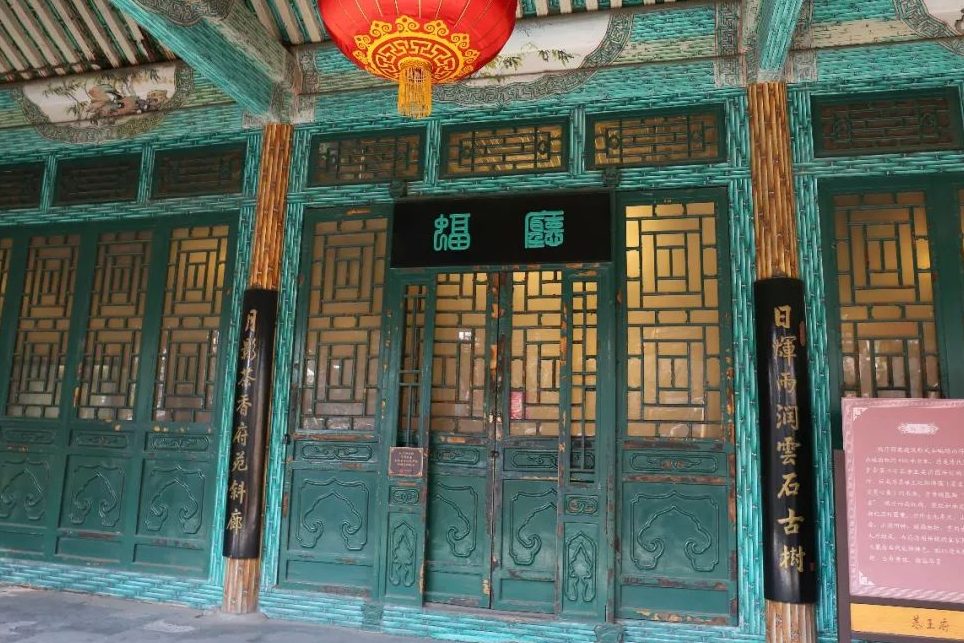
The mansion's signature feature is a rockery screen hiding a single giant 'Fu' (good fortune) character carved into the stone. Combined with 9,999 bat motifs across the roofs and beams, it was designed as a private luck machine for the prince.
The Rear Garden (Cuijin Garden)
A classical scholar's garden with a central lake, artificial hills, pavilions and a covered walkway. This is the most photogenic quarter and the clearest contrast to the formal palace compounds elsewhere in Beijing.
The Mini Peking-Opera Theatre
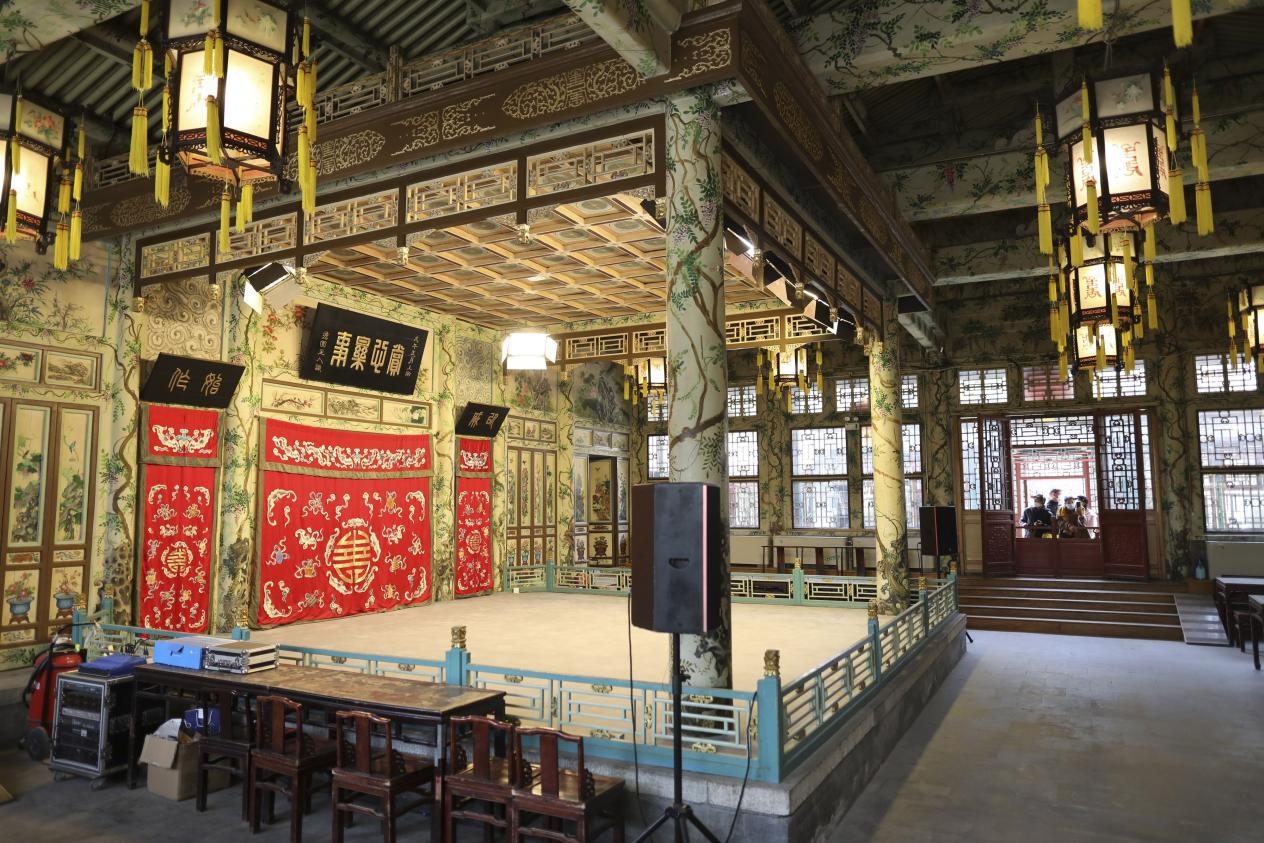
A restored indoor stage where the prince's household watched opera. The intimate wooden auditorium and painted ceiling show the private entertainment of the Qing elite far better than any museum display.
The Front Reception Courts
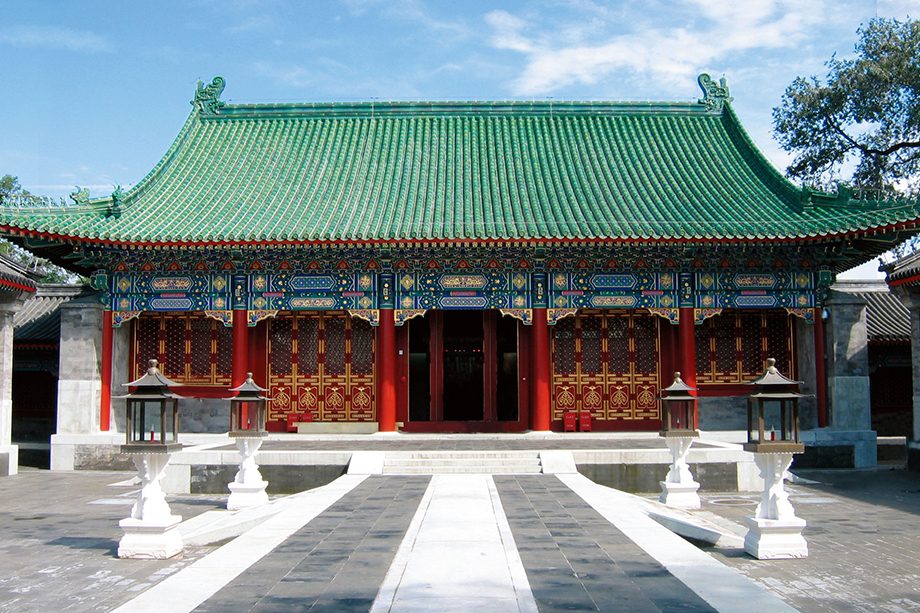
A sequence of solemn courtyard halls where the prince received guests and conducted business. The layout follows strict Qing rank, and the carved doorways are among the finest surviving in a private residence.
Photo Gallery
The Bat Hall (Fu Ting) at Prince Gong's Mansion, its lattice doors painted green and gold beneath a red lanternInside the Grand Theatre (Da Xi Lou), the fully enclosed Qing-dynasty opera house at Prince Gong's Mansion
From Imperial Favourite to Princely Seat
The site began in the late 18th century as the town residence of Heshen, a favourite of the Qianlong emperor notorious for his wealth and corruption. After Heshen's fall, the compound passed through several imperial hands before becoming the home of Prince Gong, Yixin, a powerful statesman of the late Qing, around 1851.
The prince's family occupied it through the turbulent final decades of the dynasty, and after 1911 the mansion slipped into decline, subdivided and partly demolished. It served variously as a school, a bank and cramped housing before systematic restoration began in the late 20th century to recover its original plan.
Today the restored mansion is a national heritage site and one of the few Qing aristocratic homes open to the public. Its 9,999-bat motif and the hidden Fu character have made it a popular symbol of fortune, and the garden is considered among the best-preserved private gardens of its era in Beijing.
Suggested Route
1. South Gate ticket checkEnter at the South Gate with your passport and e-ticket. Begin in the outer courtyard, where the scale of a prince's reception halls first becomes clear.
2. Front ceremonial courtsMove north through the main halls used for audiences and family rites. Read the rank in the door carvings before the crowds thicken mid-morning.
3. The Pavilion of the FuSeek out the rockery screen with the hidden Fu character and count the bat motifs. This is the mansion's signature photo stop.
4. The opera theatreDetour to the restored indoor stage. Stand in the small auditorium to appreciate how intimately the Qing elite watched their opera.
5. Rear garden and exitEnd in the Cuijin Garden by the lake, then exit north toward Shichahai and the hutong cafés for a slower finish.
Mistakes to Avoid
Do not visit on a Monday — the mansion closes weekly and this catches many travellers.
Book online before arrival; the on-site window rarely serves foreign passports.
Avoid the midday tour-group wave; arrive at opening for empty courts.
Do not miss the rear garden — most visitors turn back at the courts.
Bring your passport even with the e-ticket; it is checked at the gate.
Do I need to book Prince Gong's Mansion in advance?
Yes. Tickets are sold online against your passport number with timed entry, and there is no reliable walk-up window for foreign visitors. Book a few days ahead, especially for weekends, and never on a Monday when it is closed.
How much does it cost?
Around CNY 40, though confirm the current figure on the official WeChat account before you go, as municipal pricing shifts. The ticket covers the courts, garden and opera theatre; there is no separate charge inside.
How long should I allow?
Plan two to three hours to see the reception courts, the Fu pavilion, the opera theatre and the rear garden without rushing. Add another hour if you linger in the garden or pair it with Shichahai.
When is the best time to go?
Weekday mornings at opening are calmest; spring and autumn offer the best light in the garden. Avoid national holidays and Mondays (closed). Late April's blossoms and October's clear skies are ideal.
Is it worth visiting after the Forbidden City?
Yes, for contrast. Where the palace shows imperial power at scale, this mansion shows how the elite actually lived — intimate courts, a private opera stage and a scholar's garden. It pairs naturally with the Shichahai hutongs.