
The Square Altar (Fangze Altar)
A low two-tier square platform of yellow earth and brick, surrounded by a square moat. This is the ritual heart of the park and the clearest surviving statement of earth-worship geometry.
Beijing's square altar of earth and a beloved local park, famous for its Lunar New Year fair
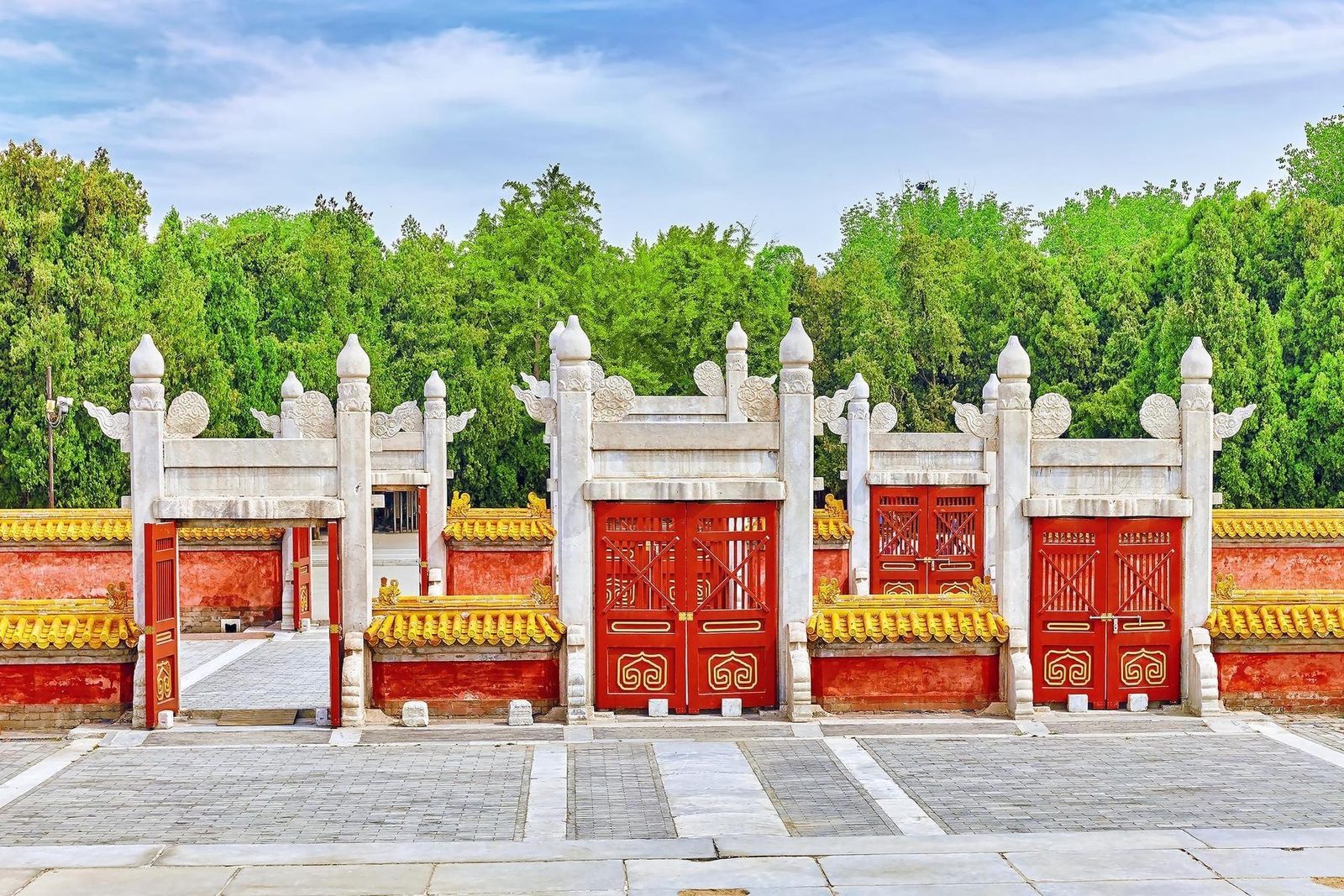
Temple of Earth, known in Chinese as Ditan, is one of Beijing's four imperial altars of heaven-and-earth worship and the only one laid out as a square — the shape that symbolised earth in Ming and Qing state ritual. Today it is both a quiet park and a working piece of ritual history, framed by old cypresses and a low earthen altar. This guide covers opening hours, getting there, what little remains of the altar complex, and the famous Lunar New Year fair that briefly turns the park into the city's biggest festival.
Ditan Park is a public park and needs no reservation. The altar enclosure is open and free to enter, so you simply walk through a gate. At Lunar New Year the fair draws big crowds, and timed or capped entry can apply on the busiest days — check the park's notice then.
Metro Line 2 or 5 to Yonghegong Lama Temple (Exit A), then a 10-minute walk north; or Line 5 to Hepingli Beijie (Exit B) and a 5-minute walk west.
Show the driver 地坛公园 (Ditan Gongyuan). Add 南门 (south gate) if you want the main entrance.
Enter at the south gate for the altar, or any side gate for the park. The site is open and not one-way.
A low two-tier square platform of yellow earth and brick, surrounded by a square moat. This is the ritual heart of the park and the clearest surviving statement of earth-worship geometry.
Centuries-old cypress trees shade the paths and the altar, giving the park a calm, wooded feel that the central altars of Beijing rarely keep.
For about a week each winter the park hosts one of Beijing's largest temple fairs, with folk stalls, snacks, and performances across the lawns and squares.
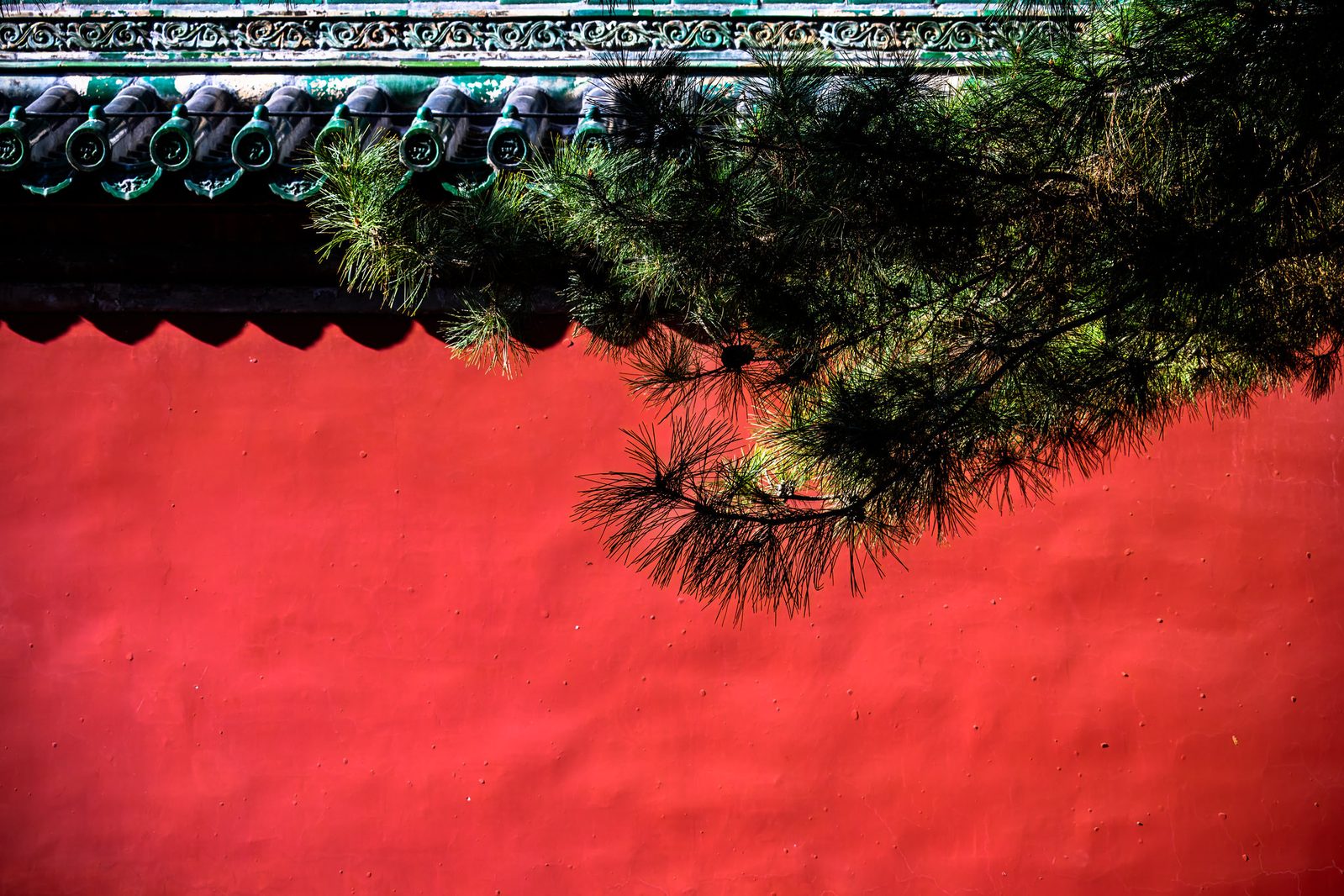
Painted gatehouses and stretches of vermilion wall mark where the imperial altar precinct once stood, now softened into the everyday park edge.
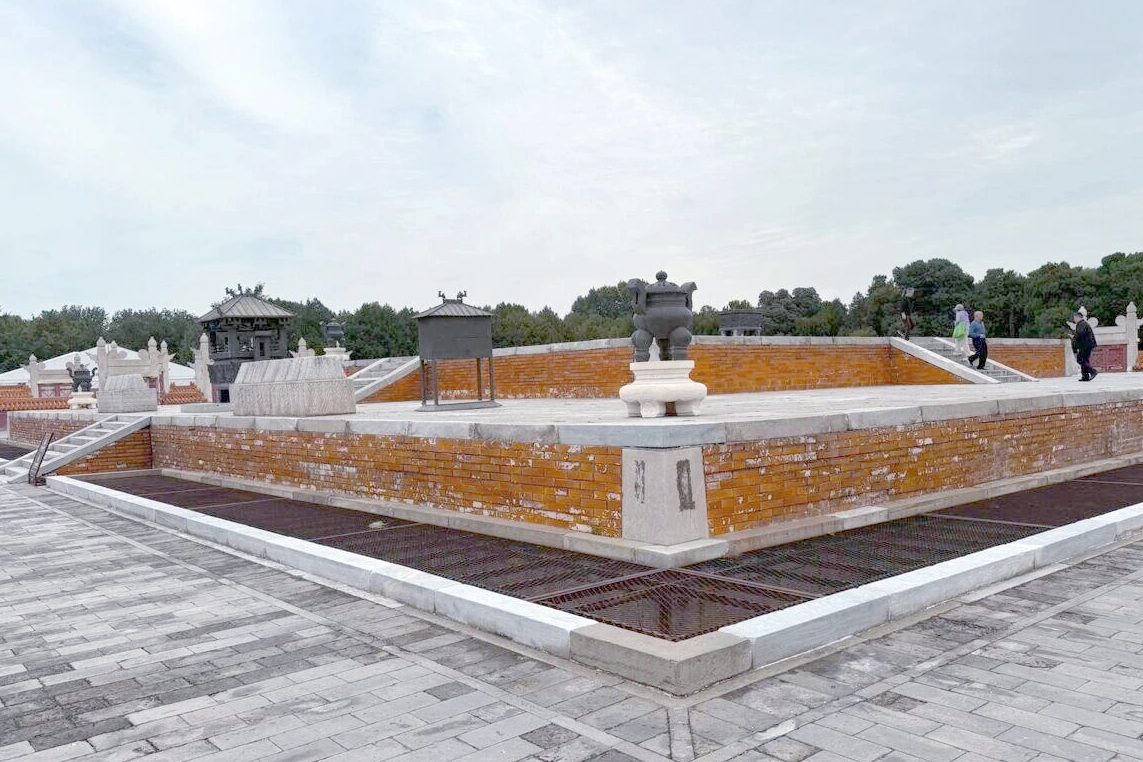
The Temple of Earth was built in 1530 under the Jiajing Emperor of the Ming dynasty, as part of a set of four suburban altars — earth, sun, moon and heaven — arranged around the capital. Earth was placed in the north, and unlike the round Altar of Heaven it was built square to match the classical Chinese idea that earth is square and heaven is round.
Each summer solstice the emperor came north to the square altar to offer sacrifices to the god of earth and the spirits of the land. The rites continued under the Qing, who maintained and rebuilt the structures. After the fall of the empire in 1912 the altar was opened to the public as a park, and most of its halls were lost or repurposed over the 20th century.
Today only the square altar and fragments of wall survive from the ritual complex, but the park remains one of the most beloved green spaces in the north of the city. Its biggest moment is the Lunar New Year fair, which can draw hundreds of thousands of visitors in a single week — a vivid echo of its old ceremonial crowd.
Yes. Ditan Park is free to enter and the altar enclosure is open without a ticket. You simply walk through a gate. The only paid event is the Lunar New Year fair, which sells a separate fair ticket during its run.
Take Metro Line 2 or 5 to Yonghegong Lama Temple and walk about ten minutes north, or Line 5 to Hepingli Beijie and walk west. A taxi to 地坛公园 is simple and cheap from anywhere in the central city.
One to two hours is enough for the altar and a relaxed walk through the cypress groves. If you come for the Lunar New Year fair, allow half a day and expect large crowds and slower movement.
Spring and autumn are pleasant for the park itself. The standout time is the Lunar New Year fair in late January or February, when the park fills with stalls, food and performances — but only if you enjoy crowds.
It is quieter and far less grand than the Temple of Heaven, with little original architecture. Visit for the calm park, the square altar's symbolism, and the fair — or pair it with Lama Temple rather than making a special trip.